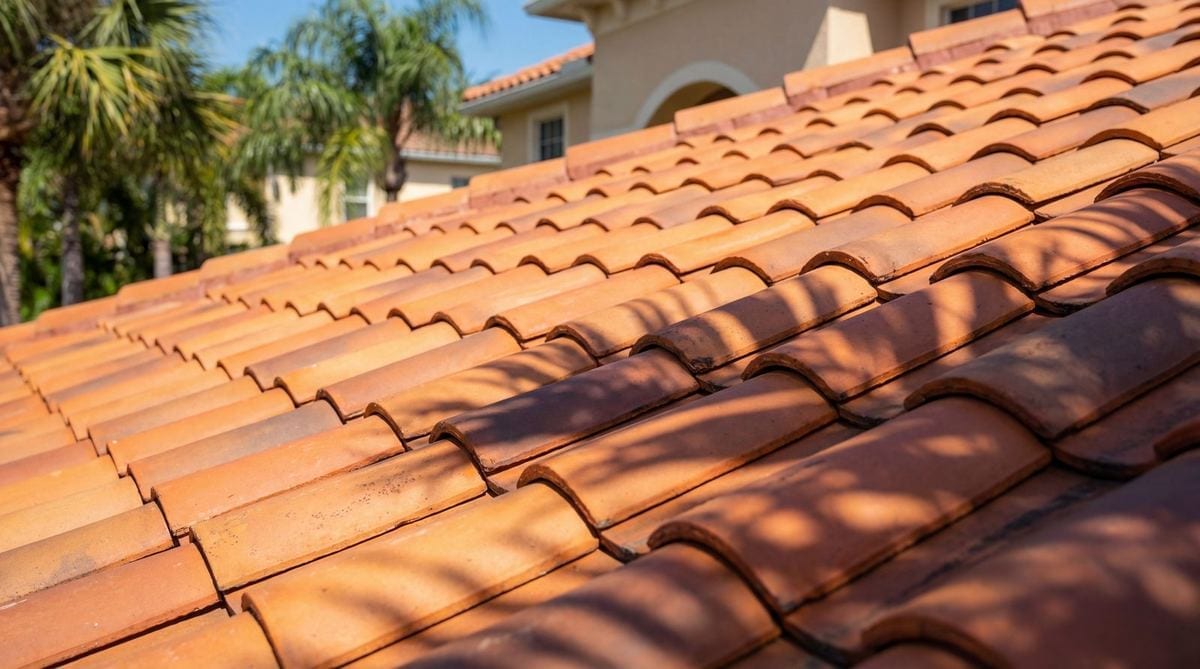
Tile Roof Replacement Cost in Florida (2026): Concrete vs Clay, Per Square, and the Re-Lay Option
Tile roof replacement cost in Florida: our installed concrete and clay ranges per square foot and per square, what moves a quote, and when a re-lay wins.
- Our published installed ranges: concrete tile $10.00 to $16.00 per square foot ($1,000 to $1,600 per square) and clay $12.00 to $22.00 ($1,200 to $2,200 per square). A 2,000 square foot home carries about 2,400 square feet of roof, so $24,000 to $38,400 for concrete and $28,800 to $52,800 for clay.
- Weight comes before price. Eagle lists its Florida-profile Capistrano at 880 lbs per square; a 24-square roof is over ten tons on your trusses, so a shingle-to-tile conversion starts with an engineer, not a quote.
- Lift-and-relay beats full replacement when the tile is sound, breakage on the lift is low and the profile is still made or salvageable. Brittle or discontinued tile with no match means new tile.
- Over 30 years, concrete tile and standing seam metal cost the same per square foot in our ranges and shingle gets bought twice. Choose tile on weight, look and HOA rules, not on price.
Tile roof replacement cost in Florida runs $10.00 to $16.00 per square foot installed for concrete tile and $12.00 to $22.00 for clay in our published ranges, or $1,000 to $2,200 per roofing square. A 2,000 square foot home with about 2,400 square feet of roof lands at $24,000 to $52,800 before decking and permit.
Tile is the roof the HOAs expect in Westchase, Tampa Palms, Lakewood Ranch and most of Land O’ Lakes, and it is the roof where two honest quotes for the same house can land $14,000 apart on concrete and $24,000 apart on clay. Here is where the money goes.
Tile Roof Replacement Cost Per Square Foot and Per Square

Roofers price tile by the square, 100 square feet of roof, and most will not put the per-square number in writing. We publish ours, and they are installed prices: tear-off, disposal, underlayment system, flashings, drip edge, tile, attachment, labor and cleanup.
| Tile | Installed, per sq ft | Per square | Expected life | Wind rating |
|---|---|---|---|---|
| Concrete tile | $10.00 to $16.00 | $1,000 to $1,600 | 50 to 75 years | 150+ mph |
| Clay tile | $12.00 to $22.00 | $1,200 to $2,200 | 75 to 100+ years | 150+ mph |
Those are the figures on our estimate page, the same ones behind every tile roofing quote we write.
Roof area is not living area. A 2,000 square foot home usually carries about 2,400 square feet of roof once pitch, overhangs and cutting waste are counted, so multiply by the roof, not the house.
| Roof squares | Roof area | About the roof on | Concrete tile | Clay tile |
|---|---|---|---|---|
| 20 | 2,000 sq ft | a 1,650 sq ft home | $20,000 to $32,000 | $24,000 to $44,000 |
| 24 | 2,400 sq ft | a 2,000 sq ft home | $24,000 to $38,400 | $28,800 to $52,800 |
| 30 | 3,000 sq ft | a 2,500 sq ft home | $30,000 to $48,000 | $36,000 to $66,000 |
| 40 | 4,000 sq ft | a 3,300 sq ft home | $40,000 to $64,000 | $48,000 to $88,000 |
Simple hip roofs at a 5:12 pitch land low in each band. Cut-up two-stories with a dozen hips, three valleys and a turret, the Tampa Palms special, land high. The roof cost calculator runs the math for your own footprint.
If a tile quote does not show the per-square number, do the division yourself. It is the only way to compare two tile bids honestly.
The national numbers. This Old House’s April 2026 guide puts the national average tile roof at $16,000, with clay at $8 to $22 and concrete at $7 to $19 per square foot installed. Fixr prices a new clay roof at $994 per square and tile overall at $7 to $41 per square foot installed; Homewyse’s May 2026 terracotta estimate starts at $19.01 to $26.03 per square foot. The useful one is Fixr’s Florida page: concrete at $12.50 to $23 and clay at $12.50 to $27.50 per square foot in Florida, well above its national figures.
Our ranges sit inside that Florida band and above the national middle, for the reasons below. The statewide frame is in our roof replacement cost in Florida guide.
Concrete vs Clay: Which Tile Is Worth the Upcharge?
Concrete, for most Tampa Bay homes. Clay, for the ones that will still be in the family in 2080.
Concrete tile is the workhorse. Eagle makes it at a plant in Sumterville, FL and publishes Florida versions of its Capistrano S-tile and Malibu medium barrel alongside its flat Bel Air. Eagle’s FAQ claims a Class A fire rating, winds of up to 180 mph and a limited transferable lifetime product warranty on the tile, if it is registered. Our expected-life figure for concrete is 50 to 75 years, at $10.00 to $16.00 installed.
Clay tile is fired, not poured, and the price buys time. Ludowici backs its clay with a 75-year material warranty across more than 40 profiles and lists its Straight Barrel Mission 16 at 1,190 pounds per square with a recommended minimum slope of 5:12. Our expected-life figure for clay is 75 to 100 plus years, at $12.00 to $22.00.
The 1920s barrel roofs on Davis Islands and in Palma Ceia are clay; the 1990s S-tile across Westchase is almost all concrete. Either lasts only as long as the underlayment beneath it, which is why we wrote the tile roof underlayment replacement guide.
Our take: concrete on the 1998 Westchase two-story you will sell in ten years; clay on the block home you are handing to your kids, or the street where the HOA spec says clay. The profiles we install most are on the tile roofs in Tampa page.
Weight First: The Structural Check Before Any Tile Quote
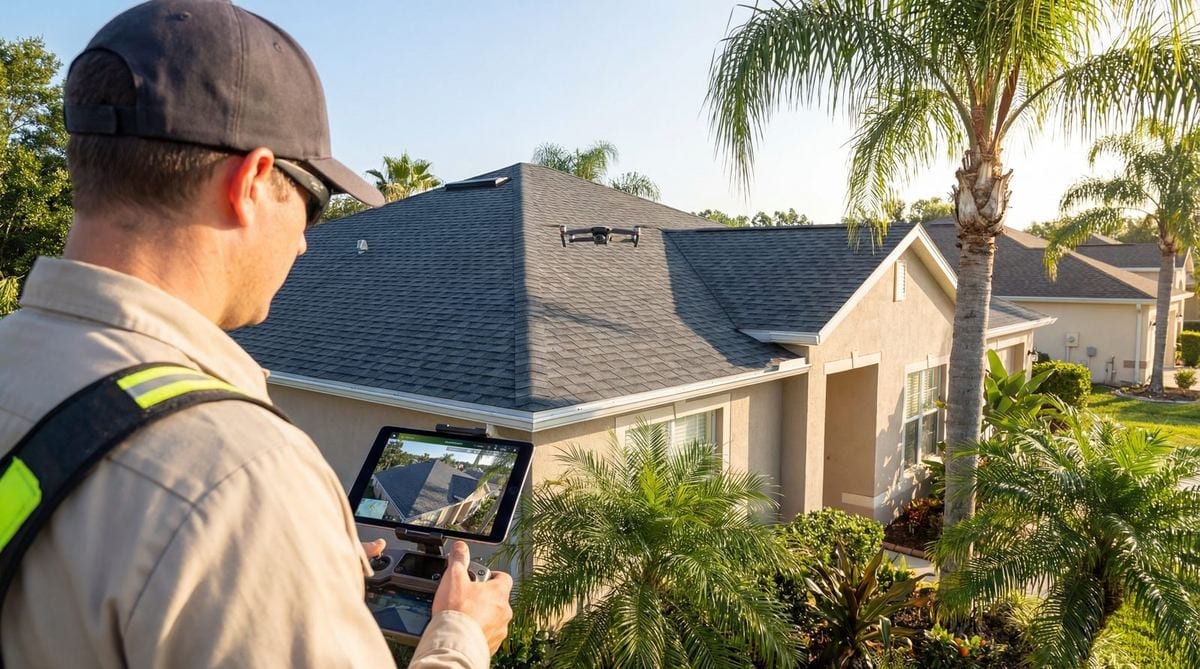
Every tile quote starts in the attic, because tile is heavy and a quote on a roof that cannot carry it is fiction.
Eagle’s technical specifications list its Florida Malibu at 770 pounds per 100 square feet, its Florida Capistrano at 880 lbs and the standard Bel Air at 970. Its Eaglelite line drops that to 550 to 720. Clay runs heavier: Ludowici’s Straight Barrel Mission 16 is 1,190 pounds per square.
Approximate weight per 100 square feet of Eagle's Florida-profile Capistrano concrete tile. On a 24-square roof that is over ten tons riding on your trusses before the first rain.
Source: Eagle Roofing Products, technical specificationsA home built for tile usually carries it fine; Eagle’s own guidance is that most quality residential structures require little or no additional bracing and that an engineer can confirm it. The house that needs the check is the shingle home going to tile.
A 1980s ranch in Carrollwood framed with 2x4 trusses was never engineered for ten tons on the top chord. The engineer’s letter comes first, and if the trusses need sistering or bracing, that is a line on the quote before the tile is. National guides put structural reinforcement at $1,000 to $10,000 when it is required; we price it per roof after the inspection and never guess.
No engineer’s letter, no tile. We would rather lose a conversion than put ten tons on trusses nobody checked.
Want a tile number for your roof, not a typical one?
Run the calculator for a fast range, then let us measure the roof, check the trusses from the attic and price the profile, the attachment and the permit so the estimate holds on job day.
What Actually Drives a Florida Tile Quote Up or Down

Two concrete tile quotes on the same Westchase street can land at opposite ends of our range. Here is what moves the number.
Profile. Barrel and S-tile go down fastest; flat and slate-look profiles pack tighter, weigh more (Bel Air at 970 against Capistrano at 880) and take more cutting at hips and valleys. Two-piece clay barrel is slowest of all: Ludowici’s Straight Barrel Mission 16 takes 192 pieces per square against about 88 for a one-piece concrete S-tile.
Matching. Blends get discontinued, and Eagle says flat out that it will not manufacture a custom blend. If your HOA wants the new roof to match a flat profile nobody has made since 2005, you are shopping salvage yards or replacing more than you planned.
Attachment: foam or mechanical. Tile goes down mechanically, with screws or nails and clips into the deck, or adhesive-set, with a two-part polyurethane foam paddy under each tile. Underlayments are built for both; Polyglass’s Polystick TU Plus is designed for adhesive foam or mechanically fastened tile and approved to 265 degrees F. Foam is faster and puts fewer holes in the membrane; mechanical is easier to inspect. Either way the method goes on the permit.
The underlayment system. The Florida Building Commission referenced the 7th Edition FRSA-TRI Florida High Wind Concrete and Clay Tile Installation Manual as a standard alongside the 8th Edition code, and that edition dropped the prescriptive two-ply hot-mop references from its underlayment flowchart in favor of systems that pass the tests behind a Florida Product Approval. It took effect December 31, 2023, and the 2026 Ninth Edition keeps sending tile work outside the High-Velocity Hurricane Zone, which includes all of Tampa Bay, back to that manual for flashing and drip edge. So the underlayment line on your quote should name a product with a Florida Product Approval behind it, not “30-pound felt and cap sheet.”
Battens and counter-battens. On steeper roofs and most mechanically fastened jobs the tile hangs on horizontal battens; on the better jobs a counter-batten runs up-slope beneath them so water drains instead of pooling behind each batten. More wood, more labor, better roof. Battens are no shortcut around fastening: the state’s strictest protocols, the High-Velocity Hurricane Zone tests, require tile fasteners to go not less than 3/4 inch into the roof sheathing even when battens are used.
Hip and ridge. FRSA notes that hip and ridge failures were an issue after Hurricane Ian in 2022, and it is the detail we see skipped most. Per the manual, a metal hip member is set in plastic cement and fastened 6 inches on center on each side of the flange with 1-1/4 inch ring shank nails, and every starter tile is secured at both ends. “Mortar and go” is cheaper for a reason.
Coastal exposure. Within sight of the bay, on Davis Islands, in Apollo Beach, in Palmetto, salt eats plain fasteners, so our crews spec stainless or coated fasteners and clips and heavier edge metal. It costs more. It is also the only version of that roof we will put our license number on.
Full Replacement or Lift-and-Relay? Our Decision Rule
Here is the question that decides whether you spend $24,000 or a good deal less: does your tile go back on?
A lift-and-relay strips the underlayment to the deck and relays your own tile over a new tested system; a full replacement sends the old tile to the dumpster and buys new. Our rule is three questions, in order. Is the tile sound enough to survive the lift? Is the profile still made, or salvageable, so a broken tile does not become a mismatch on the street-facing slope? And does the math still hold after we lift the first few squares and count the breakage? Two yeses and a reasonable breakage count, relay. A no on either of the first two, replace.
Relay pricing is per roof, because it depends on how much tile survives. The relay in depth, salvage options and code history included, is in the tile roof underlayment replacement cost guide; the repair-versus-reroof line for a few slipped or cracked tiles is in tile roof repair and replacement in Florida.
On a relay, the tile you did not buy is the only line that gets cheaper. The permit, the underlayment, the flashings and the labor cost the same or more.
Tile vs Metal vs Class 4 Shingle Over 30 Years

Tile loses on day one and wins by year 30. Run our installed ranges and expected-life figures across a 30-year ownership, at today’s prices, and the order flips.
| System | Installed, per sq ft | Expected life | Roofs in 30 years | 30-year cost, per sq ft | On 2,400 sq ft |
|---|---|---|---|---|---|
| Architectural shingle | $4.50 to $5.50 | 20 to 25 years | Two | $9.00 to $11.00 | $21,600 to $26,400 |
| Class 4 impact-rated shingle | $5.50 to $7.50 | 25 to 30 years | One or two | $5.50 to $15.00 | $13,200 to $36,000 |
| Standing seam metal | $10.00 to $16.00 | 50 to 70 years | One | $10.00 to $16.00 | $24,000 to $38,400 |
| Concrete tile | $10.00 to $16.00 | 50 to 75 years | One, plus a relay | $10.00 to $16.00, plus relay | $24,000 to $38,400, plus relay |
| Clay tile | $12.00 to $22.00 | 75 to 100+ years | One, plus a relay | $12.00 to $22.00, plus relay | $28,800 to $52,800, plus relay |
Our ranges only: no inflation, no financing cost, no insurance difference, relay priced per roof. Read it as a shape, not a forecast.
The shape says three things. Shingle is the cheapest roof and the most expensive 30 years, because you buy it twice. Standing seam and concrete tile cost the same per square foot in our ranges, so the choice is weight, look and what your HOA allows, not money; our metal roof cost in Florida post makes the metal case. And clay is the only roof on the table with a real shot at outliving the mortgage and the next two owners.
How each system actually ages here is in how long a roof lasts in Florida; the shingle side of the math is in shingle roof replacement cost in Florida.
Permits, Timeline, the 15-Year Rule and Paying for It
Permit fees. Small line, real line. Our published reroof permit ranges:
| County | Reroof permit fee range |
|---|---|
| Hillsborough | $150 to $350 |
| Pinellas | $175 to $400 |
| Pasco | $125 to $300 |
| Manatee | $150 to $350 |
| Sarasota | $175 to $425 |
| Polk | $125 to $275 |
The permit brings the inspector. In Hillsborough a reroof gets a progress check, where inspectors confirm roof attachments are strengthened and corrected per the Florida Building Code, then a final; on tile, that progress check sees the underlayment and the attachment before the tile hides them for decades. Each county’s process is in the Tampa Bay roof permit guide by county.
Timeline. On a tile job our crews typically schedule three to five working days on the roof, plus material lead time, because tile is ordered by profile and blend, not pulled off a shelf in Brandon. The permit-to-final calendar is longer than the on-roof time, so plan in weeks; the full calendar is in how long roof replacement takes in Florida.
The 15-year rule, which favors tile. Florida’s s. 627.7011 says an insurer “may not refuse to issue or refuse to renew a homeowner’s policy insuring a residential structure with a roof that is less than 15 years old solely because of the age of the roof.” For a roof at least 15 years old, the insurer must allow a roof inspection by an authorized inspector at the homeowner’s expense before requiring replacement, and it may not refuse solely because of roof age if that inspection indicates the roof has 5 years or more of useful life remaining. Roof age runs from “the last date on which 100 percent of the roof’s surface area was built or replaced.”
Citizens goes further for hard roofs. Its bulletin sets the roof age at which remaining-life documentation kicks in at 50 years for tile, slate, concrete or metal roofs, against 25 years for shingle, with a five-year minimum of remaining life and coverage extended for a period of up to five years.
What your carrier does with a new tile roof is the carrier’s decision. We document the roof, we do not handle claims and we never promise an outcome. The window is explained in the Florida 15-year roof rule post; if a storm is why you are reading this, start with does homeowners insurance cover roof replacement in Florida.
Paying for it. A $24,000 to $52,800 roof is not a casual check. We offer credit-based home improvement loans through GreenSky and a PACE option through Ygrene repaid on your property tax bill, both subject to approval; the roof financing page lays out each one, and your own lender’s home equity line may beat both. The full menu is in roof financing options for 2026.
What to Do Before You Sign a Tile Quote
Get the per-square number in writing. Get the profile and blend by name, the underlayment by product, the attachment method, the decking rate and the permit line. Compare bids on those six things, not the totals.
If the house has never carried tile, get the engineer’s letter before you get attached to a color. And if the tile up there is sound, ask every bidder whether it goes back on; the answer tells you whether they are pricing your roof or just a roof.
We inspect for free, respond the same week, and every tile estimate from Integrity Roofing of Florida is itemized down to the hip detail. Start with the roof replacement page or book below.
Get a tile roof estimate you can actually compare
Free inspection, same-week response, and an itemized estimate with the per-square price, the profile, the attachment method and the permit line on it. Financing options included.
Frequently Asked Questions
How much does a tile roof replacement cost in Florida per square?+
In our published installed ranges, concrete tile runs $1,000 to $1,600 per roofing square (100 square feet) and clay tile $1,200 to $2,200 per square. A 2,000 square foot home usually carries about 2,400 square feet of roof, or 24 squares, which puts concrete at $24,000 to $38,400 and clay at $28,800 to $52,800 before decking repairs and the county permit. Profile, attachment method and roof complexity decide where inside the band a specific roof lands.
Is concrete or clay tile cheaper to replace in Florida?+
Concrete. Our installed range for concrete tile is $10.00 to $16.00 per square foot against $12.00 to $22.00 for clay. You buy the gap back in years: our expected-life figures are 50 to 75 years for concrete and 75 to 100 plus for clay, and both carry 150 plus mph wind ratings. On most Tampa Bay homes concrete is the right call. Clay earns its price on a house you plan to hand down or on an HOA street that requires it.
Can I replace just the underlayment under my tile instead of the whole roof?+
Often, yes. That is a lift-and-relay, and it is the right call when the tile is sound, breakage on the lift stays low and the profile is still made or salvageable. Brittle or discontinued tile with no match means a full replacement is the honest answer. The code treats a relay as a reroof, with a permit and inspections. Our tile roof underlayment replacement guide covers the salvage options and how we price it.
Does my house need structural work before a tile roof goes on?+
It depends on what the trusses were built for. Eagle lists its Florida-profile Capistrano concrete tile at 880 pounds per square, so a 24-square roof is over ten tons, and clay barrel tile is heavier still. A home built for tile usually needs little or no added bracing. A shingle home being converted to tile needs an engineer's sign-off first, and national guides put reinforcement at $1,000 to $10,000 when it is required. We price it after the inspection, never before.
How long does a tile roof replacement take in Tampa Bay?+
On a tile job our crews typically schedule three to five working days on the roof, plus material lead time, since tile is ordered by profile and blend rather than pulled off a shelf. A big two-story with a dozen hips and valleys runs longer, and rain days do not count. The permit-to-final calendar is longer than the on-roof time, so plan in weeks. The underlayment day in the middle is the one we photograph most.
Will a new tile roof help with my Florida homeowners insurance?+
The rules favor tile. Florida law says an insurer may not refuse to issue or renew a homeowner's policy on a roof less than 15 years old solely because of its age, and Citizens does not require roof-life documentation until 50 years for tile, slate, concrete and metal roofs, against 25 years for shingle. What your own carrier charges is its decision, so ask your agent before you choose a material. We document the roof; we do not handle claims or promise outcomes.
Want a real estimate on your Tampa Bay roof?
Enter your address and we'll pull satellite measurements instantly.
Mike Shepherd · Co-Owner, Integrity Roofing of Florida
Mike Shepherd co-owns Integrity Roofing of Florida with Bettina Savorelli. The company is a Florida-licensed roofing contractor (license CCC1334243), a TAMKO Pro Gold and GAF-certified installer, and a BBB A+ rated business serving Hillsborough, Pinellas, Pasco, Polk, Manatee and Sarasota counties. His crews install and repair tile, metal and shingle roofs across Tampa Bay and document storm damage for homeowners' insurance claims. Every article is written from the field, not from a content desk.
Ready to talk to a real human?
No phone tree, no pressure. Owner-level attention on every call.