How Long Does It Take to Replace a Roof in Florida? Day-by-Day, With Permits and Inspections
How long does it take to replace a roof in Florida? A Tampa Bay roofer's day-by-day, from permit to final inspection, plus metal and tile timing.
- Our crews are on a single-story shingle roof one to two working days. Metal runs two to four, tile three to five plus the wait for material.
- The timeline that matters is permit to passed final inspection. Your county or city re-roof permit comes with inspections on both ends, and that calendar sets the pace.
- We will not open a roof with a named storm inside five days, and we never leave a deck bare overnight. From June through November the dry-in is the whole game.
- You do not have to stay home, but move the cars, cover the attic and take pictures off the walls before the first shingle comes off.
How long does it take to replace a roof? On a single-story shingle home in Tampa Bay, our crews spend one to two working days on the roof. Metal runs two to four, tile three to five plus material lead time. The full calendar, permit to passed final inspection, runs longer, and that is the number to plan around.
In Tampa Bay the calendar matters more than the crew days. We schedule every tear-off around a hurricane season that runs June 1 to November 30 and around summer afternoons that rain on a timer.
How Long Does It Take to Replace a Roof? Start at the Permit
Ask a roofer how long the job takes and you will hear “a day, maybe two.” True, and useless. That is the on-roof time, and your contract does not start on the roof.
It starts the day we apply for the permit. Every roof replacement in Tampa Bay is permitted work, and the county or city building department has to review and issue it before a single shingle comes off. We cannot rush that queue, and nobody can, whatever the door-knocker tells you. The county or city queue is the one number we will not guess at; we tell you the current wait the day you sign.
The roof goes on in a day or two. The paperwork is what fills the calendar.
Permit fees are a small line. On our jobs they run about $150 to $350 in Hillsborough, $175 to $400 in Pinellas, $125 to $300 in Pasco, $125 to $275 in Polk, $150 to $350 in Manatee and $175 to $425 in Sarasota, and every instant estimate we give includes the right county. The county-by-county detail is in our Tampa Bay roof permit guide.
While the building department works, so do we. Material gets ordered, the dumpster gets scheduled, and if you live behind a gate in Westchase or FishHawk Ranch, the HOA color request goes in now, not after the shingles are on.
Day by Day on a Single-Story Shingle Re-Roof

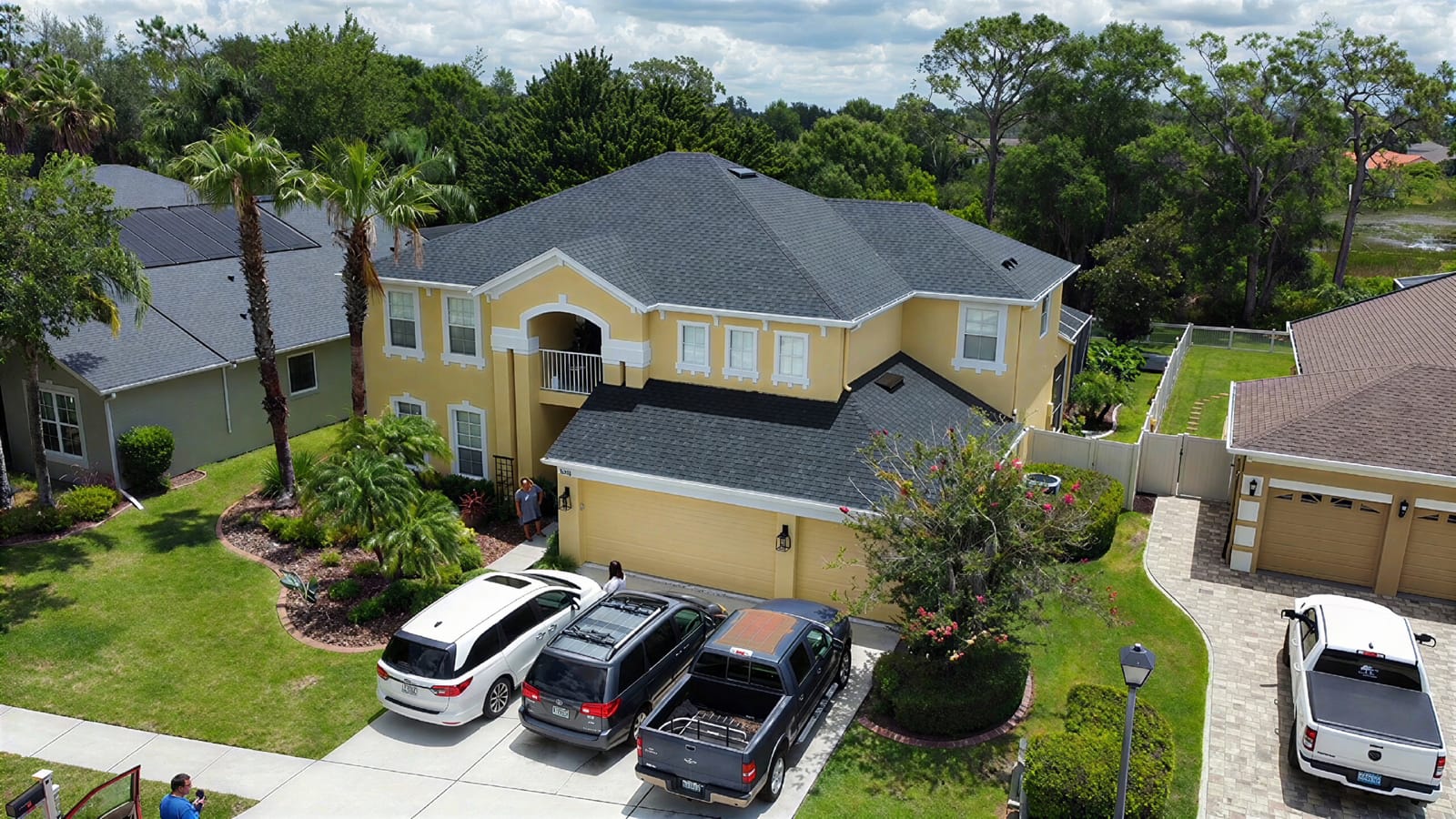
Take a 1970s block ranch in Brandon or Carrollwood: single story, hip roof, about 2,000 square feet of living space, which usually means about 2,400 square feet of roof once you add pitch, overhangs and waste.
The day before. Shingles arrive on a boom truck, the dumpster lands in the driveway, and our foreman photographs the driveway, the pool cage and the landscaping before anything moves.
Day one, first light. Tear-off, down to the deck: old shingles, old felt, old drip edge. We never lay a second layer over the first.
Day one, mid-morning. The deck check, the step a cheap roofer skips. We walk every sheet of plywood, or every plank on the old Seminole Heights bungalows, and mark anything soft or rotten. Bad wood comes out, then we re-nail the whole deck with 8d ring-shank nails on the current pattern.
Day one, afternoon. Dry-in: drip edge, then underlayment across the whole deck, sealed at every edge, boot and valley. On our jobs that is peel-and-stick, or a synthetic with peel-and-stick in the valleys and at the eaves. The house is now watertight without a single shingle on it, and we do not go home before it is.
Day one or day two. Install: starter strip, shingles at six nails each, step flashing at the walls, pipe boots, ridge vent, caps. On a simple hip roof, the crew that dried in by lunch is often capping the ridge by late afternoon, while three dormers and a chimney make it a second day.
The last hour. Magnets across the yard and driveway, dumpster pulled, foreman walks the finished roof with you.
The whole calendar in one table:
| Phase | What happens | Who is on site | What moves this date | You will hear from us when |
|---|---|---|---|---|
| Contract and permit | Measure, scope, order material, apply for the permit | Our estimator | The county or city queue; we tell you the current wait the day you sign | The permit is issued and the material is confirmed |
| Tear-off, deck check, dry-in | Old roof off, deck inspected and re-nailed, drip edge and underlayment on | Full crew with the foreman | Weather, and rot found on day one | The foreman calls on any change order, and again when the roof is dried in |
| Progress check | Inspector sees the dry-in, or we upload the mitigation statement in Hillsborough | County inspector, or nobody for an upload | Inspector availability; the upload removes that wait | The check passes or the statement is accepted |
| Install | Shingles, flashing, ridge vent, caps. Day one or two on shingle, two to four days metal, three to five tile | Full crew | Material lead time on metal and tile, afternoon storms | The ridge is capped and the yard is swept |
| Final inspection | County or city inspector signs off, permit closes | Inspector; we meet them | We request it the day the roof is finished; the county or city assigns the slot | The permit is closed and the paperwork is yours |
Metal and Tile Take Longer, and Tile Waits on the Truck

Same house, different material, different week.
On our jobs, exposed-fastener metal (5V crimp, R-panel) and standing seam both run two to four working days on the roof. Tear-off and dry-in look the same as shingle. The install does not: panels are cut to length for each run, every penetration gets a fitted boot, and standing seam gets its seams closed by machine. Nobody should be racing a standing seam roof.
Tile runs three to five days once the material is on site, and “once” is the catch. Concrete and clay tile is ordered by the pallet in a specific profile and color, a flat Bel Air, an S-tile, a barrel, and it arrives when the plant ships it.
So we pick the color and profile at signing, because that is what starts the clock. We do not schedule the tear-off until the pallets are confirmed. And we plan a loading day, when the boom truck sets the tile on the dried-in roof before the install starts.
Same permit, same inspections, same hurricane rules. What changes is how long the roof is in progress, which is why the dry-in on a tile job is built to sit exposed for days, not hours.
Our roof installation page covers what each material asks of the structure, and our new roof cost guide for Tampa puts installed prices next to the days.
Florida Adds Three Steps Most Timelines Leave Out
A national blog post gives you tear-off, install, done. Florida adds three steps that never make those timelines.
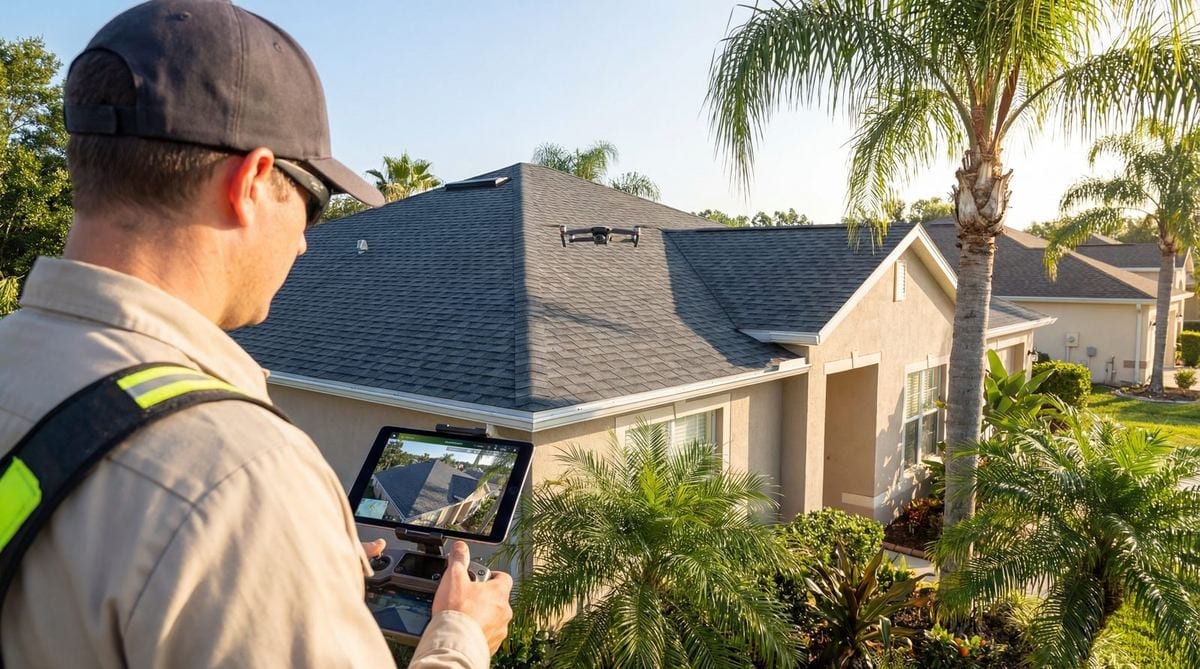
The two inspections. In Hillsborough, a re-roofing permit requires Progress Check inspections and then a Final inspection. We call for the progress check at dry-in, so the inspector can still see the deck nailing and the underlayment. Hillsborough also lets the contractor upload a Roof Mitigation Verification Statement through HillsGovHub in lieu of the progress check.
We use the upload on most shingle jobs: photograph the deck, the fasteners and the dry-in, submit it, and keep the crew moving instead of holding a bare roof open for an inspector window. The final is the county’s sign-off, and the permit does not close until it passes.
The 25% rule. If you called us about a repair and ended up talking about a replacement, this is usually why. The Florida Building Code says:
“Not more than 25 percent of the total roof area or roof section of any existing building or structure shall be repaired, replaced or recovered in any 12-month period unless the roof covering on the entire existing roof system or roof section is replaced or recovered to conform to the requirements of this code.” FRSA, Florida Roofing magazine
SB 4-D, effective May 27, 2022, added an exception for roofs built or replaced under the 2007 Florida Building Code or later: on those, only the repaired, replaced or recovered portion has to meet the code in effect. The catch is the date. The 2007 code did not take effect until March 1, 2009, so a roof installed in 2006 gets no exception.
Hillsborough’s inspection page puts it plainly: on a roof installed before the 2007 code, replacing more than 25% of a section in any 12-month period means the entire roof system or section must conform to the current codes. Our explainer on Florida’s 25% roof rule covers how the area gets measured.
The roof-to-wall retrofit. This one surprises people with $300,000-plus homes in South Tampa and on Davis Islands when the permit puts the house in the higher wind zone, which we check for you. Under Florida Statutes section 553.844, a site-built single-family home in the higher wind zones with an insured value or just value of $300,000 or more must, during a roof replacement, incorporate the code’s roof-to-wall connection retrofit techniques, capped so the work “does not exceed approximately 15 percent of the cost of reroofing,” with priority at the gable ends. The same statute lists “strengthening or correcting roof-decking attachments and fasteners during reroofing” and a secondary water barrier among its mitigation techniques, the legal names for the re-nail and the peel-and-stick from day one.
On the calendar, the retrofit means someone evaluates the truss-to-wall connections at the gable ends or corners while the eave is open on day one, and adds straps or clips where they fit under that 15 percent cap. Some houses are already strapped. Some are toe-nailed, and on those, install slides into day two.
One more date for anyone signing this winter. The 2026 Florida Building Code, Ninth Edition, takes effect December 31, 2026. Its steep-slope change puts the drip edge over the underlayment, with an ASTM D1970 self-adhering underlayment allowed over a primed drip edge flange. That reorders two steps on day one. It does not add a day, and if your job straddles New Year’s, ask which edition the permit was issued under.
Want the calendar for your roof, not a guess?
Tell us the address and the material you are leaning toward. We will map the permit, the crew days and the inspections for your county or city before you sign anything.
We Will Not Open a Roof With a Named Storm Inside Five Days
The Atlantic hurricane season runs June 1 to November 30, and the climatological peak lands on Sept 10, with most of the activity between mid-August and mid-October. That is also when the phone rings most, so we work straight through it. With rules.
the climatological peak of hurricane season; we plan tear-offs around it
Source: NOAA National Hurricane Center, Tropical Cyclone ClimatologyRule one: no tear-off with a named storm inside five days of Tampa Bay. Not a tropical storm, not a Category 1 “that will probably turn.” If the cone brushes our coast inside five days, your tear-off moves. We would rather eat a week of schedule than explain a bare deck to you in tropical-storm-force wind.
Rule two: nothing opens that cannot be dried in the same day. A dried-in deck, covered, sealed and edged, sits through an ordinary thunderstorm without a shingle on it. A bare deck does not, so on a big house we tear off half, dry in half, then touch the other side.
A bare deck at three in the afternoon in August is not a schedule. It is a leak.
Rule three: respect the afternoon. From June through September the sea breeze collides over the Bay and the storms build after lunch. Our summer crews start at first light and watch radar, and when the cell builds over Plant City and heads west we stop, dry in, cover the stacks and finish tomorrow. That is a weather delay, and it is why a one-day shingle job is quoted as one to two days.
Our hurricane season roofing prep guide covers what can and cannot be done inside the season.
Should You Stay Home? An Hour on Day One, Then Leave
Our answer: be there for the first hour of day one, be reachable all day, and otherwise go live your life.
The first hour is the walkthrough. The foreman confirms the color and the scope, photographs the property, and shows you where the dumpster and the boom truck will sit. The reachable part covers the deck check, because if we find rot we call you before we cut, with photos and the per-sheet price from your contract.
After that, the house is loud. Tear-off sounds like a hailstorm on the ceiling, and nail guns run until the ridge is capped. Work from a coffee shop on Dale Mabry that day. If your dog hates fireworks, this is a fireworks day, and kids and pets stay out of the yard until the magnet sweep is done.
Before the crew arrives:
- Move the cars off the driveway and the street in front. The dumpster and the delivery truck need the driveway, and shingles come off the roof in that direction.
- Cover what is in the attic. Tear-off shakes dust and old granules through every gap in the decking.
- Take pictures and mirrors off the walls on the roof side. The vibration from a re-nail is real.
- Tell the HOA and the neighbors. A note on the door next door buys a lot of goodwill on tear-off day.
- Satellite dish. We pull it and re-mount the bracket. Your provider has to re-aim it, so book that call now.
- Solar panels. They come off before tear-off and go back on after the final, a separate crew and separate days on both ends. Our roof replacement with solar panels page explains the sequence.
What “Included” Means, and What Becomes a Change Order

“What is included in a roof replacement?” really means “what will I be asked to pay for on day one that was not in the quote?” Fair question. On our contracts, a full roof replacement in Tampa includes:
- Tear-off to the deck and haul-away, dumpster included
- The decking inspection and the code re-nail
- Underlayment across the whole roof, with self-adhering membrane at least in the valleys and at the eaves
- New drip edge on every eave and rake
- New flashing: step flashing at the walls, pipe boots, counterflashing at the chimney where needed
- Starter strip, shingles, ridge cap and a ridge vent where the roof takes one
- The permit, the inspections and the closed permit
- The magnet sweep and the walkthrough
Not included, because nobody can see it until the old roof is off:
- Rotted decking. Priced per sheet in the contract before we start, so the number on day one is not a negotiation. We photograph every sheet we replace.
- Fascia and rafter tails. When the old drip edge comes off, the wood behind it sometimes crumbles.
- Structural surprises. A cracked truss, a sistered rafter from a 1990s repair nobody permitted. Rare. Not free.
- Upgrades you choose on the day. Extra vents, a skylight swap, a cricket behind the chimney.
If a quote is one number with no mention of decking, ask what a sheet costs before you sign. Then read our new roof cost guide for Tampa for what the whole job runs by material, and get an instant estimate with your county’s permit fee built in.
Book the Week, Not Just the Day
The honest answer to “how long does it take to replace a roof” has two halves. One to two days on the roof for shingle, two to four for metal, three to five for tile once the material lands. Then the permit calendar on both ends, plus a hurricane forecast that can move the whole thing.
Plan for the week, not the day. Ask any roofer you interview for both numbers, the on-roof days and the permit-to-final calendar. If they only have one, they have not done enough jobs in Florida.
Integrity Roofing of Florida crews work Hillsborough, Pinellas, Pasco, Polk, Manatee and Sarasota with same-week response and free inspections. Schedule a free inspection and we will lay out your calendar before you sign anything.
Ready to put your re-roof on the calendar?
Get an instant estimate with your county's permit fee built in, or book a free on-site inspection and we will walk the whole timeline with you, permit to final.
Frequently Asked Questions
How long does it take to replace a roof in Florida?+
On a single-story shingle home our crews are usually on the roof one to two working days. Metal takes two to four, and tile three to five plus the wait for material to arrive. The full timeline, from the permit application to the passed final inspection, is longer, because the county or city permit queue and inspection windows sit on either side of the crew days. Ask any roofer for both numbers before you sign.
Should I stay home during a roof replacement?+
You do not have to, but we like the homeowner there for the first hour of day one and reachable by phone after that. That is when we walk the property, confirm the color, and call you if the deck shows rot that needs a change order. Tear-off is loud, so if you work from home, plan to work somewhere else that day. Dogs and cats do better away from the house too.
What inspections does a Florida re-roof need?+
A permitted re-roof in Hillsborough County gets a progress check after the dry-in and a final inspection when the roof is finished. Hillsborough also accepts a Roof Mitigation Verification Statement uploaded through HillsGovHub in place of the progress check, which is what we do on most shingle jobs so the crew does not wait on an inspector window. Other counties and cities have their own inspection sequence, and we schedule whatever your building department requires as part of the job.
Can roofers work in the rain?+
No. Wet decking and wet underlayment do not hold shingles the way the manufacturer intends, and a crew on a wet roof is a fall risk. We start at first light in summer, watch radar, and stop when the afternoon storm builds. If the day ends early, the dry-in keeps the house watertight overnight and we pick up the next morning. Weather slides the schedule. It should never cost you a ceiling.
Why would a roof repair turn into a full replacement?+
Florida's 25 percent rule says that if more than a quarter of a roof section is repaired, replaced or recovered in any 12-month period, the whole section has to be brought up to current code. SB 4-D carved out an exception for roofs built or replaced under the 2007 Florida Building Code or later, which in practice means roofs installed from March 2009 on. On an older roof, a large repair often becomes a replacement.
How long does a metal or tile roof take compared with shingle?+
On our jobs, exposed-fastener and standing seam metal usually take two to four working days on the roof, and tile takes three to five once the material is on site. Tile adds lead time up front because the concrete or clay has to be ordered and delivered, and metal panels are cut to length for the house. Both use the same permit and inspection sequence as shingle, so the paperwork side of the calendar does not change much.
What is a dry-in and why does it matter during hurricane season?+
The dry-in is the stage where the old roof is gone, the deck has been inspected and re-nailed, and the underlayment and drip edge are on, so the house is watertight before the shingles, metal or tile go down. We treat it as the finish line for day one. From June through November we will not tear off a section we cannot dry in the same day, and we will not open a roof at all with a named storm inside five days.
Want a real estimate on your Tampa Bay roof?
Enter your address and we'll pull satellite measurements instantly.
Mike Shepherd · Co-Owner, Integrity Roofing of Florida
Mike Shepherd co-owns Integrity Roofing of Florida with Bettina Savorelli. The company is a Florida-licensed roofing contractor (license CCC1334243), a TAMKO Pro Gold and GAF-certified installer, and a BBB A+ rated business serving Hillsborough, Pinellas, Pasco, Polk, Manatee and Sarasota counties. His crews install and repair tile, metal and shingle roofs across Tampa Bay and document storm damage for homeowners' insurance claims. Every article is written from the field, not from a content desk.
Ready to talk to a real human?
No phone tree, no pressure. Owner-level attention on every call.