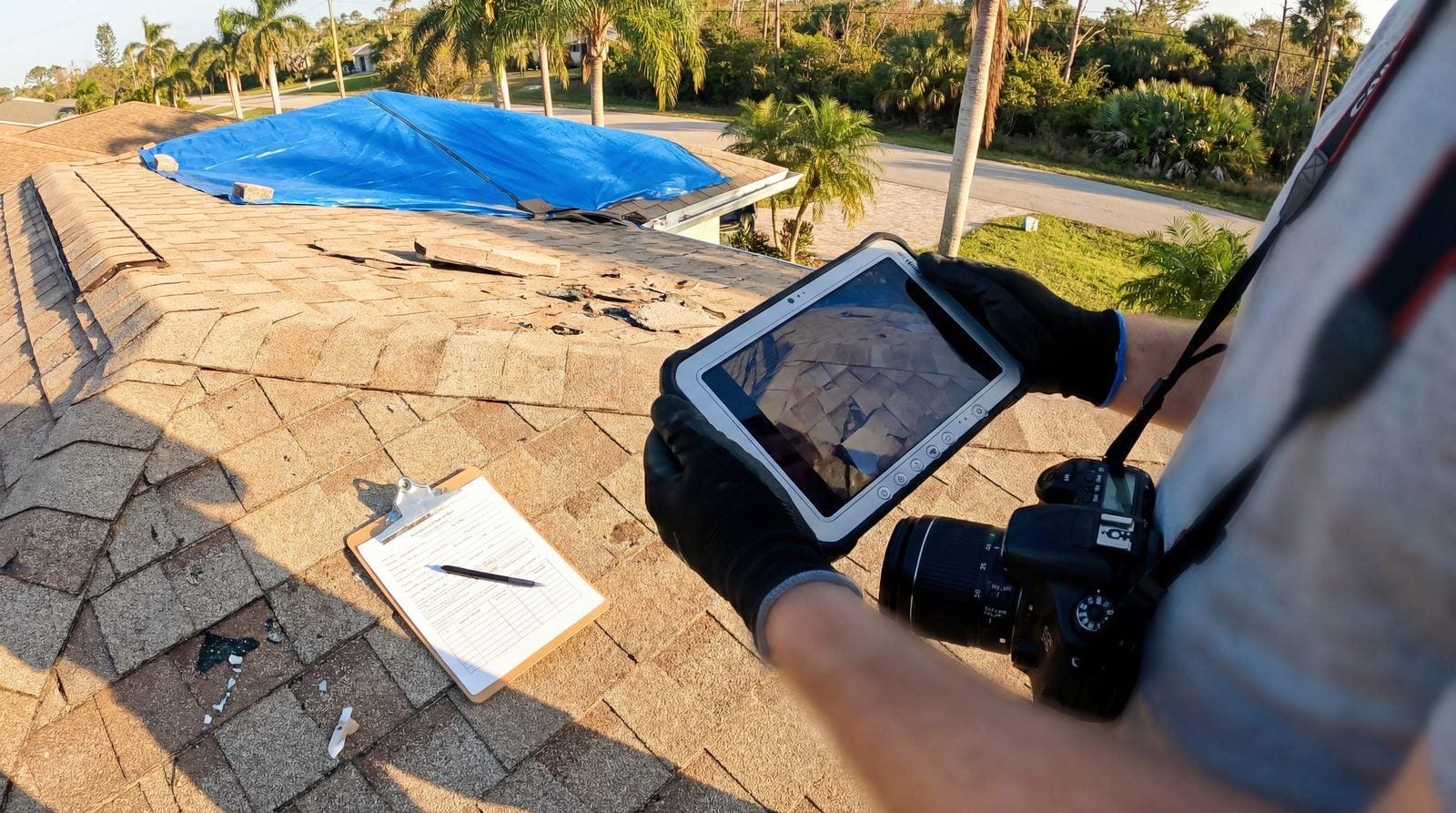
Florida's 25% Roof Rule Explained: What Homeowners & Adjusters Need to Know
Florida's 25% rule requires a full roof replacement when 25% or more is damaged. Triggering insurance payouts most homeowners don't know they're entitled to. Here's how it works and how to use it.
- Florida's 25% rule comes from Florida Building Code section 706.1.1. Not from your insurance policy. It applies to every roof in Florida regardless of carrier.
- If 25% or more of the roof is damaged or needs repair, the entire roof must be brought up to current code. Which usually means full replacement.
- The rule was modified in 2022 by SB 4-D. Roofs built or replaced to the 2007 FBC or later can be repaired without full replacement in some cases.
- Using the 25% rule correctly can turn a partial repair into a fully covered replacement when storm damage qualifies.
If you’ve spent any time on a Florida roof estimate call, you’ve heard someone mention “the 25% rule.” It’s one of the most misunderstood regulations in Florida homeownership. And one of the most financially important. Used correctly, it can turn a $4,000 patch-up into a $28,000 covered replacement. Misunderstood, it leaves homeowners paying out of pocket for work their insurance should have handled.
This is a plain-English explanation of the rule, who it applies to, how the 2022 changes affected it, and how to use it in an active insurance claim. If you’re in Tampa Bay and dealing with storm and hurricane roof damage, read this before you sign anything.
What the 25% Rule Actually Says
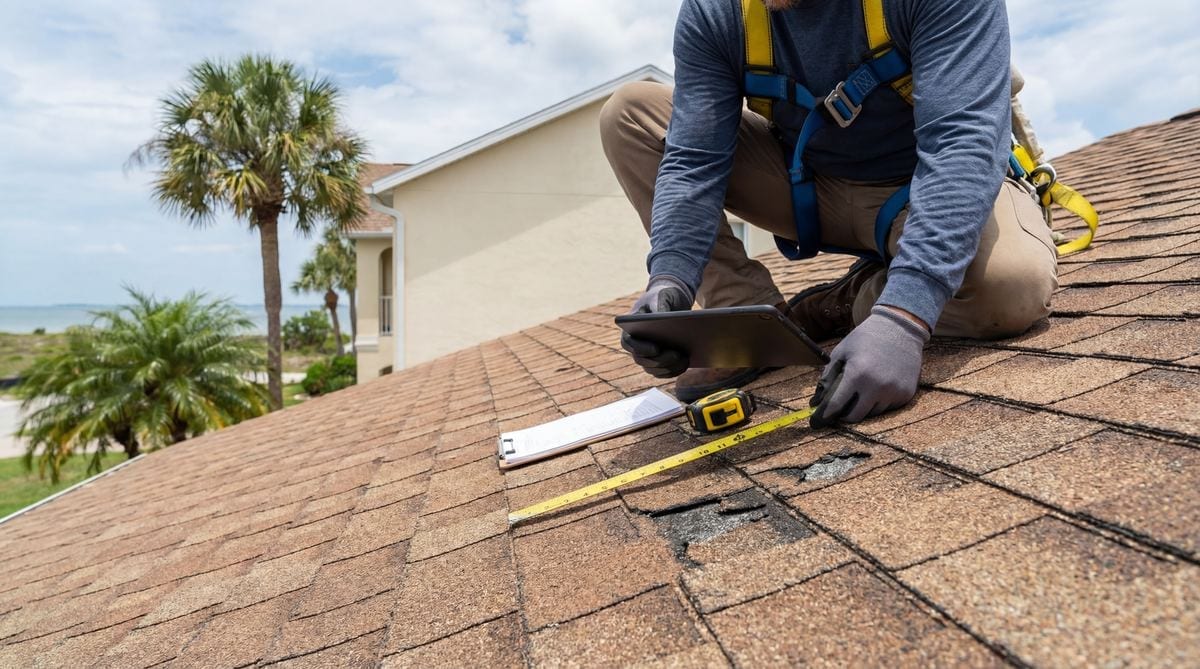
The rule comes from the Florida Building Code. Specifically section 706.1.1, “Roofing Repairs.” The relevant language, simplified:
“Not more than 25 percent of the total roof area or roof section of any existing building or structure shall be repaired, replaced, or recovered in any 12-month period unless the entire existing roofing system or roof section is replaced to conform to requirements of this code.”
In plain English: if you need to repair, replace, or recover more than 25% of your roof, you can’t just patch the damaged section. Florida code requires the entire roof be brought up to the current Florida Building Code. For most homes, that means a full roof replacement.
This is a building safety requirement. It’s designed to keep Florida roofs uniform, code-compliant, and hurricane-resistant across the whole surface. You can’t have a 2007-code patchwork next to 2023-code new install on the same roof.
Why This Matters for Insurance
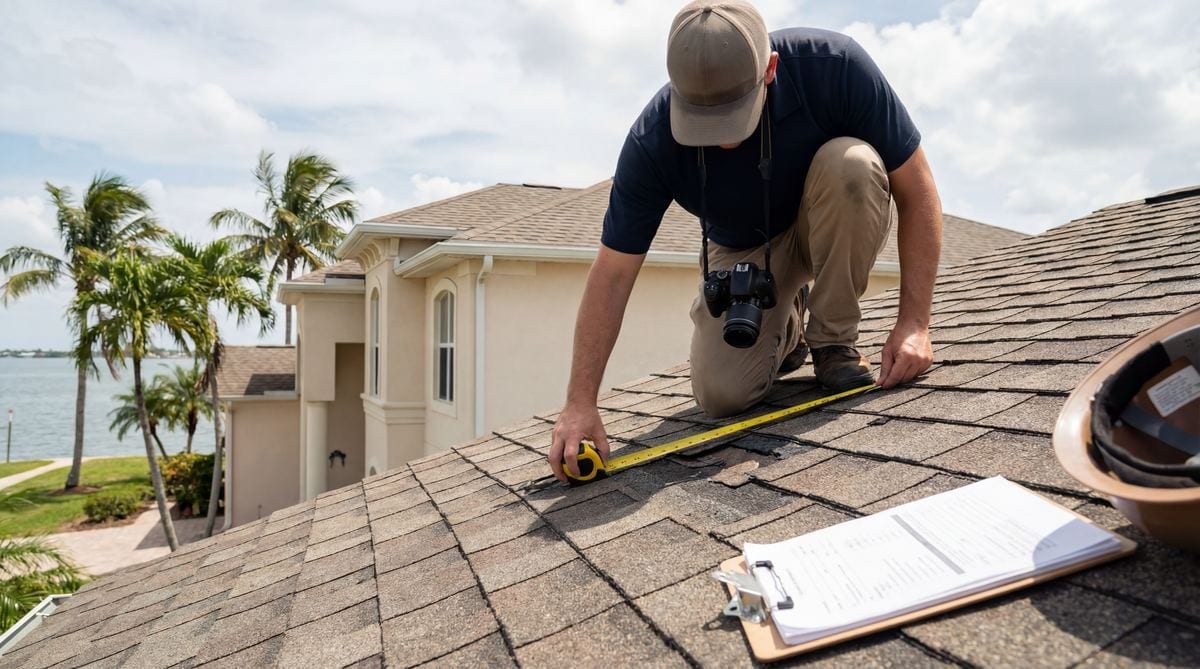
Here’s where it gets financially interesting. Florida homeowner policies typically cover sudden, storm-caused damage. Hurricanes, wind, hail, falling trees. When an adjuster comes out to assess damage and writes the scope, they’ll often identify damage on one or two slopes and propose a “partial repair.”
A partial repair would violate Florida code if it exceeds 25% of the total roof area. Which means:
- The partial repair is not legally installable. A licensed roofer can’t pull a permit for a code-non-compliant repair
- Under the rule, the entire roof must be replaced to current code
- If the damage was storm-caused and covered, your insurance should cover the full replacement (minus deductible)
The number of Florida homeowners who’ve accepted a partial-repair settlement when they were legally entitled to a full replacement is staggering. This is why having a licensed roofer providing insurance documentation support on-site during the adjuster visit changes outcomes so dramatically.
How to Measure 25%
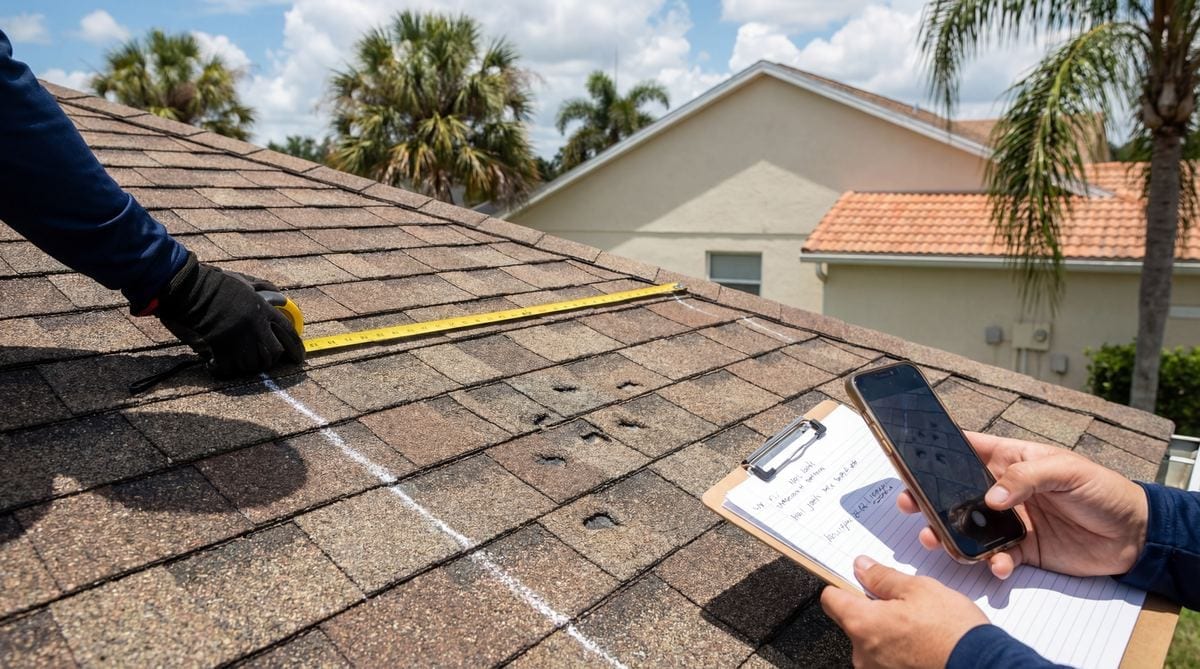
The 25% threshold is calculated against the total roof area, not the building’s footprint. If your home has a 2,400 square foot roof and damage covers 700 square feet, that’s 29%. Triggering the rule.
What counts as “damaged”:
- Shingles, tiles, or metal panels that are missing, displaced, cracked, or broken
- Areas where the underlayment has failed and must be replaced
- Decking that needs replacement due to rot, water damage, or structural failure
- Flashings that have pulled away and cannot be re-secured without removing surrounding roofing
What typically doesn’t count:
- Normal wear and tear on an aged roof
- Staining or algae (cosmetic)
- Granule loss on shingles (reduces lifespan but isn’t “damage” in the code sense)
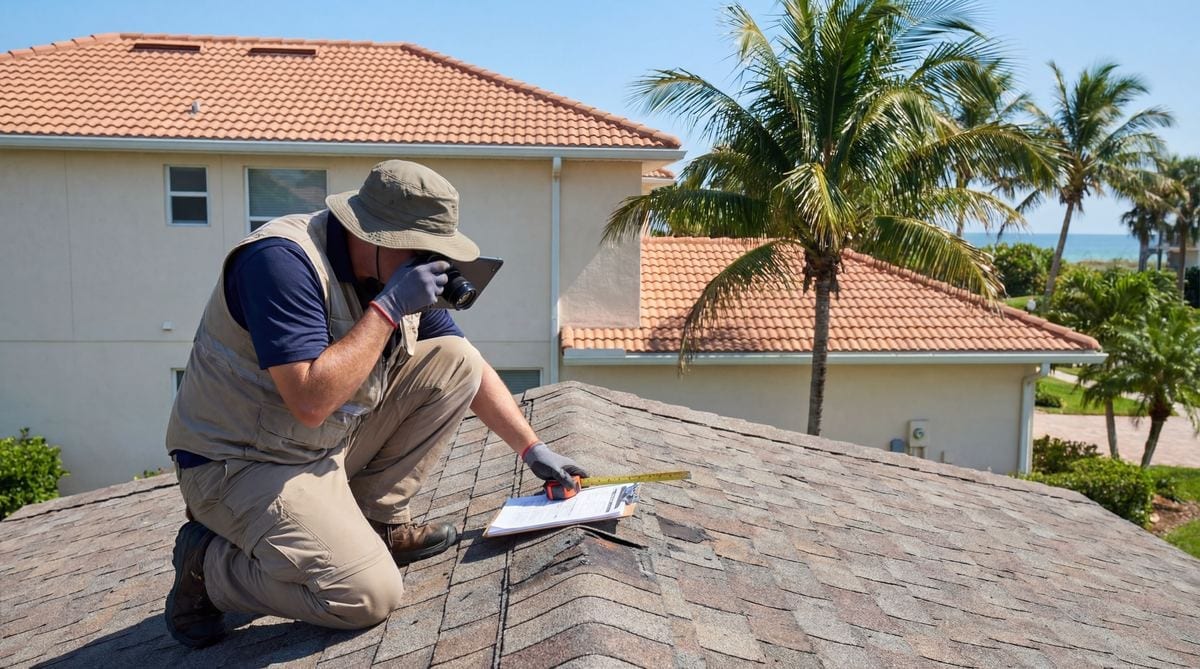
The honest measurement requires a professional assessment. A licensed roofer uses drone photos, attic inspection, and slope-by-slope visual documentation to establish the damaged area as a percentage of the total.
Threshold of damaged roof area that triggers the Florida Building Code full-replacement requirement (Section 706.1.1).
Source: Florida Building Code, 8th Edition. 2023The 2022 Changes (SB 4-D)
In 2022, Florida Senate Bill 4-D modified how the 25% rule applies to newer roofs. This change matters because it created a big exception that many homeowners and insurance adjusters still don’t fully understand.
The new rule (simplified):
- For roofs built or replaced after March 1, 2009 (to the 2007 FBC or later), the 25% rule is relaxed
- These roofs can be repaired to a larger extent without triggering full replacement. But only if the repair brings the damaged area up to current code
- For roofs built before 2007 FBC adoption, the original 25% rule still applies in its full form
Why the change? The 2022 legislation was part of a broader Florida insurance reform push. Carriers were paying out on full-replacement claims when newer, already-hurricane-rated roofs had limited damage that could be legitimately repaired without compromising the structure. SB 4-D narrowed the rule for post-2009 roofs to reduce those claims.
What this means in practice:
If your roof was installed before 2009, the original 25% rule applies. Damage exceeding 25% = full replacement required by code = typically full insurance coverage.
If your roof was installed or replaced after 2009 to the 2007 FBC or later, the rule is more nuanced. A qualified inspection can determine whether repair is allowed or replacement is required.
How to Use This in an Insurance Claim
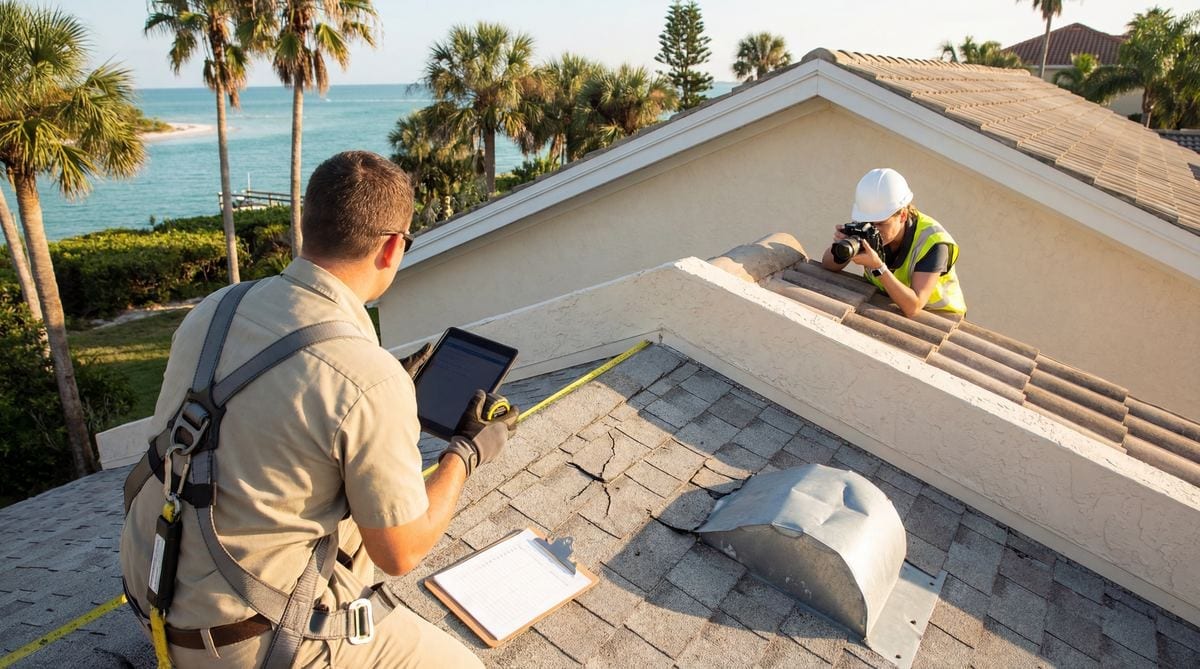
Here’s the step-by-step for homeowners working an active claim:
1. Establish When the Roof Was Installed
Pull the permit history for your home. Your county property appraiser’s website usually has this, or you can contact the county permitting office directly. You need to know the roof install date and which Florida Building Code version it was built to.
2. Get a Qualified Damage Assessment
A licensed Florida roofing contractor documents:
- Total roof area (square footage)
- Damaged area (square footage, by slope)
- Percentage damaged against total
- Photos and drone imagery of every affected section
- Attic interior condition confirming or ruling out widespread impact
3. Determine Which Rule Applies
Based on roof install date:
- Pre-2009: original 25% rule. If damage exceeds 25%, full replacement required
- Post-2009: modified rule. Repair may be allowed depending on damage type and extent
4. Write the Scope Accordingly
Your roofer writes a scope of work that:
- Cites Florida Building Code section 706.1.1 directly
- Documents the damaged percentage with photo evidence
- Specifies the minimum work required to bring the roof to code
- References the original install date and FBC version
5. Present at the Adjuster Meeting
This is where everything comes together. When your roofer is on-site with the adjuster, the scope gets reviewed collaboratively. If the percentage damaged exceeds 25% (pre-2009 roof) or the specific damage type requires full replacement under the modified rule, it’s spelled out in the inspection report.
Adjusters respond to documented code requirements. A licensed roofer citing FBC 706.1.1 with photo proof and a measured percentage is harder to lowball than a homeowner saying “I think we need a new roof.”
Working a Florida insurance claim?
We meet your adjuster on-site, document every finding with drone imagery, and write FBC-compliant scope reports you can submit to your carrier. Thorough documentation gives Tampa Bay homeowners their strongest footing.
What the 25% Rule Doesn’t Do
Important caveats. The 25% rule isn’t a magic wand:
It doesn’t force insurance to pay for non-covered damage. If the damage is wear-and-tear (not storm-caused), the 25% rule still applies structurally, but insurance won’t cover it because it’s not a covered loss. You’d pay out of pocket for the required full replacement.
It doesn’t apply to cosmetic issues. Fading, algae, granule loss. These aren’t “damaged” in the code sense. They don’t trigger the rule.
It doesn’t circumvent your policy’s exclusions. If your policy excludes certain damage types (e.g., some carriers exclude cosmetic hail damage), the 25% rule doesn’t force coverage. It only determines what repair is legal once coverage is established.
It doesn’t apply if the damage is under 25%. For a pre-2009 roof with 15% damage, a partial repair is legally allowed and insurance will typically cover only that partial scope.
Common Adjuster Pushback (And How to Respond)
Some Florida adjusters. Especially for out-of-state carriers. Will push back on 25% rule claims. Common arguments:
“We’ll pay for the repair, and you can decide if you want to do more.” This ignores the fact that a partial repair exceeding 25% is code-non-compliant. A licensed Florida roofer can’t legally install it. Response: cite FBC 706.1.1 and provide the licensed-contractor letter stating the partial repair can’t be permitted.
“Your damage is only 20%. We won’t cover a full replacement.” Fine if accurate. But confirm the measurement. Drone photography and slope-by-slope documentation often shows higher percentages than a ground-level visual estimate.
“The 2022 law changed the 25% rule.” True. But only for post-2009 roofs. If yours is older, the original rule fully applies. Response: “My roof was installed in [year], which predates the 2009 modification. The original 25% rule applies in its pre-SB 4-D form.”
“You can’t use the 25% rule to force coverage.” Also true. But it’s not being used to force coverage. It’s being used to require the full scope of work when damage is already covered. Response: “We’ve established coverage under the policy. The rule only determines the legal scope of the covered repair.”
The Bottom Line
Florida’s 25% roof rule is one of the most powerful tools in a homeowner’s insurance-claim toolkit. But only if you know how to use it, and only if your claim has legitimate storm damage. If you’re working through a claim where the adjuster is proposing a partial repair that seems to cover a big chunk of your roof, get a licensed Tampa roofer out for a free inspection before you sign anything. The difference between a partial repair and a full replacement might be the 25% rule.
If you’re in Tampa Bay and want us on-site when your adjuster visits. Or just want an honest assessment of whether your damage qualifies. Call (813) 388-9190. Free inspection. No pressure. We tell you honestly whether you have a claim worth pursuing or whether it’s not worth the fight.
Want a real estimate on your Tampa Bay roof?
Enter your address and we'll pull satellite measurements instantly.
The Integrity Roofing Team · Florida Roofing Experts · Licensed & Insured
The Integrity Roofing of Florida team installs and repairs tile, metal, and shingle roofs across Tampa Bay. With decades of combined field experience, we've helped more than a thousand homeowners navigate hurricane-damage claims, material choices, and the gap between what's marketed and what actually holds up in Florida conditions. Every post is written by working Florida roofers. Not content writers.
Ready to talk to a real human?
No phone tree, no pressure. Owner-level attention on every call.