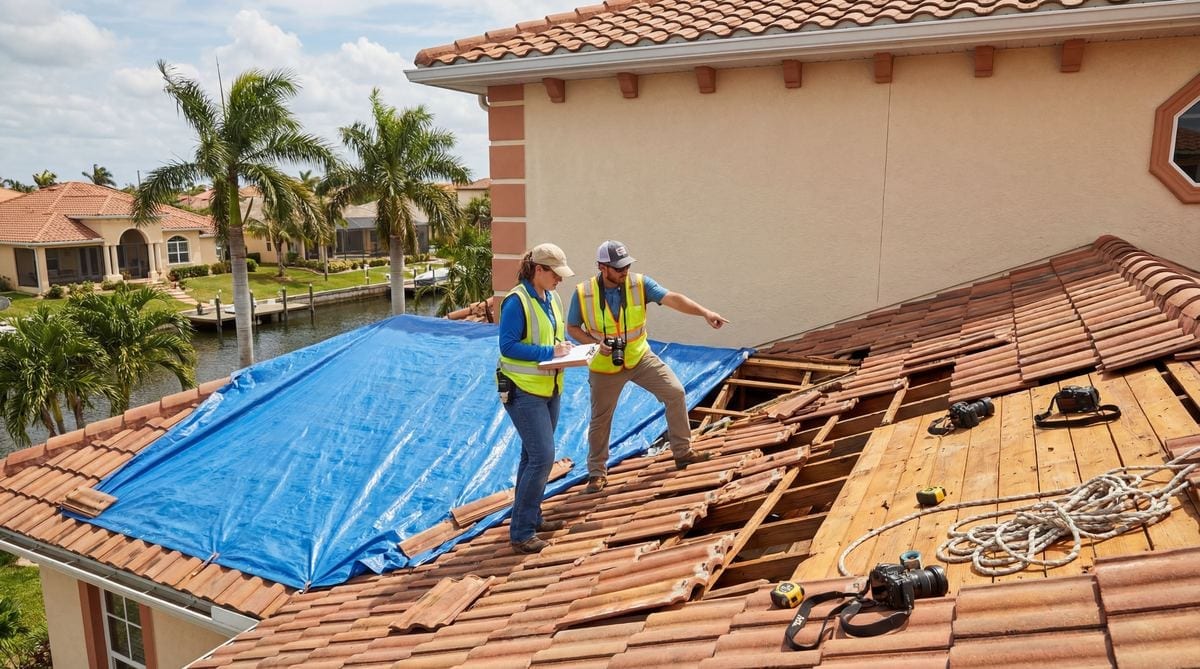
Florida Roof Insurance Claim: Step-by-Step Homeowner Guide
A Tampa Bay roofer's step-by-step guide to filing a Florida roof insurance claim. Timing, documentation, adjuster coordination, and how to give your claim its strongest footing.
- Florida roof insurance claims are approved at higher rates when the licensed contractor meets the adjuster on-site and packages the full scope of work.
- Damage meeting the 25% rule triggers full replacement under Florida Building Code, not just repair.
- Time-stamped photo documentation from the first 24-48 hours after a storm is the single biggest factor in first-submission claim approvals.
- Florida insurance carriers are increasingly strict on roofs over 15-20 years old. Age-related wear is not covered regardless of when damage appears.
Florida roof insurance claims are not inherently complicated, but they are heavily paperwork-driven and time-sensitive. The difference between a claim approved on first submission and one denied or reduced is almost always documentation quality in the first 48 hours and professional coordination with the insurance adjuster. After working through hundreds of Tampa Bay claims with homeowners and insurance carriers over the last several years, our team has identified the documentation practices that consistently give homeowners the strongest footing with their carrier.
This article walks through the Florida roof insurance claim process step by step, with Tampa Bay-specific context on carrier behavior, the 25% rule implications, and how to document the damage so your claim is as strong as it can be.
Step 1: Emergency Stabilization (First 24 Hours)
If your Tampa Bay roof has active storm damage producing interior leaks, emergency response comes before insurance paperwork. Call a licensed Tampa Bay roofer for emergency roof repair and tarping within 24-48 hours of the storm passing. Tarping:
- Prevents secondary water damage (doubles the claim value if not stopped)
- Is typically covered by homeowner insurance as “mitigation expense” separate from the structural repair
- Preserves the damage evidence without letting it worsen
Per the Florida Department of Financial Services, mitigation expenses are specifically called out as covered under most Florida homeowner policies. Tarping cost ($150-$350 for a standard residential roof) is almost always reimbursed separately from the main claim.
Do not climb on your own roof to tarp or inspect. Post-storm roof access is dangerous, and homeowner injuries are one of the most common claims our emergency response services see. Licensed roofers with proper safety equipment handle the tarping and documentation.
Step 2: Photo Documentation (First 48 Hours)
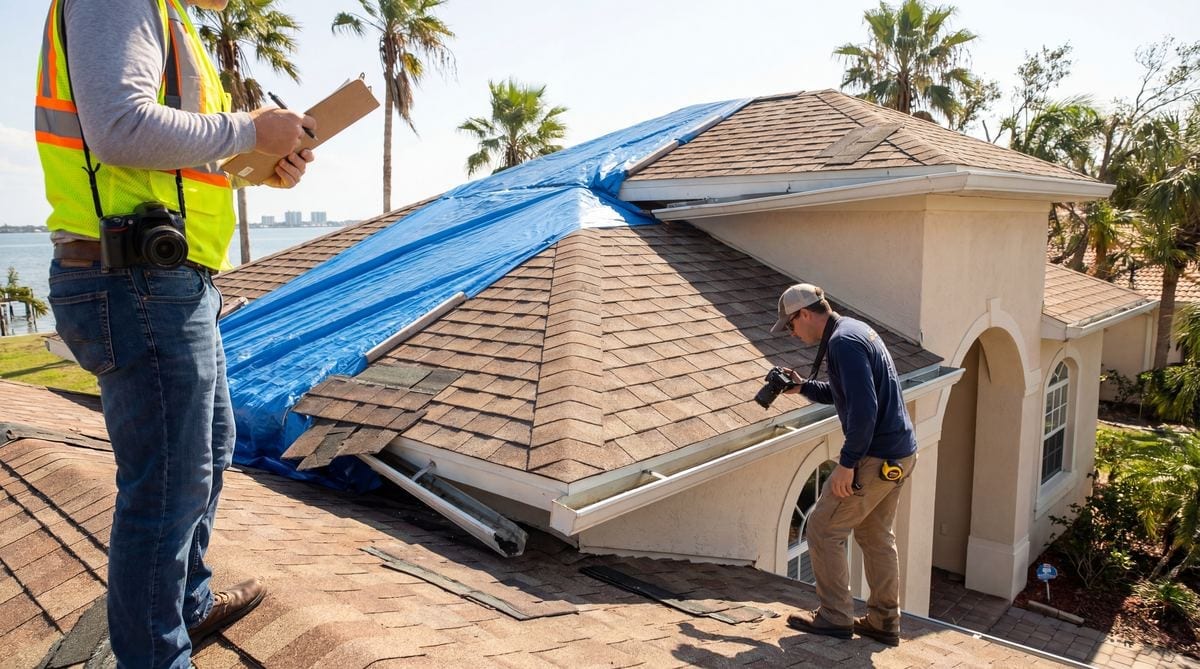
The single biggest factor in claim approval is quality of photo documentation from the first 48 hours. What to document:
- Exterior photos from the ground: Walk the entire perimeter of your home. Photograph every side of the house, every visible roof area, fence lines, yard debris, and anything else that might support the damage narrative.
- Interior photos: Water stains on ceilings, wet insulation in attic, damaged furniture or personal property, floor damage.
- Yard photos: Shingles, tiles, debris, fallen tree limbs, anything that came off the roof.
- Surrounding area: Storm damage to neighbors’ properties, downed trees, standing water depth.
Every photo automatically includes date/time metadata on modern smartphones, which is exactly what insurance adjusters want. Take 30-60 photos minimum. You can always discard extras. You cannot go back and re-document.
If the roof itself is safely accessible (post-storm only after conditions fully stabilize, with a trained professional), licensed roofer photos from on the roof become the primary damage evidence. Our Tampa Bay emergency response includes full roof photo documentation as standard.
Step 3: Open the Claim with Your Carrier (Within 72 Hours)
Call your insurance carrier within 72 hours of the damage event. Most Florida homeowner policies require “prompt notice” of claims, and the Florida Department of Financial Services specifically recommends reporting within days, not weeks.
What to provide during the initial claim call:
- Policy number (have it ready before calling)
- Date and time of the damage event
- Brief damage description (do not overstate or understate)
- Photos you have already taken
- Your preferred contact method for the adjuster
Do not commit to a specific repair scope or contractor during the initial claim call. You want to open the claim and get a claim number assigned. Scope discussions happen later with the licensed contractor and adjuster together.
Do not sign with any contractor before the adjuster arrives. This is the single most common Tampa Bay homeowner mistake. Signing with a contractor before the adjuster’s on-site inspection complicates the claim process and often gives the contractor leverage to inflate scope or work around the homeowner. Legitimate contractors are comfortable waiting for the adjuster meeting.
Filing a Tampa Bay roof insurance claim?
We meet your adjuster on-site, package the full scope of work, and coordinate the claim through approval. No upfront contractor commitment required.
Step 4: Contractor Inspection and Scope Package (Days 3-7)
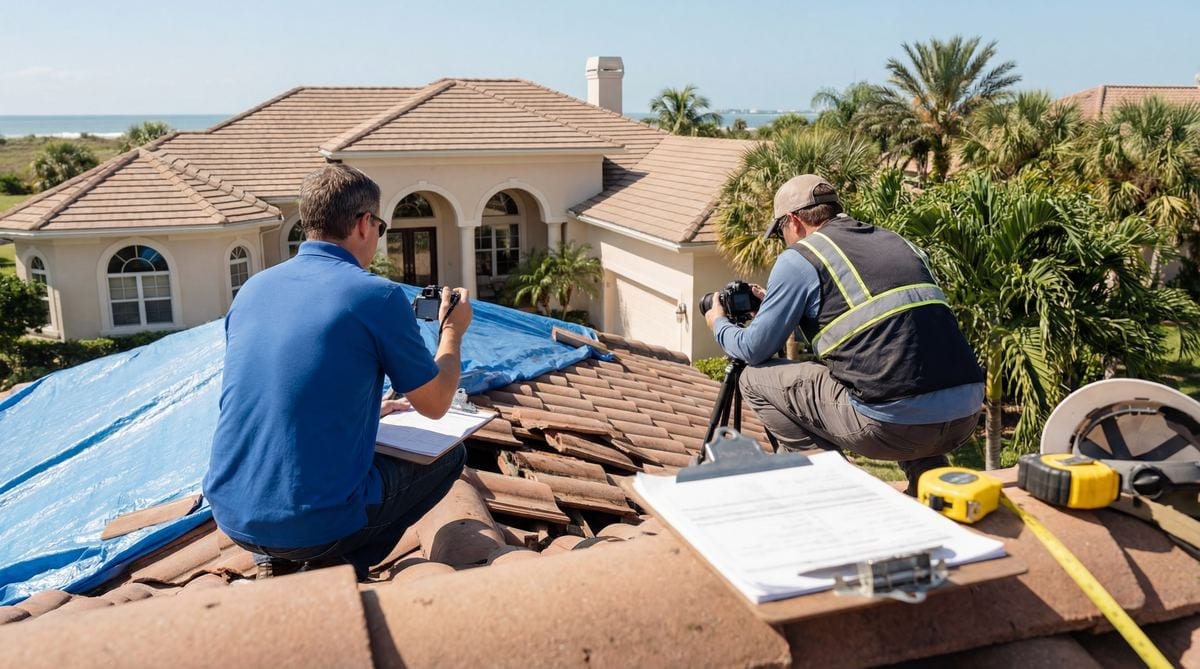
After the claim is opened, schedule a free inspection with a licensed Tampa Bay roofer. The contractor’s role at this stage:
- Comprehensive roof inspection with full photo documentation
- Written scope of work detailing the necessary repair or replacement
- Material specification matching code requirements for your Tampa Bay address
- Pricing aligned with industry-standard Florida insurance claim allowances
- 25% rule evaluation if damage is widespread
The 25% rule matters enormously. Florida Building Code requires that if more than 25% of a roof is damaged within any 12-month period, the entire roof must be replaced, not just repaired. For Tampa Bay roofs with significant storm and hurricane damage, meeting the 25% threshold converts a repair claim into a full replacement claim, which is typically 10x larger in dollar value.
Our inspection reports specifically document damage against the 25% rule when applicable. Accurate documentation at this stage dramatically improves claim outcomes.
Step 5: Adjuster On-Site Meeting (Days 5-14)
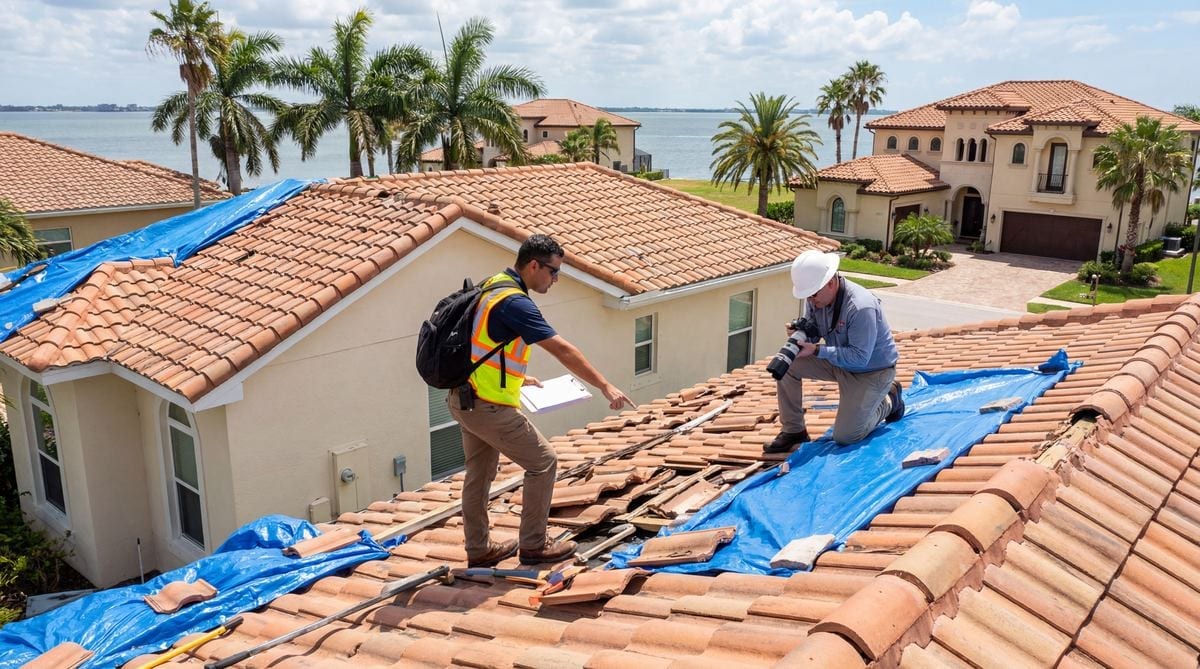
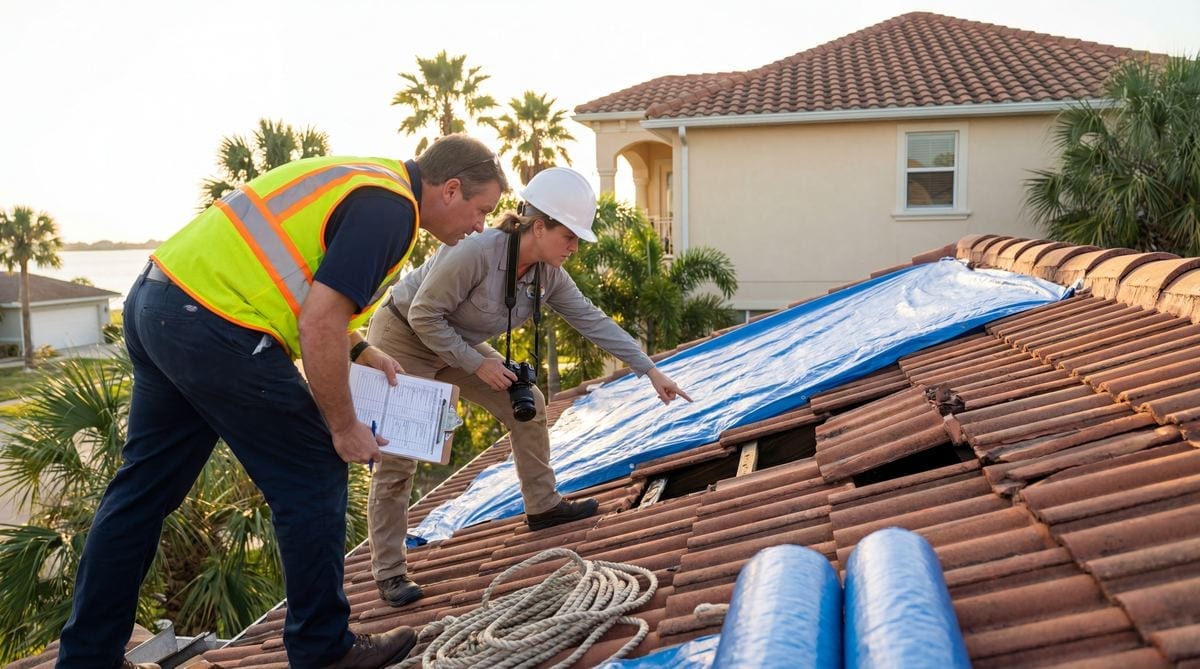
Your insurance carrier dispatches an adjuster to inspect the damage on-site. This meeting is the most important step in the claim process, and having your licensed contractor present changes outcomes significantly.
What the adjuster does:
- Walks the roof (sometimes with your contractor present)
- Takes their own photos
- Writes their own damage assessment
- Estimates repair or replacement scope
- Issues claim coverage decision and payment offer
Having the contractor present accomplishes several things: they can point out damage the adjuster might miss, they can discuss scope professionally in terms the adjuster accepts, they can push back on incomplete assessments, and they can verify the adjuster’s measurements. This is the heart of our insurance documentation support: meeting the adjuster on-site and packaging the full scope of work for the carrier.
Adjusters are not adversaries, but they are working from the carrier’s perspective and may genuinely miss damage without pointed guidance. Contractors who routinely handle Florida insurance claims know the specific damage types adjusters overlook.
Step 6: Claim Decision and Negotiation (Days 14-30)
The carrier issues a claim coverage decision. Typical outcomes:
Full approval of contractor scope: Best case. Contractor quote and adjuster agree on scope and pricing. Payment is issued and work is scheduled.
Partial approval with scope reduction: Common. Adjuster agrees some damage exists but disputes specific line items or total scope. Your contractor disputes the reduction with documentation, adjuster re-evaluates.
Supplement required: Work begins, additional damage is found during tear-off (common), and a supplemental claim is filed for the additional scope.
Denial: Rare but possible, typically for age-related wear or causes not covered by the policy. Can be appealed with additional documentation or escalated to Florida Department of Financial Services review.
Most Tampa Bay claims we handle with proper documentation and contractor advocacy settle at full scope within 30-45 days of initial damage.
Step 7: Work Completion and Final Payment (Days 30-60)
After scope agreement, the licensed contractor completes the work on the schedule agreed with the homeowner. Florida insurance typically pays in two installments:
- Initial payment based on the adjuster’s damage assessment, minus your hurricane deductible (2-5% of dwelling coverage, separate from the standard deductible)
- Final payment upon completion documentation (photos of completed work, invoices, final inspection approval)
Your deductible is your responsibility. Some out-of-state operators offer to “donate your deductible” or absorb it into the contract. This is illegal in Florida under insurance fraud statutes. Legitimate Tampa Bay contractors never offer deductible kickbacks.
Tampa Bay Carrier-Specific Notes
Citizens Property Insurance (state-backed carrier of last resort): Strict documentation requirements, historically slower claim processing, but generally fair on properly-documented claims. Growing share of Tampa Bay policies in recent years.
Heritage Property & Casualty: Mid-market Florida carrier with reasonable claim handling. Tampa Bay exposure concentrated in Hillsborough and Pinellas.
American Integrity: Tampa Bay-focused carrier with local claim handling. Reasonable claim approval rates with proper documentation.
Out-of-state specialty carriers: Multiple short-tail carriers entering and exiting Florida have created uneven experience. Some offer aggressive pricing with less predictable claim outcomes.
The 25% Rule in Claim Context
Florida Building Code’s 25% rule is both a code requirement and a claim leverage point. If your licensed contractor documents that more than 25% of the roof is damaged:
- The contractor must quote full replacement (cannot legally quote spot repair only)
- The insurance carrier must cover full replacement under the policy
- Attempts by the carrier to approve only partial repair conflict with code
Tampa Bay contractors who understand the 25% rule and document against it consistently get better claim outcomes than contractors who quote only spot repair. Our Tampa Bay inspection protocol includes specific 25% documentation when applicable.
Ready to file a Tampa Bay roof insurance claim or get a second opinion on a claim in progress? Schedule a free inspection, and we will document the damage, coordinate with your adjuster, and package the full scope for approval. Or start with our roof cost calculator for replacement pricing baseline.
Want a real estimate on your Tampa Bay roof?
Enter your address and we'll pull satellite measurements instantly.
The Integrity Roofing Team · Florida Roofing Experts. Licensed & Insured
The Integrity Roofing of Florida team installs and repairs tile, metal, and shingle roofs across Tampa Bay. With decades of combined field experience, we've helped more than a thousand homeowners navigate hurricane-damage claims, material choices, and the gap between what's marketed and what actually holds up in Florida conditions. Every post is written by working Florida roofers. Not content writers.
Ready to talk to a real human?
No phone tree, no pressure. Owner-level attention on every call.