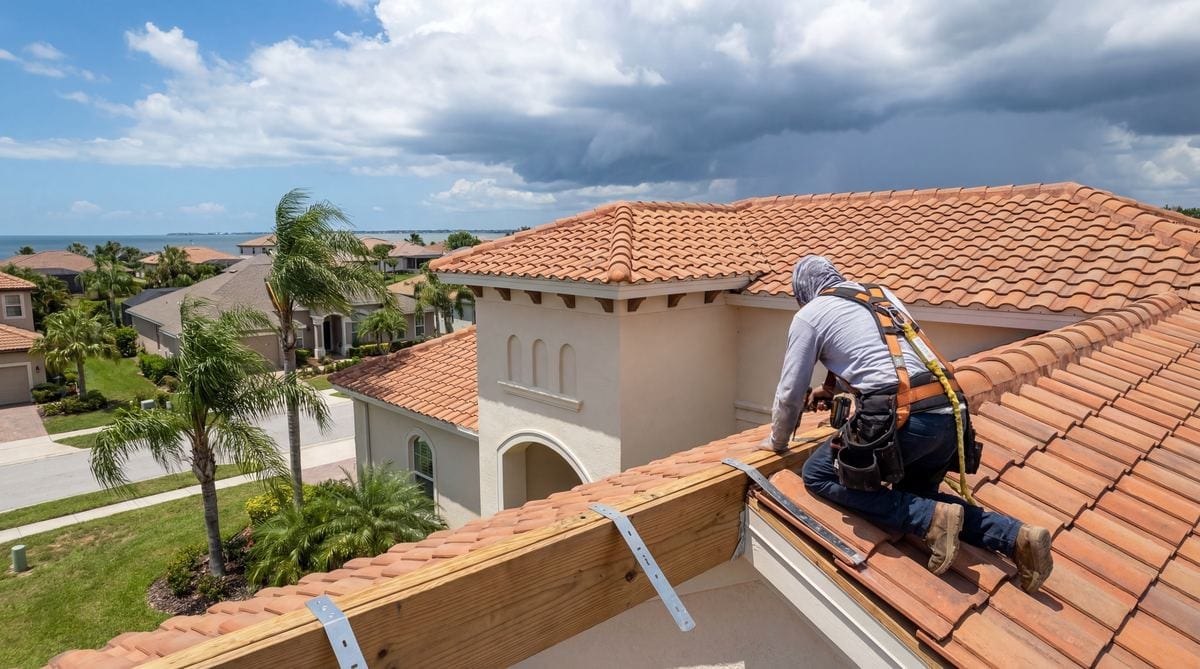
Tampa Bay Hurricane Season Roofing Prep: The Complete Homeowner Guide
A field-tested Tampa Bay hurricane prep guide. What to do in the 6 months before season, the 2 weeks before a storm, and the 48 hours of landfall. Plus the documentation that saves insurance claims.
- Tampa Bay's hurricane season runs June 1 through November 30, with peak activity August through October. The 2023-2024 seasons produced three direct-strike or near-miss events.
- The most valuable prep happens months before a storm. Pre-season inspection, roof repair, and insurance documentation are the levers that actually work.
- Emergency roof tarping across Tampa Bay typically runs $150-$350 and is usually covered by homeowner insurance as mitigation expense when a claim is filed.
- Photo documentation from the first 24-48 hours post-storm is the single biggest factor in first-submission insurance claim approvals.
Tampa Bay hurricane season is not a surprise. The season runs June 1 through November 30 every year, peak activity falls in August, September, and October, and NOAA issues seasonal forecasts months in advance. Despite that predictability, most Tampa Bay homeowners wait until a specific storm is on the seven-day cone before thinking about roof preparation. By then, it is usually too late to do the things that matter most.
This guide walks through Tampa Bay hurricane roof prep on three timelines: the 6 months before season when you can actually strengthen the roof, the 2 weeks before a specific storm when tactical prep starts, and the 48 hours after landfall when claim documentation makes or breaks your insurance recovery. It is written from the perspective of licensed Tampa Bay roofers who have responded to every major storm event in the region over the last several seasons.
The 6-Month Window: Pre-Season Roof Strengthening
Real hurricane prep happens between December and May. The work you do (or do not do) during this window determines how your Tampa Bay home performs when the season arrives.
Schedule a pre-season inspection. Free Tampa Bay roof inspections in the December-April window catch early-stage issues before hurricane winds stress-test them. We recommend annual inspections for any roof over 10 years old in Tampa Bay, and every 6 months for roofs over 20 years old. The Insurance Institute for Business & Home Safety (IBHS) specifically documents that pre-storm inspection is one of the most effective predictors of successful storm survival.
Complete any pending repairs. A loose ridge cap, a cracked flashing, or a small soft spot in decking is a nuisance in normal weather. In a direct-hit hurricane, it becomes the failure point that removes the entire roof. Tampa Bay roofers’ calendars fill up quickly once May arrives because everyone remembers they should have fixed the roof six months ago. Schedule roof repair in Tampa during the winter months when crews have availability and permits move fast.
Consider upgrading to impact-rated materials if you are near end-of-life. If your Tampa Bay roof is 18+ years old and approaching replacement, doing it in the December-April window ahead of hurricane season is the smart play. Impact-rated Class 4 shingles ($7-$10 per square foot installed) carry up to 150 mph wind ratings and often qualify for 10-15% insurance premium reductions. Standing seam metal ($10-$16 per square foot installed) carries 180+ mph ratings.
Verify your wind mitigation inspection is current. Florida homeowner insurance premium reductions for wind-resistant roof assemblies require current wind-mitigation inspection documentation on file. Many Tampa Bay homeowners have outdated or missing wind-mitigation reports and leave 10-25% insurance savings unclaimed every year. We coordinate wind mitigation inspections as part of any replacement project, and we can recommend independent inspectors for existing roofs.
The 2-Week Window: When a Specific Storm Appears
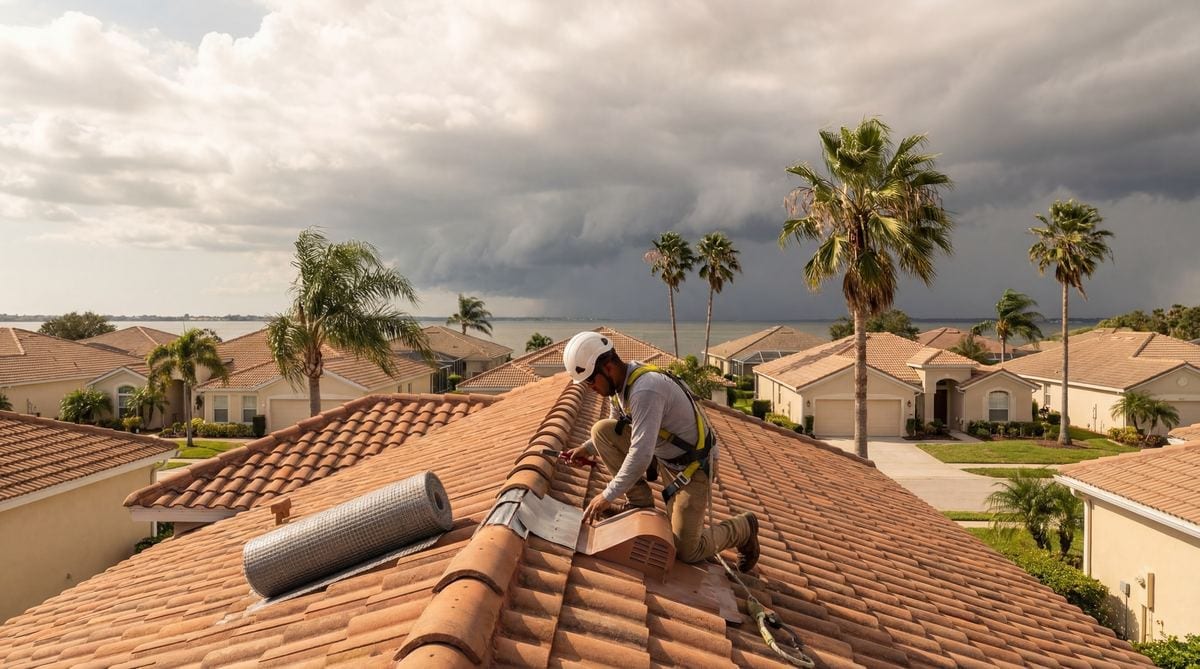
When a named storm enters the 7-day forecast cone for Tampa Bay, tactical prep begins.
Photograph your roof now, while the weather is still good. Walk the perimeter of your home and take date-timestamped photos of every side of the house, the yard, fencing, and visible roof areas. If storm damage occurs later, these pre-storm photos become your baseline evidence against “pre-existing damage” arguments from insurance carriers.
Clear the yard and roof of debris. Palm fronds, loose outdoor furniture, hanging tree limbs, and anything else that can become a projectile in 80+ mph winds need to be secured or removed. Per the Florida Department of Financial Services, wind-driven debris causes more roof damage than direct wind pressure in most Tampa Bay storm events.
Verify your insurance documentation. Locate your homeowner policy, note your deductible (especially the hurricane deductible, which is typically 2-5% of dwelling coverage and kicks in separately), verify your contact info with the carrier, and save your claims phone number in your phone. During the 48 hours after a major storm, insurance claim phone lines are overwhelmed and getting through takes hours. Having the number saved and knowing your policy details speeds everything.
Coordinate with your roofer. Call your trusted Tampa Bay roofer before the storm to confirm their post-storm response protocol. We keep Tampa Bay emergency materials pre-staged during active hurricane watches and pre-commit to homeowner customers we have existing inspection records for. Having that relationship in place means faster post-storm tarping.
Do not climb on your roof to inspect. Roofs look fine from the ground are often the most dangerous surfaces during active storm prep. Wet shingles, loose flashing, and elevated footing all combine to make homeowner roof inspections during storm prep one of the most common injury causes we see. If you need to assess the roof, call for a free inspection instead.
The 48-Hour Window: Post-Storm Action
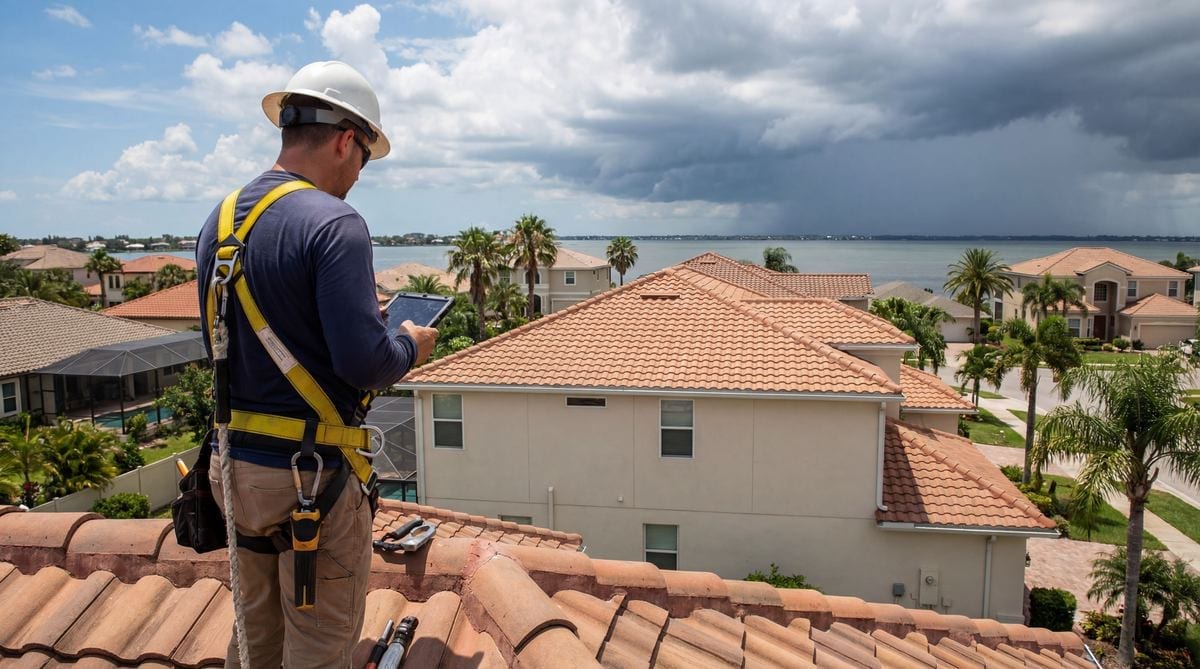
The first 48 hours after Tampa Bay hurricane landfall determine whether your insurance claim is approved smoothly or fought for months.
First 0-2 hours after conditions stabilize: Confirm household safety first. Check for downed power lines before stepping outside. Power lines cause the majority of post-storm injuries, and even “dead” lines can re-energize without warning when utilities restore service. Call 911 before approaching any fallen line.
2-6 hours: Walk the perimeter from the ground. Do NOT climb on the roof. Photograph everything: roof edges visible from the ground, yard debris, fence lines, soffits, gutters, visible shingles or tiles in the yard, and any water stains visible inside the home. Take more photos than you think you need. Every photo has a timestamp that becomes claim evidence.
6-12 hours: Check the attic with a flashlight. Look for wet insulation, daylight through decking, or water stains on framing or beams. Most interior roof leaks start here. Early attic inspection catches damage before drywall is ruined.
12-24 hours: Call your insurance carrier and open a claim number. Do not commit to a roofing contractor yet. Opening the claim preserves your rights and starts the adjuster dispatch. Many homeowners make the mistake of signing with a contractor before the adjuster arrives, which complicates the claim significantly.
24-48 hours: Schedule a licensed Tampa Bay roofer’s free inspection. Meet them on-site when possible. An independent set of eyes catches damage adjusters routinely miss, and a written scope-of-work package from a licensed contractor dramatically improves first-submission claim approval. This is the core of our storm and hurricane damage work: documentation and adjuster coordination handled in-house.
48+ hours: Follow the insurance claim process. Keep all communication in writing, save all documentation, and do not agree to scope reductions without roofer consultation.
Active hurricane damage on your Tampa Bay roof?
We respond to emergency calls same-day during active storm events. Emergency tarping, full claim documentation, and adjuster coordination handled in-house.
Emergency Tarping: What It Does and What It Costs
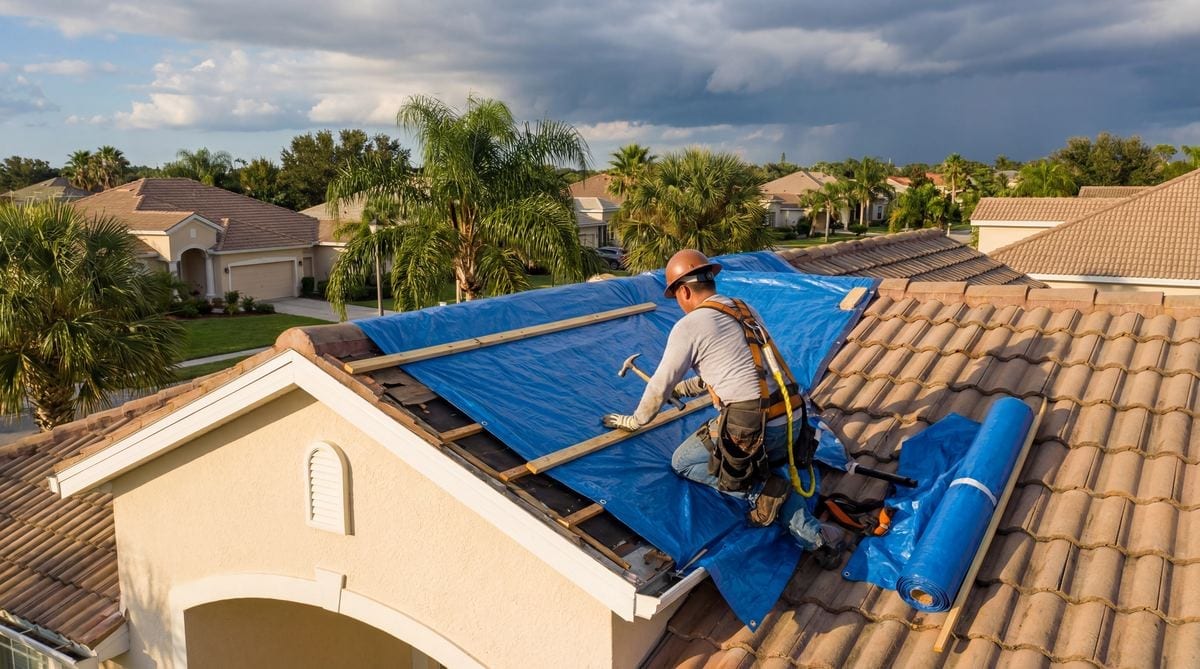
Emergency tarping is not a permanent repair. It is a temporary weather barrier designed to prevent secondary water damage while the insurance claim processes and the permanent repair schedules. Typical Tampa Bay tarping deployment runs $150-$350 for a standard residential roof, and the cost is typically covered by homeowner insurance as “mitigation expense” separate from the structural repair allowance.
Tarps typically hold 2-4 weeks in good weather, less during active hurricane season when high winds and heavy rain stress the tarp daily. We check tarps during extended storm events as part of the emergency service.
Do not delay tarping to wait for the insurance adjuster. Water damage doubles every 24-48 hours in Florida humidity, and mold growth starts within that same window in wet drywall and insulation. The tarping expense is small, always covered, and dramatically reduces total claim dollars.
Tampa Bay Hurricane Season Specifics by City
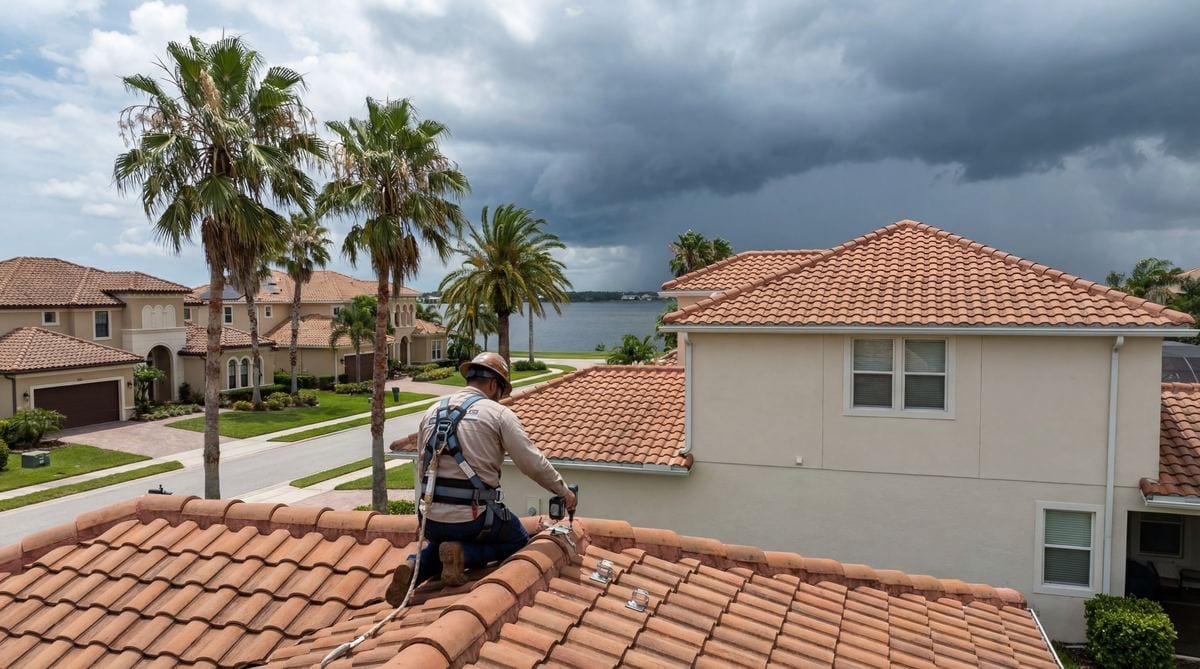
Tampa and inland Hillsborough County: Lower direct Gulf exposure than Pinellas or Manatee. Typical peak winds in a major hurricane run 80-110 mph inland. Standard 130 mph architectural shingle meets code. Older 1990s-2000s shingle roofs are the most vulnerable in Brandon, Wesley Chapel, and New Tampa.
St. Petersburg and Clearwater: Direct Gulf exposure. 150+ mph code requirements on most residential. Salt air accelerates metal component corrosion. Post-hurricane claim volume consistently highest in our service area.
Bradenton and Anna Maria Island: Direct Gulf exposure with particularly aggressive wind zones on barrier islands. 150+ mph minimums, 180 mph recommended on direct waterfront. Tile roofs common but require modern fastening.
Sarasota and Siesta Key: Direct Gulf exposure. Luxury market with tile and standing seam metal dominant. Coastal material spec (aluminum or Kynar coatings) required.
Inland Pasco and Polk: Lower wind speeds at the peak of most hurricanes. 130 mph code minimums. Standard architectural shingle performs well.
After the Season: Post-Season Assessment
Every Tampa Bay homeowner should schedule a free inspection in November or December regardless of whether their specific home sustained visible damage. Cumulative wind exposure across a hurricane season weakens fastener patterns, loosens flashings, and creates the pre-conditions for leaks that do not show up until the next rainstorm. For homeowners who want this handled automatically every year, our roof maintenance plans build pre-season and post-season inspections into a recurring schedule.
Post-season inspection is also the right moment to document the roof’s condition for insurance renewal purposes. A clean inspection report entering December significantly improves policy renewal outcomes for the following year.
Ready for a Tampa Bay hurricane prep inspection or post-storm assessment? Schedule a free on-site inspection or start with the roof cost calculator for instant replacement pricing if your roof is approaching end-of-life. We keep Tampa Bay crews on call during active hurricane season for emergency response.
Want a real estimate on your Tampa Bay roof?
Enter your address and we'll pull satellite measurements instantly.
The Integrity Roofing Team · Florida Roofing Experts. Licensed & Insured
The Integrity Roofing of Florida team installs and repairs tile, metal, and shingle roofs across Tampa Bay. With decades of combined field experience, we've helped more than a thousand homeowners navigate hurricane-damage claims, material choices, and the gap between what's marketed and what actually holds up in Florida conditions. Every post is written by working Florida roofers. Not content writers.
Ready to talk to a real human?
No phone tree, no pressure. Owner-level attention on every call.