Why Tampa Bay Roofs Fail Faster: Heat, UV, Salt Air & Hurricane Factors
The four environmental factors that cause Tampa Bay roofs to fail faster than manufacturer ratings suggest. And what homeowners can do to push their roof's real lifespan back toward the published numbers.
- Tampa Bay roofs typically deliver 20-30% less service life than the manufacturer ratings published on the shingle wrapper suggest.
- Four environmental factors drive the derating: UV intensity, heat and humidity cycling, salt-air corrosion (coastal), and hurricane exposure.
- Specific Tampa Bay failure patterns include granule loss at 12-15 years, underlayment failure on tile at 20-25 years, and metal component corrosion at 10-15 years on coastal homes.
- Mitigation through material selection (impact-rated shingle, Kynar-coated metal components) can push real service life back toward published ratings.
Tampa Bay roofs do not last as long as the packaging on the shingle bundle says they will. A 30-year-rated architectural shingle from GAF or CertainTeed typically delivers 25-30 years in Atlanta, 22-26 years in Dallas, and 18-22 years in Tampa Bay. The same product, in three different climates, produces three meaningfully different outcomes.
This article explains the four environmental factors that cause Tampa Bay roofs to fail faster than manufacturer ratings predict, the specific failure patterns we see most often across our Tampa, Pinellas, and Manatee service areas, and what homeowners can do to push their real roof service life back toward the published numbers. It is based on more than a decade of inspection data from across Tampa Bay, not theoretical models.
Factor 1: UV Intensity
Florida’s UV index routinely hits 10-11 during summer months, compared to 6-8 in most of the temperate US. According to the Environmental Protection Agency, UV intensity in southern Florida ranks among the highest in the continental United States year-round, not just in summer. Roofing materials absorb UV energy and degrade accordingly.
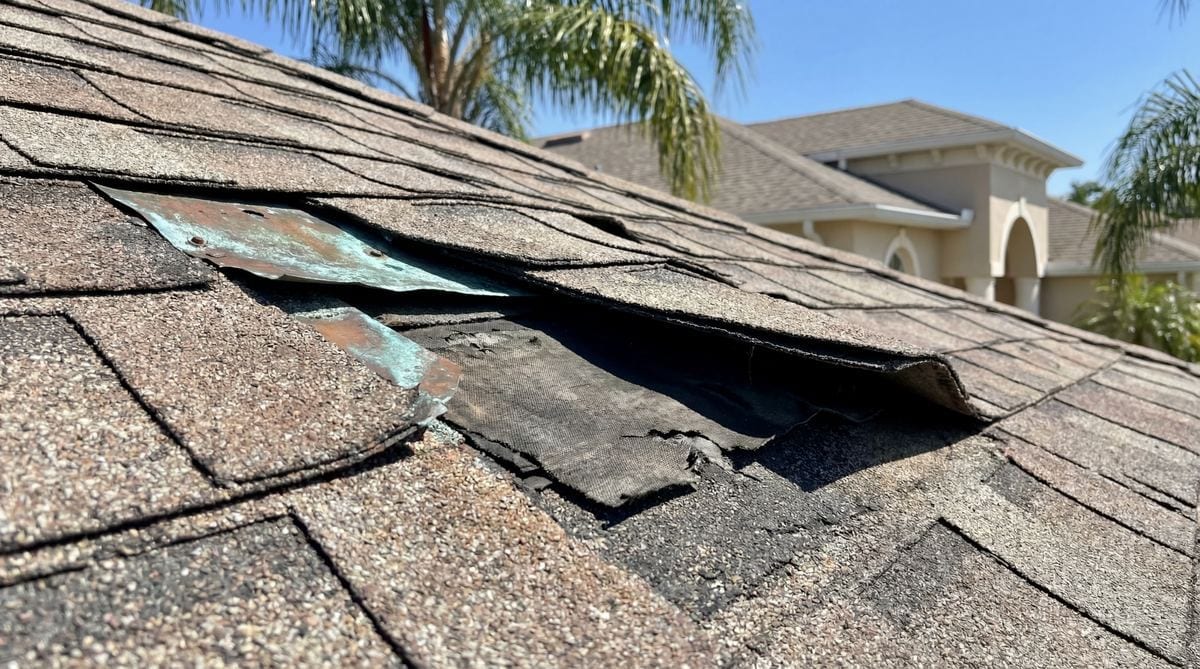
Asphalt shingle specifically shows UV aging as granule loss (the ceramic-coated particles that protect the asphalt substrate from UV), shingle curling and cupping (asphalt drying out and losing flexibility), and color fading (aesthetic but also indicates material aging). A shingle roof in Atlanta might show minor granule loss at year 18. A Tampa Bay shingle roof typically shows the same level of granule loss at year 12-14.
Tile and metal are more UV-resistant than shingle but still show aging. Tile sealant and underlayment beneath the tile suffer UV-accelerated degradation even while the tile itself is fine. Metal roof coatings (typically Kynar or SMP finishes) fade over 20-30 years of Florida UV exposure versus 30-40 years in cooler climates.
Factor 2: Heat and Humidity Cycling
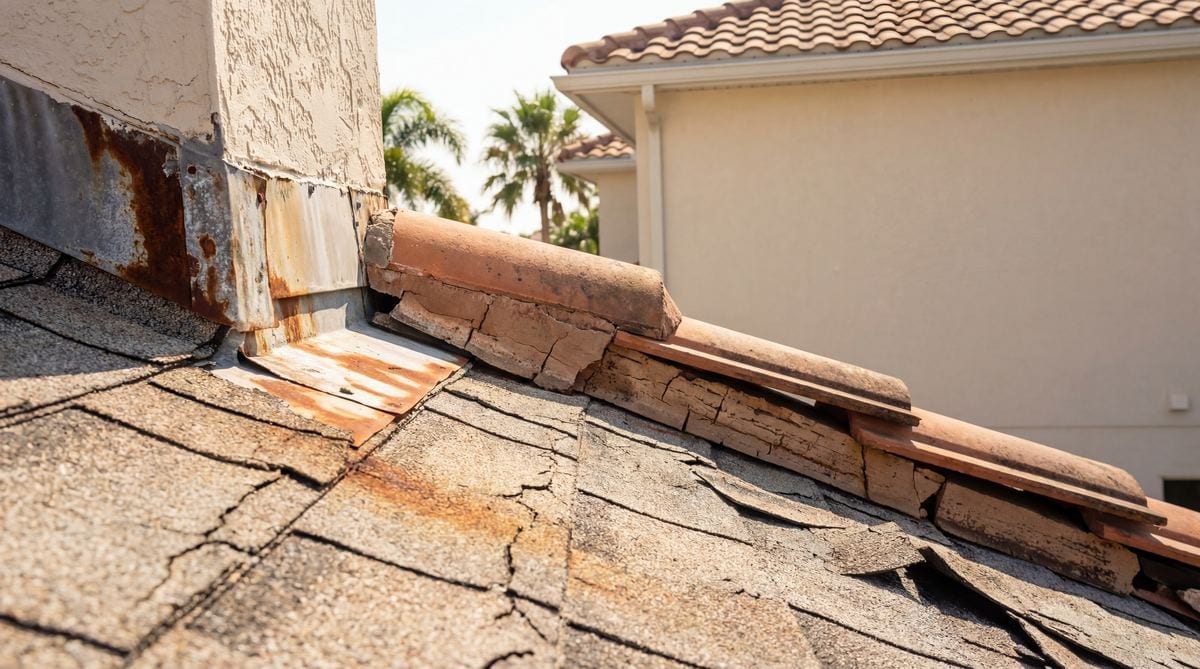
Tampa Bay attics routinely exceed 140 degrees Fahrenheit on summer afternoons, then cool 30-40 degrees overnight. That thermal cycling stresses every roofing component. Asphalt shingle experiences expansion and contraction cycles that loosen fasteners and separate adhesive strips. Tile underlayment (felt or synthetic) cycles through temperature-driven stretching that accelerates fatigue failure. Metal panels oil-can if not fastened to accommodate thermal movement.
Humidity compounds the heat problem. Florida’s 70-80% average summer humidity keeps asphalt substrates saturated more than dryer climates. Wet asphalt is structurally weaker than dry asphalt, which means Tampa Bay shingles are load-bearing at a lower peak strength during summer months than the same shingle in Arizona would be.
The Florida Roofing and Sheet Metal Contractors Association documents that ventilation-improving installations (ridge vents, gable vents, soffit vents, radiant barrier underlayment) reduce attic temperatures by 15-25 degrees and measurably extend roof service life. Proper ventilation is worth specifying as part of any full roof replacement in Tampa Bay.
Factor 3: Salt-Air Corrosion (Coastal Only)
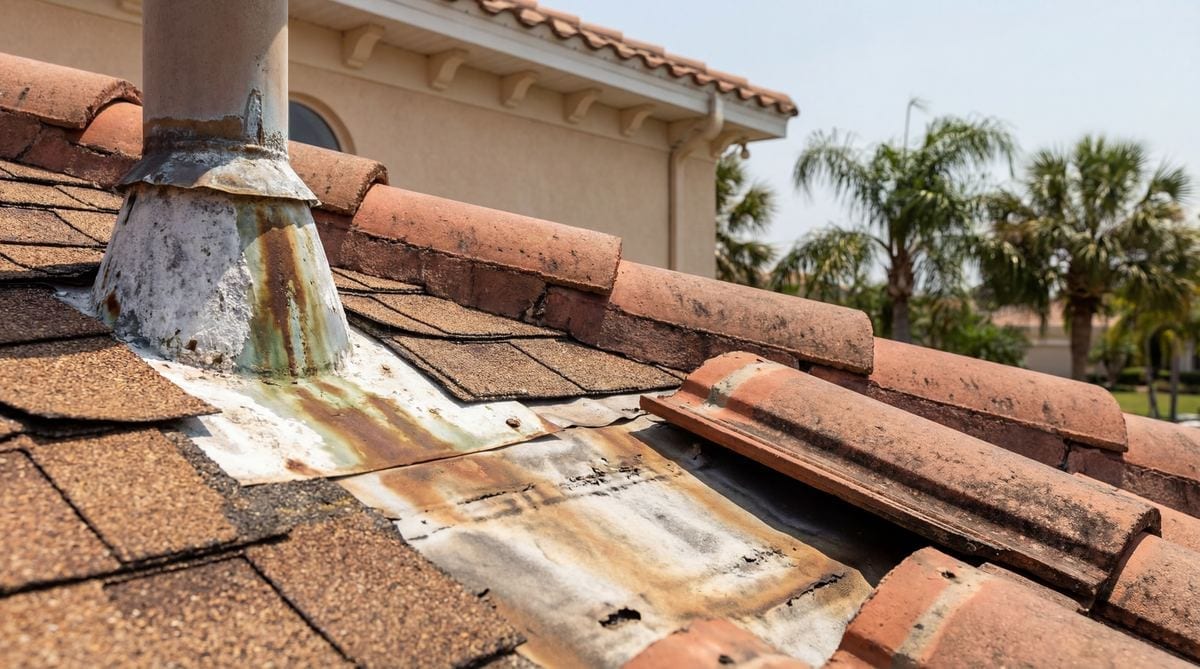
Tampa Bay’s coastal communities (Clearwater Beach, St. Pete Beach, Indian Rocks, Madeira Beach, Anna Maria Island, Longboat Key, Siesta Key) face salt-air exposure that dramatically accelerates metal corrosion. Galvanized steel flashings that perform for 30-40 years inland can corrode through in 10-15 years on direct Gulf exposure.
Salt accelerates corrosion through electrochemical reaction with the galvanizing coating. Once the coating is compromised, the underlying steel rusts, and the flashing loses structural integrity. The visual signal is rust streaking below flashings and valley metal, visible from the ground. By the time rust is visible, the metal component is approaching failure.
Coastal Tampa Bay material spec should default to:
- Aluminum flashings (corrosion-resistant, lightweight, more expensive but dramatically longer service life)
- Kynar-coated steel for any steel component (factory-applied fluoropolymer coating that resists corrosion for 30+ years)
- Stainless fasteners for any exposed fastener
- Copper for premium trim and valleys on luxury properties
The upcharge over galvanized is modest (typically 5-10% of total install cost on coastal projects). The service life extension is dramatic.
Factor 4: Hurricane Exposure
Tampa Bay has experienced direct strike or close-miss hurricane events in three of the last three seasons (Idalia 2023, Helene 2024, Milton 2024). Each event produces sustained 80-120+ mph winds across the region with peak gusts reaching 150+ mph in coastal communities.
Hurricane stress on roofs is not just about peak wind. It is about sustained exposure. A hurricane passing over Tampa Bay typically delivers 6-12 hours of 60+ mph winds, punctuated by periods of 100+ mph gusts. Each cycle loads the roof assembly, tests every fastener, and stresses every adhesive bond.
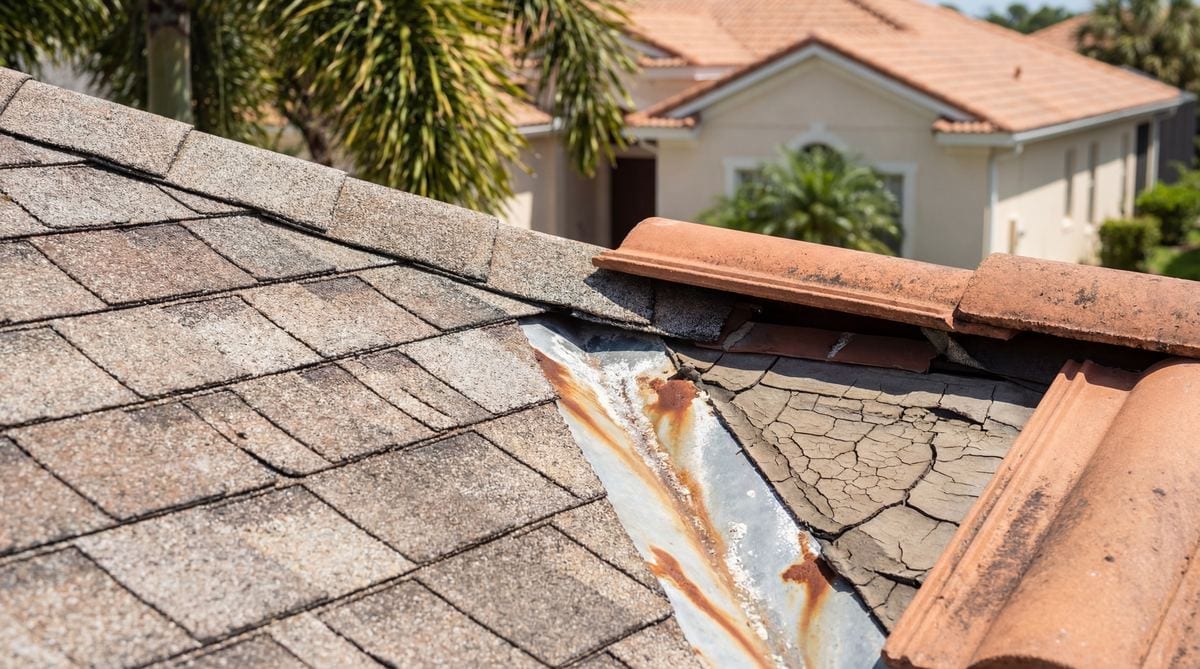
The roofs that survive hurricanes well share common characteristics: proper fastener schedules (6 nails per shingle minimum, often 8 in high-wind zones), modern synthetic underlayment (not traditional felt), ridge and hip cap hand-nailing (not stapling), and complete flashing systems around all penetrations. Roofs that fail in hurricanes typically have one or more of these fundamentals wrong, and the failure mode is usually not the primary roofing material (the shingle, tile, or metal itself) but one of the supporting assemblies around it.
Worried your Tampa Bay roof is aging faster than you thought?
Our free inspection documents the actual condition with photos and gives you a realistic remaining-life estimate.
Specific Tampa Bay Failure Patterns We See
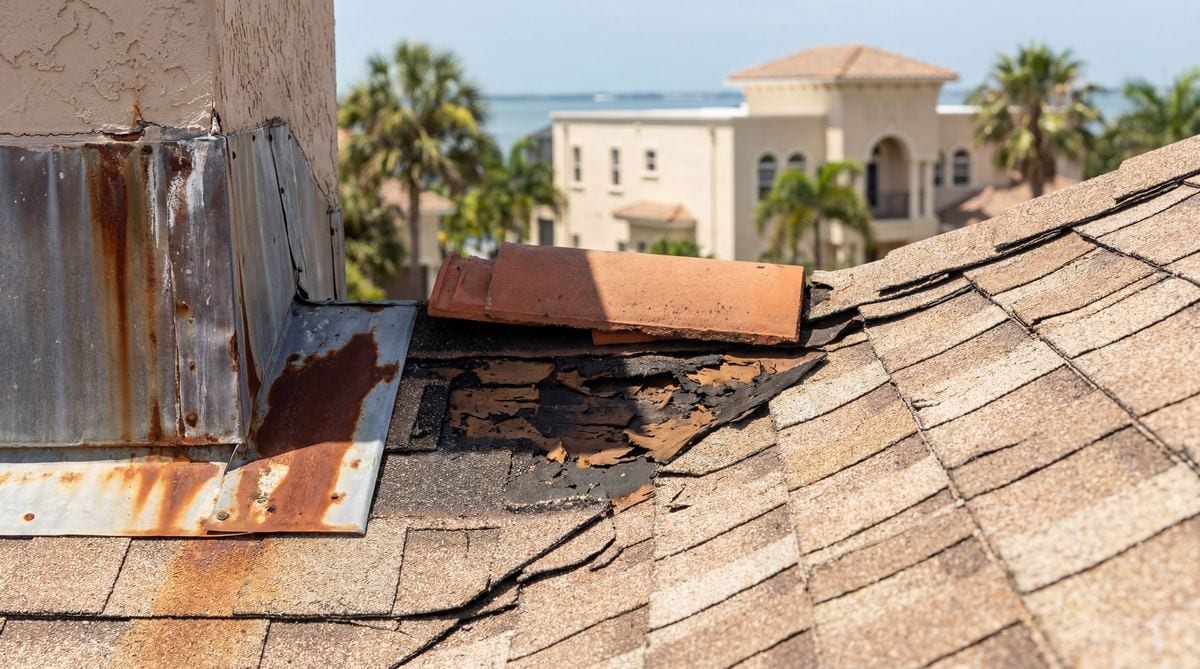
After more than a thousand inspections, we see the same failure patterns repeat across Tampa Bay neighborhoods. Each one below is the kind of issue a free roof inspection is designed to surface before it forces a full replacement.
Pattern 1: 12-15 year granule loss on 1990s-2000s architectural shingle. Brandon, Wesley Chapel, and east Hillsborough neighborhoods with production shingle construction show accelerated granule loss at the 12-15 year mark, full 3-5 years earlier than manufacturer ratings suggest. The cause is combination UV plus heat plus production-grade shingle quality (builder-grade installations often used entry-level shingle products).
Pattern 2: Underlayment failure at 20-25 years on tile roofs. Hyde Park, Kenwood (St. Petersburg), and Downtown Sarasota tile roofs regularly hit the underlayment-replacement window while the tile itself has 30+ more years of service life. The fix is tile re-underlay, not full tile replacement.
Pattern 3: Flashing corrosion at 10-15 years on coastal homes. Clearwater Beach, Indian Rocks, Anna Maria Island homes with standard galvanized flashings and drip edges routinely fail at the 10-15 year mark. Replacement with aluminum or Kynar-coated components during repair or partial replacement permanently solves the problem.
Pattern 4: Post-hurricane partial failures on 20+ year old roofs. Every major hurricane event produces a cluster of partial-failure claims on Tampa Bay roofs that were technically past end-of-life. Hurricane winds accelerate failures that would have occurred within 2-3 years anyway, and the insurance claim becomes the mechanism for replacement.
Pattern 5: Ridge cap and valley failures on 15+ year old shingle. Ridge caps and valley metal are the hardest-working components of a shingle roof system and typically fail 2-3 years before the field shingles. Targeted ridge/valley replacement can extend field shingle life 3-5 more years.
How Homeowners Can Push Service Life Back Toward Published Ratings
The environmental factors above are non-negotiable. Tampa Bay is Tampa Bay. But material selection, installation quality, and maintenance significantly affect how much of the published rating your specific roof actually delivers.
Specify better materials. Impact-rated Class 4 shingles are 25-30% more wind-resistant than standard architectural and 50-100% more impact-resistant. Kynar-coated standing seam metal lasts 50-70 years versus 30-40 for painted versions. Clay tile (75-100+ years) outlasts concrete tile (50-75 years). Premium materials cost 15-40% more and deliver 50-100%+ service life.
Demand proper installation. Fastener schedules, underlayment choice, flashing installation, and ventilation specification matter as much as material choice. Entry-level installations by unlicensed crews often deliver 15 years of service life even on 30-year-rated materials. Properly-installed roofs deliver closer to the published ratings.
Schedule routine inspections. Every 3-5 years for new-ish roofs, every 2-3 years for 10+ year old roofs, every year for 20+ year old roofs. Early detection of developing issues (flashing separation, minor underlayment gaps, ridge cap loosening) enables repair at a fraction of replacement cost. This is exactly what our roof maintenance plans are built to catch before they become full replacements.
Clean gutters and clear debris. Clogged gutters back water up under drip edge, saturating decking and accelerating rot. Palm fronds and debris on the roof trap moisture against shingles, accelerating material breakdown. A 30-minute quarterly inspection from a ladder (or the ground with binoculars) extends service life meaningfully.
The Bottom Line for Tampa Bay Homeowners
Your Tampa Bay roof is probably going to deliver less service life than the wrapper on the shingle bundle promises. That is not a failure of the product. It is a reflection of the environment. Planning for an 18-22 year architectural shingle service life (instead of 30) avoids budget surprises at years 18-20 when replacement is due.
For long-term homeowners, premium material upgrades (metal, tile) often deliver better lifetime economics because they approach their published ratings even in Tampa Bay’s harsh environment. For shorter-term homeowners, impact-rated Class 4 shingle is the sweet spot of cost, performance, and insurance eligibility.
Ready for an honest read on your specific Tampa Bay roof’s remaining life? Schedule a free on-site inspection, and our inspector will document the actual condition with photos and give you a realistic service-life estimate. Or start with our roof cost calculator if you want instant replacement pricing for budget planning.
Want a real estimate on your Tampa Bay roof?
Enter your address and we'll pull satellite measurements instantly.
The Integrity Roofing Team · Florida Roofing Experts. Licensed & Insured
The Integrity Roofing of Florida team installs and repairs tile, metal, and shingle roofs across Tampa Bay. With decades of combined field experience, we've helped more than a thousand homeowners navigate hurricane-damage claims, material choices, and the gap between what's marketed and what actually holds up in Florida conditions. Every post is written by working Florida roofers. Not content writers.
Ready to talk to a real human?
No phone tree, no pressure. Owner-level attention on every call.