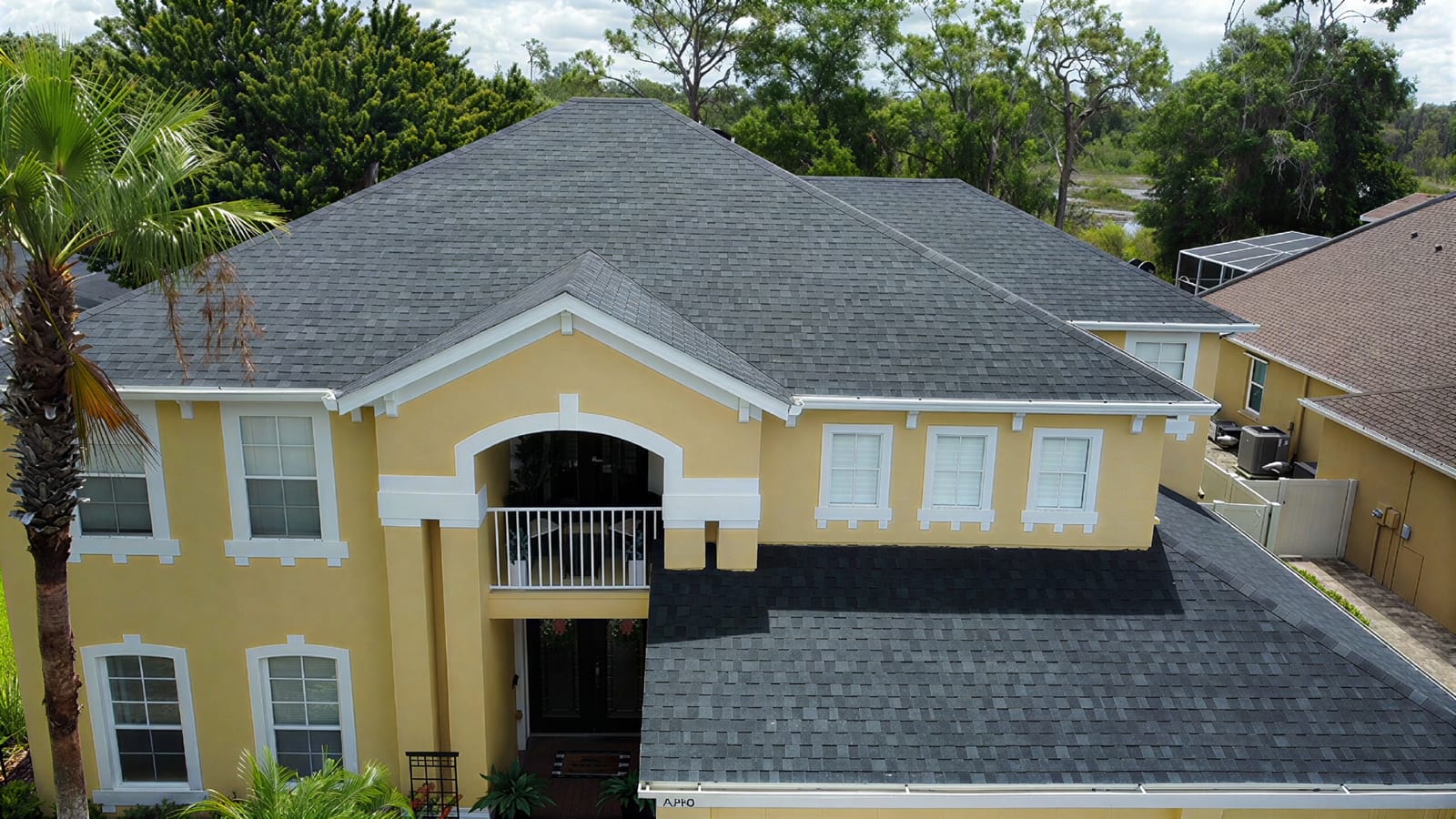
What to Do When Your Roof Is Leaking: Emergency Repair Guide for Tampa Bay
Your ceiling is dripping. What do you do right now? A step-by-step emergency guide for Tampa Bay homeowners. The four things to do before a roofer arrives, how to tarp safely, and what emergency repair actually costs.
- If the roof is actively leaking, your job is contain the water, protect valuables, and document everything - not fix the roof yourself.
- Never go on the roof during active weather. More homeowners get injured in emergency roof situations than during the storm itself.
- Emergency tarp cost from a licensed Tampa Bay roofer is typically 0 to 350 dollars, often free if they do the permanent repair.
- Call your insurance company before the permanent repair. A covered claim covers both the tarp and the fix.
It’s 11pm. It’s raining hard. Something is dripping from your ceiling and you’re standing there with a bucket wondering what the hell to do. This is a guide for that moment. Written by the Tampa Bay roofing crew that answers these calls.
The short version: contain the water, take some photos, call an emergency roofer, and do not climb on your roof in the dark or in active weather. The long version is below. If you want to skip to the part where you call someone, our emergency line is (813) 388-9190. During business hours we’ll get a crew moving fast; after hours, leave a message and you’re first in line when we open.
Step 1: Contain the Water (The First 10 Minutes)
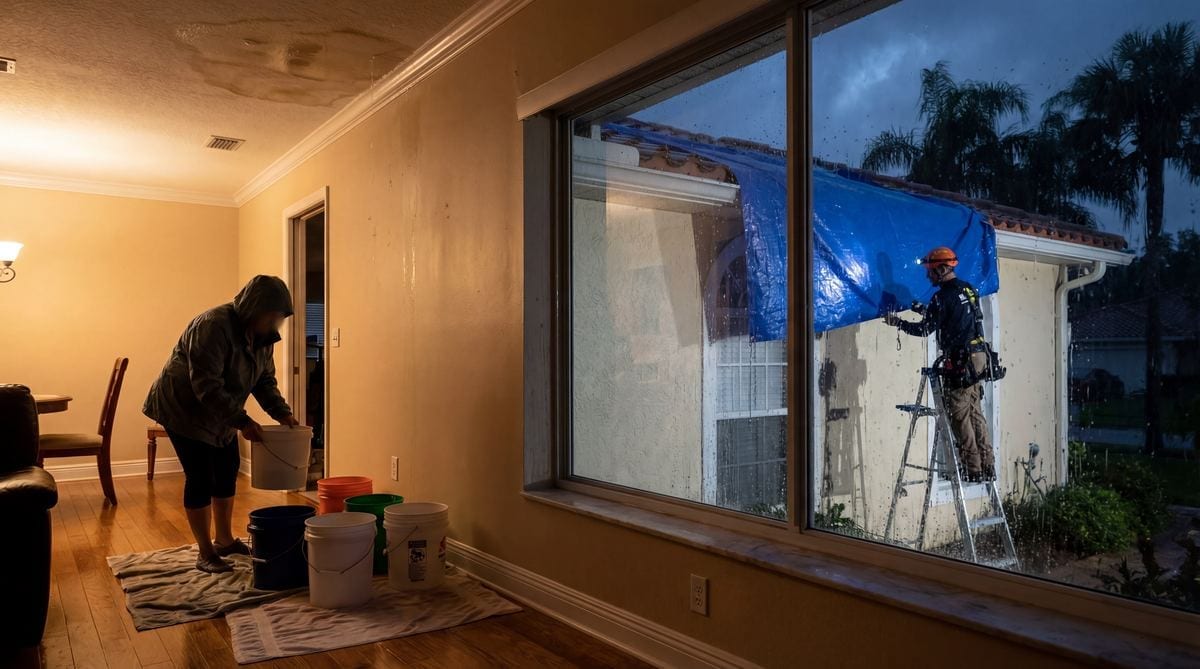
Before anything else, stop the leak from wrecking more than it has to. Specific moves:
Put a bucket under the active drip. Obvious but say it out loud. A 5-gallon bucket under a slow drip is fine for an hour. A fast leak needs a bigger bucket or a second catch underneath in case the first fills up. Towels around the base catch splash.
Move valuables out of the drop zone. Electronics, rugs, wood furniture, anything that can’t get wet. You have time for this. Don’t panic, just move.
If the ceiling is visibly sagging or bulging with water, poke a small hole. This sounds counterintuitive but it’s the right move. A water-logged drywall ceiling weighs a lot and can collapse suddenly. Taking everything below it. Grab a screwdriver or nail, poke a single small hole at the lowest point of the bulge, and let water drain into a bucket in a controlled stream. That’s far better than the ceiling giving way.
Pull back wet insulation if safe. If the attic is accessible and you can get up there safely (no live electrical wet, no structural concern), pull wet insulation away from ceiling fixtures and drywall. Wet fiberglass holds water against the drywall and accelerates damage.
Step 2: Document Everything (5 Minutes)
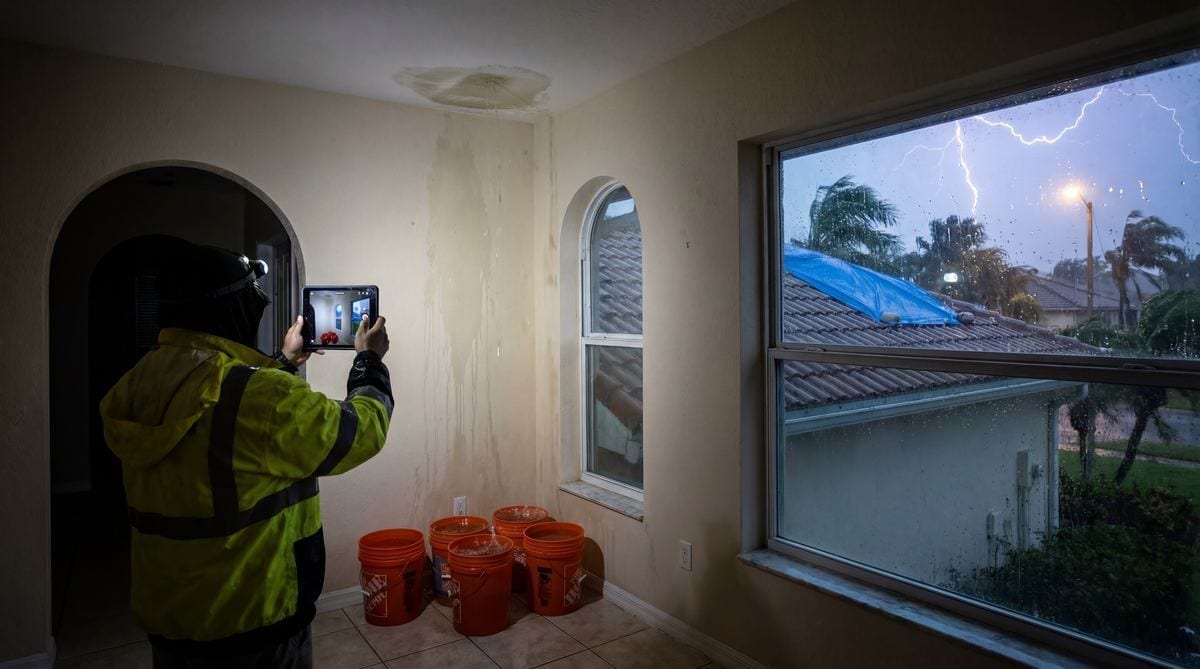
Whether or not this becomes an insurance claim, you want photos and video. Take:
- Wide shots of the affected rooms. Water on floor, stains on ceiling, any visible damage
- Close-ups of active drips, water stains, soft spots in drywall
- The bucket filling up. A timestamped video showing rate of leak is powerful evidence
- Anything on your roof you can see from the ground. Missing shingles, debris, a tree on the roof, a hole
Do not climb up for photos during active weather. A drone photo in clear weather the next day is better than a hospital visit tonight.
If you can see the attic safely, take photos of any wet decking, active dripping through the deck, or missing nails/daylight.
Step 3: Do Not Climb on Your Roof
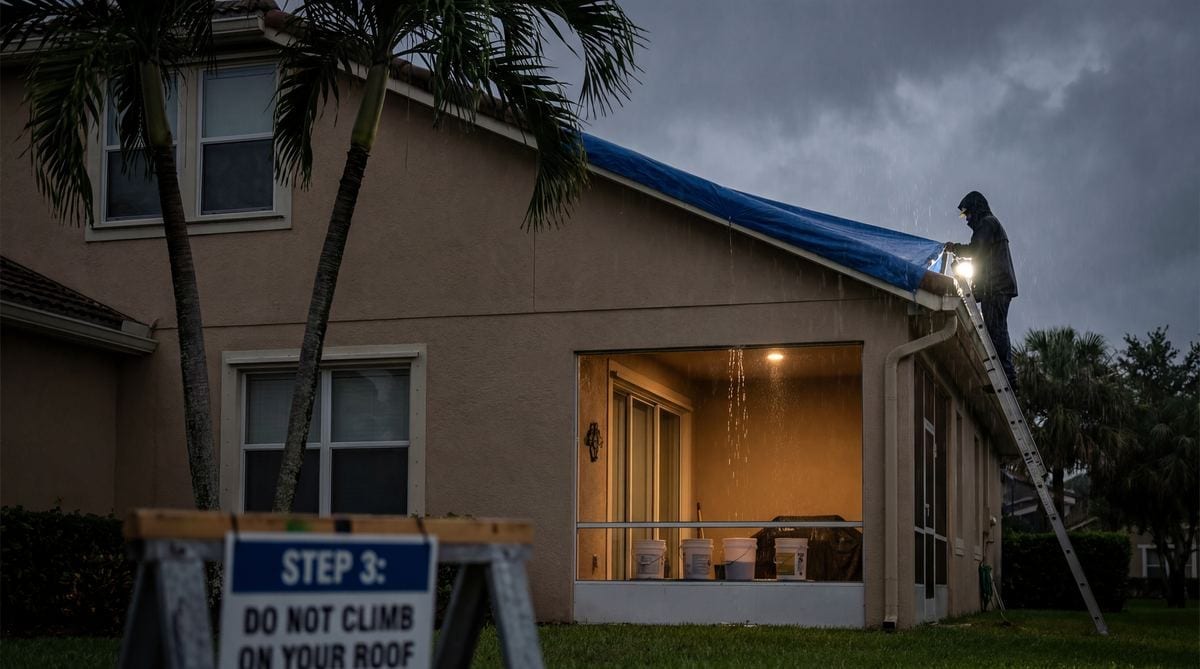
Florida roofing injuries spike during storms. Not from the storms themselves, but from homeowners attempting to tarp their own roofs in the rain. A wet asphalt shingle roof has roughly the traction of a skating rink. Add wind, darkness, and a ladder, and the math stops working.
Rules:
- Never go on the roof in the rain
- Never go on the roof in the dark
- Never go on the roof during active wind
- Never go on the roof alone
- Never go on the roof in lightning conditions
- If the roof is wet and you can see puddled water, it’s too slippery. Wait
This is not overcautious. We’ve picked up permanent repair jobs from homeowners who ended up with both a leak and a broken leg because they tried to tarp at 2am.
Typical emergency tarp cost in Tampa Bay. Often free when the roofer does the permanent repair afterward.
Source: Integrity Roofing field data, 2025–2026 emergency response callsStep 4: Call an Emergency Roofer
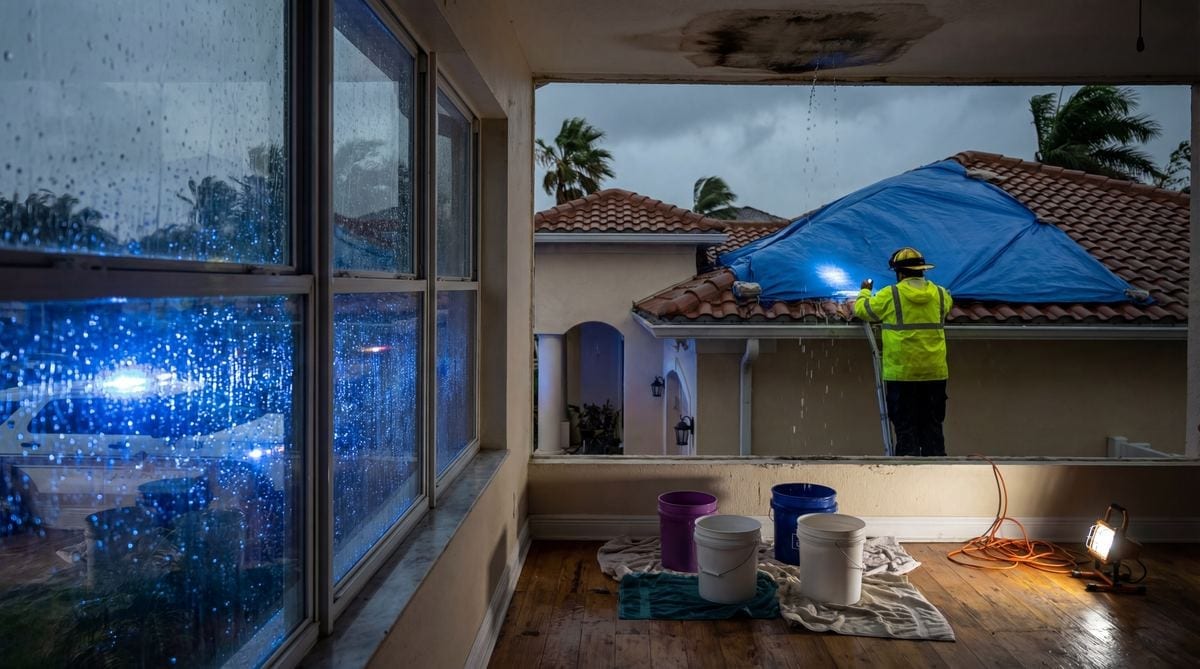
A legitimate emergency roof repair team responds fast and helps you stabilize the leak. They’ll ask:
- What’s your address?
- Is water actively coming in right now?
- Can you describe what you see (tree through the roof, missing section, visible hole)?
- Is anyone in the home in danger from structural concerns?
Based on those answers, they’ll either dispatch a crew immediately (if the leak is severe or your home is at risk) or schedule a first-light arrival for everything else.
What good emergency roofers do on arrival:
- Assess the damage and document it for insurance before touching anything
- Deploy a heavy-gauge poly tarp, properly fastened with 2x4 lumber wrapped at the edges. Not staples or nails driven into the roof deck
- Take follow-up photos once the tarp is in place
- Walk you through what they found, what the permanent repair looks like, and what it’ll cost
What to avoid:
- Any “emergency surcharge” beyond reasonable after-hours rates. Most Tampa Bay roofers charge the same for emergency tarping as normal repair
- Door-knockers who show up uninvited after a storm claiming they were “in the neighborhood”. These are often unlicensed out-of-state operators
- Anyone who demands a signed contract for permanent repair before they tarp
- Contractors who refuse to wait for your insurance adjuster before permanent work
What Emergency Roof Repair Actually Costs
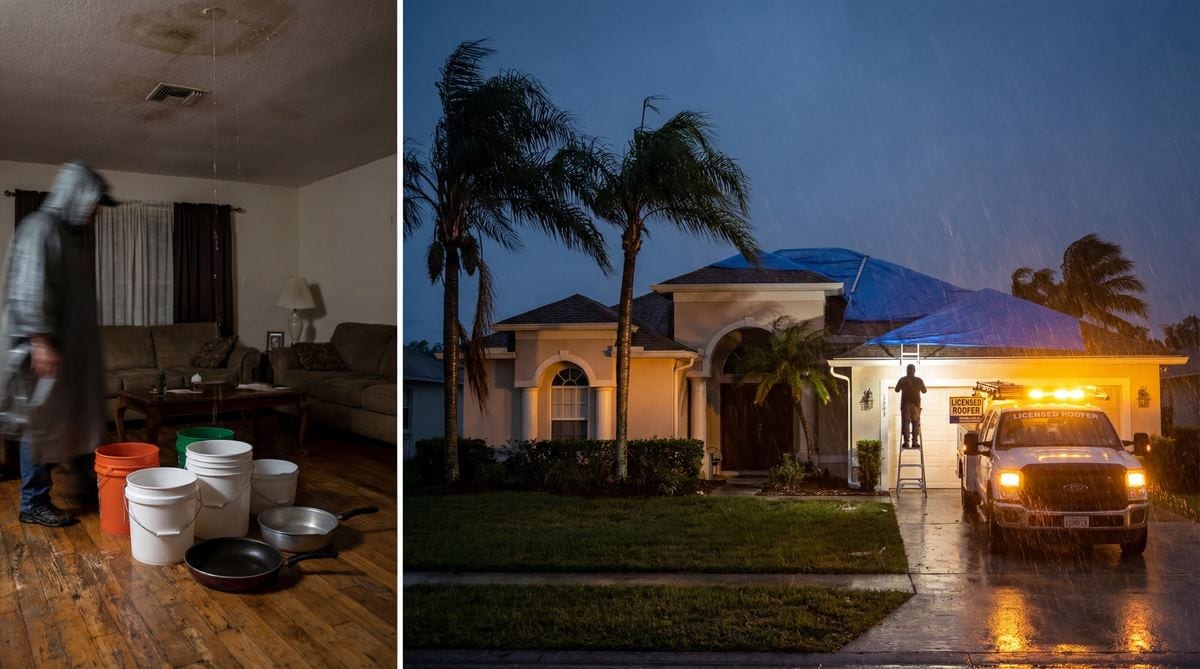
For a typical Tampa Bay residential emergency, here’s the spread:
| Scenario | Typical Cost | Notes |
|---|---|---|
| Emergency tarp only | $0–350 | Often free if the roofer does the permanent repair; $150–350 as standalone |
| Small roof repair (few shingles, flashing patch) | $300–800 | Usually same-week after tarping |
| Medium repair (skylight, chimney flashing, 100 sq ft) | $800–2,500 | Scheduled within 1–2 weeks |
| Large storm damage (partial or full replacement) | $8,000–25,000+ | Insurance typically covers if storm-caused |
| Tree through roof (structural repair + roofing) | $15,000–40,000+ | Almost always covered by homeowner’s policy |
The biggest cost driver is whether you have insurance coverage. Florida homeowner’s policies cover sudden, storm and hurricane damage. Hurricanes, wind events, hail, falling trees. They don’t cover slow decay, wear and tear, or leaks from roofs over 25 years old (depending on policy language).
If the damage is storm-related, call your insurance carrier before the permanent repair. A covered claim pays for both the emergency tarp and the fix. Your roofer can meet the adjuster on-site and document everything, so you have a complete record to submit with your claim.
Active leak right now?
Call our Tampa Bay emergency line and we'll dispatch the nearest crew, tarp the damage, and document everything for your insurance carrier. Same-day during business hours; first thing the next morning for after-hours calls.
When It’s NOT an Emergency
Not every leak needs a midnight crew. Here’s how to triage:
This IS an emergency (call now):
- Water actively dripping faster than a drop-per-second
- Visible hole in the roof or missing shingles/tiles over a large area
- Tree or branch on the roof
- Ceiling drywall actively sagging or bulging
- Active weather with more rain expected before morning
This is NOT an emergency (schedule a regular repair):
- Small water stain on the ceiling that’s not actively growing
- A few shingles in the yard after a storm with no active leak
- Ridge vent or attic vent issues
- Minor roof staining or algae
If you’re unsure, call anyway. A legitimate emergency roofer will tell you honestly if it can wait until morning. And we’d rather reassure you at 2am than have you find a bigger problem at 7am.
After the Storm: The Next 48 Hours
Once the immediate emergency is handled (tarp deployed, water contained, photos taken), the next 48 hours matter for your claim outcome:
- Call your insurance carrier within 24 hours. Florida reporting requirements vary by policy but 14 days is typical; sooner is always better. Get your claim number immediately.
- Do not sign an Assignment of Benefits (AOB) with any contractor. AOB reform in Florida after 2022 restricted these heavily, but some operators still push them. Your standard contractor agreement is fine.
- Schedule the adjuster visit and ask your roofer to be present. This single step changes claim outcomes more than anything else.
- Get written estimates from 2 to 3 licensed Florida roofers, not just one. Your insurance company may push a specific contractor (called a “preferred vendor”). You’re not obligated to use them.
- Keep receipts for everything. The tarp, any hotel stay if you had to evacuate the damaged area, even the bucket you bought. Most covered claims reimburse these.
The Bottom Line
When your roof is leaking at 2am, do these four things in order:
- Contain the water and protect valuables
- Photograph and video everything
- Stay off the roof
- Call a licensed emergency roofer
If you’re in Tampa Bay and you need help, our emergency line is (813) 388-9190. We dispatch, we tarp, we document everything for your insurance carrier, and then we fix it right. Same-day during business hours; first thing the next morning for after-hours calls.
Want a real estimate on your Tampa Bay roof?
Enter your address and we'll pull satellite measurements instantly.
The Integrity Roofing Team · Florida Roofing Experts · Licensed & Insured
The Integrity Roofing of Florida team installs and repairs tile, metal, and shingle roofs across Tampa Bay. With decades of combined field experience, we've helped more than a thousand homeowners navigate hurricane-damage claims, material choices, and the gap between what's marketed and what actually holds up in Florida conditions. Every post is written by working Florida roofers. Not content writers.
Ready to talk to a real human?
No phone tree, no pressure. Owner-level attention on every call.