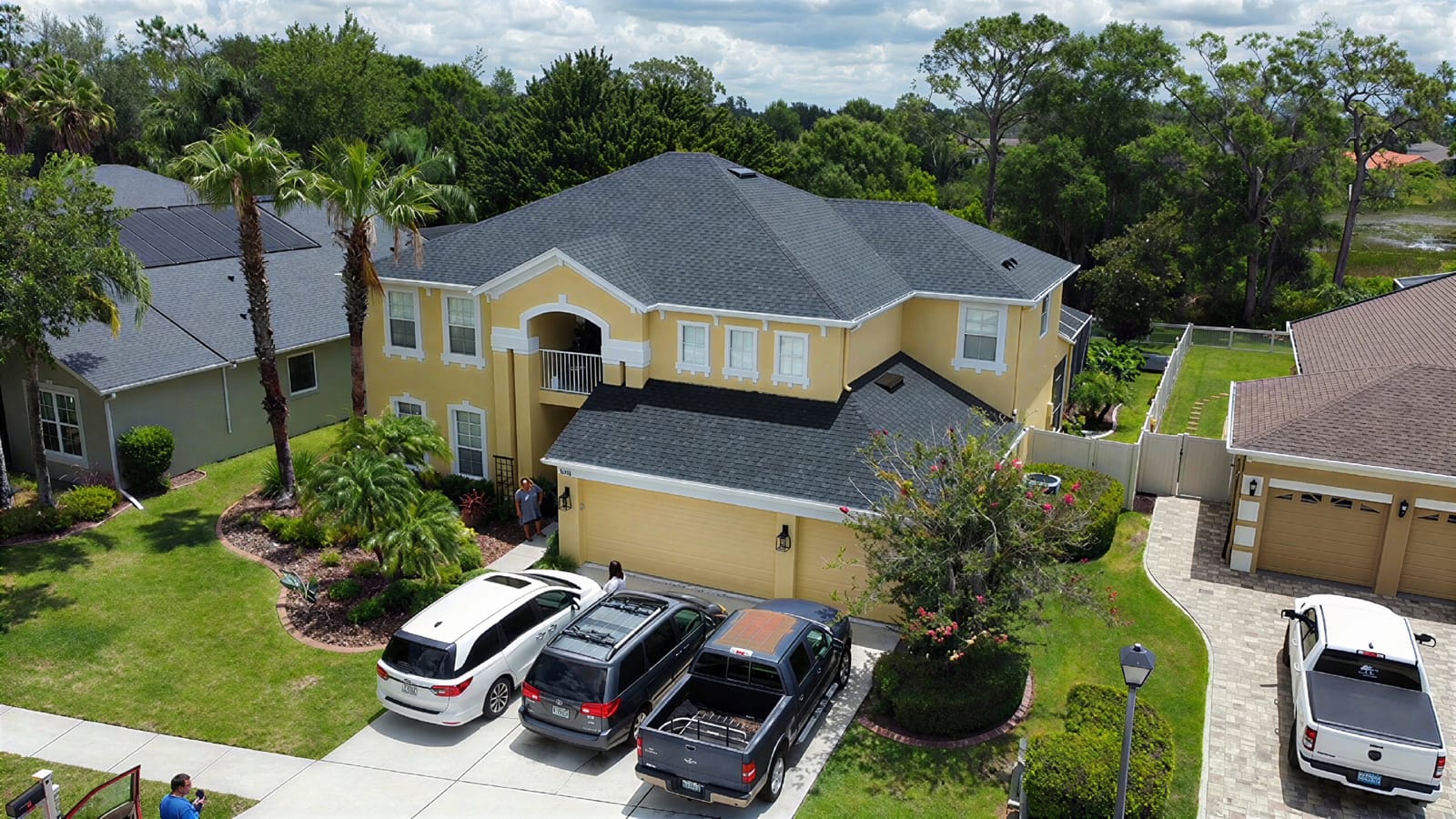
How Long Does a Roof Last in Florida? (Shingle, Metal & Tile)
Realistic Florida roof lifespans by material. What your shingle, metal, or tile roof should actually last in Tampa Bay's heat, humidity, and hurricane exposure. And when to start planning a replacement.
- Florida sun and humidity shorten roof lifespans by 20 to 30% vs. the same materials installed up north. Manufacturer lifespan ratings assume average US conditions, not subtropical coastal ones.
- Asphalt shingles in Florida realistically last 18 to 25 years, not the 30 years commonly advertised.
- Tile roofs last 40 to 50 years. But the underlayment beneath only lasts 20 to 25 years, which is what drives most 'tile roof replacements.'
- Standing-seam metal is the Florida longevity leader at 40 to 70 years and is often the last roof a Tampa Bay homeowner ever buys.
“How long will my roof last?” is the question every Tampa Bay roofer hears five times a day. The honest answer depends heavily on material, installation quality, ventilation, and how close you live to the Gulf. Florida’s climate is rough on roofing. Sustained UV exposure, salt air, hurricane-force winds, and relentless thermal cycling between 95°F daytime highs and 70°F overnights during summer.
Manufacturer lifespan ratings assume average US conditions. Florida isn’t average. This guide gives you the realistic lifespan numbers for each major roofing material in Tampa Bay, what drives variance, and how to know when your roof is approaching end-of-life.
How Long Does a Shingle Roof Last in Florida?
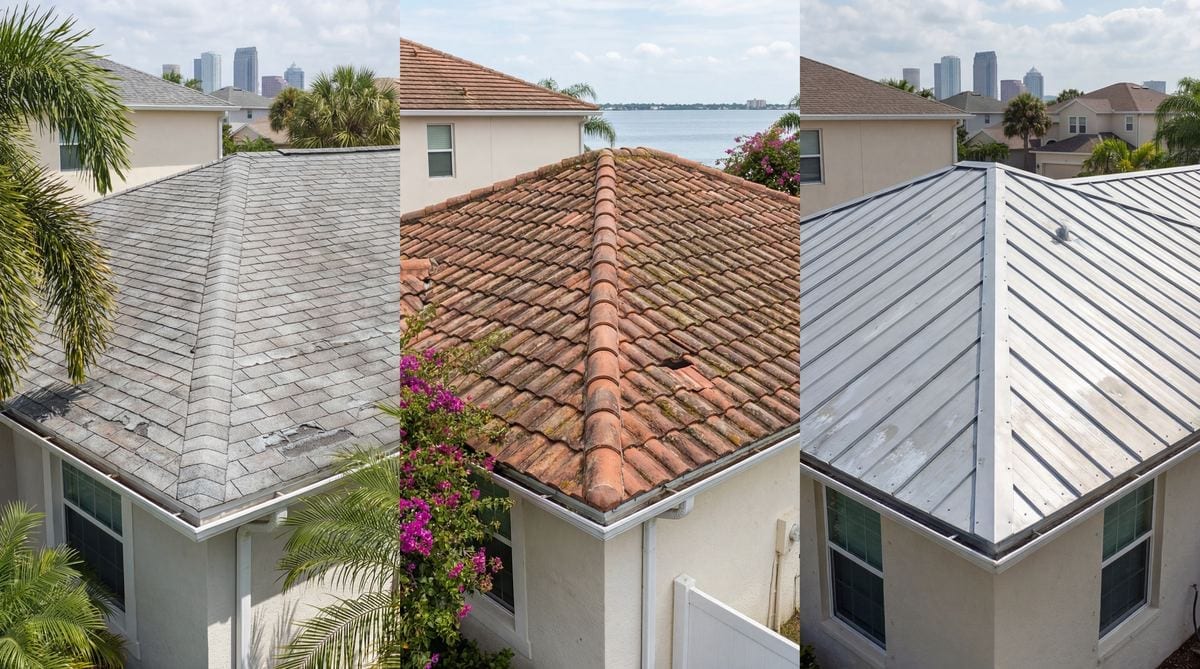
Architectural asphalt shingles are marketed with 25-to-30-year warranties. In Florida, realistic lifespan is 18 to 25 years for architectural shingles and 15 to 20 years for the older 3-tab shingles (which you shouldn’t be installing in 2026 anyway).
What drives the low end (15–18 years):
- South or west-facing slopes with no shade (direct UV exposure)
- Poor attic ventilation (heat-cooks the shingle from below)
- Coastal installation (salt accelerates degradation)
- Original 3-tab shingles or budget architectural lines
What drives the high end (23–25 years):
- Premium architectural or impact-rated shingles (Owens Corning Duration, GAF Timberline HDZ, CertainTeed Landmark Pro)
- Good attic ventilation (ridge vents + soffit intake)
- Partial shading (a tree canopy on one slope)
- Inland Tampa Bay location (Wesley Chapel, Lutz, Brandon)
Warning signs your shingle roof is nearing end-of-life:
- Granule loss showing in gutters or at downspout outlets
- Curling or cupping shingles on south/west slopes
- Bald patches where granules have washed off
- Cracking at the lower corners of shingles
- Multiple patch repairs in the last 3 years
Realistic Florida lifespan for architectural asphalt shingles with proper installation and average attic ventilation.
Source: Integrity Roofing field observations, 2019–2026 Tampa Bay installationsHow Long Does a Metal Roof Last in Florida?
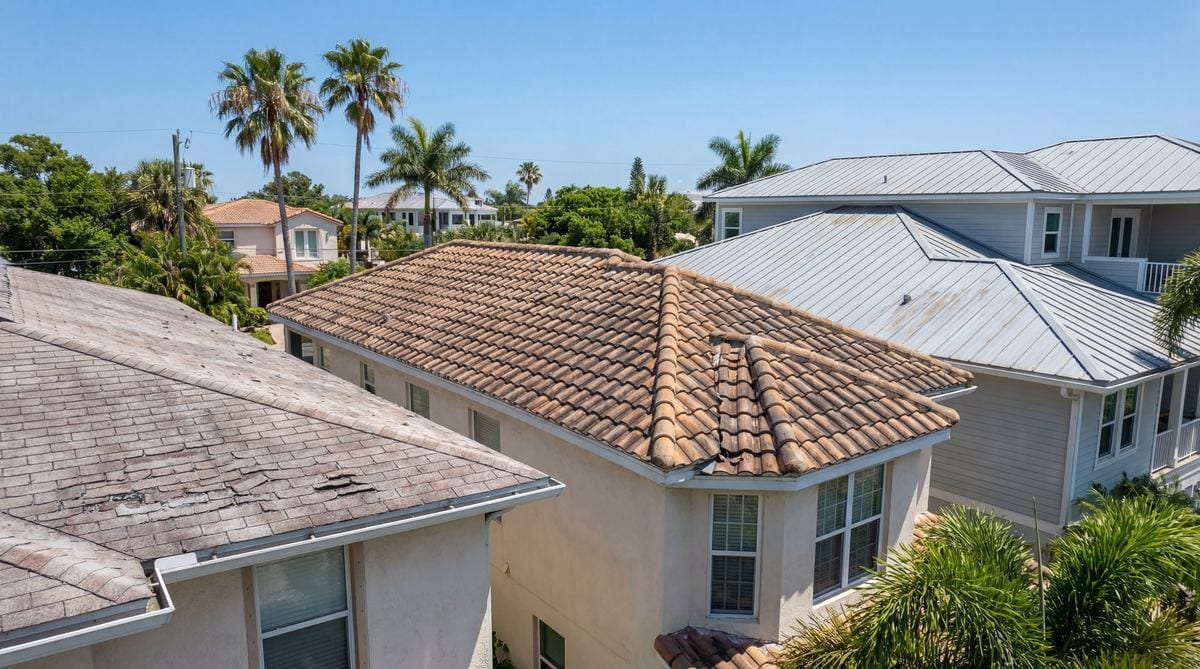
Standing-seam metal is the Florida longevity winner. Realistic lifespan is 40 to 70 years depending on the specific panel system and coating.
Standing-seam (hidden fastener): 50–70 years. The panels themselves last essentially forever (the substrate steel is galvanized or Galvalume-coated). What eventually drives replacement is typically paint fade (cosmetic) or accumulated penetration damage from decades of rooftop work.
Metal shingle (interlocking): 40–50 years. Slightly shorter than standing-seam because the interlock joints can work loose over decades of thermal cycling.
Exposed-fastener metal (agricultural panel): 25–40 years. Budget option, not really a residential roofing system in 2026. The exposed fasteners are the failure point.
Why metal wins in Florida:
- Doesn’t absorb and hold UV the way asphalt does
- Handles 150+ mph wind with proper clip spacing
- Doesn’t support algae or fungal growth
- Reflects solar heat (10–25% AC savings)
- Salt-air resistance on Gulfside homes is exceptional with Galvalume coating
When to replace: Most Tampa Bay homeowners who install standing-seam metal will not replace it in their lifetime of owning the home. The roof simply outlasts the owner. When metal roofs do need attention, it’s usually section repairs from impact damage or fastener work, not full replacement.
How Long Does a Tile Roof Last in Florida?
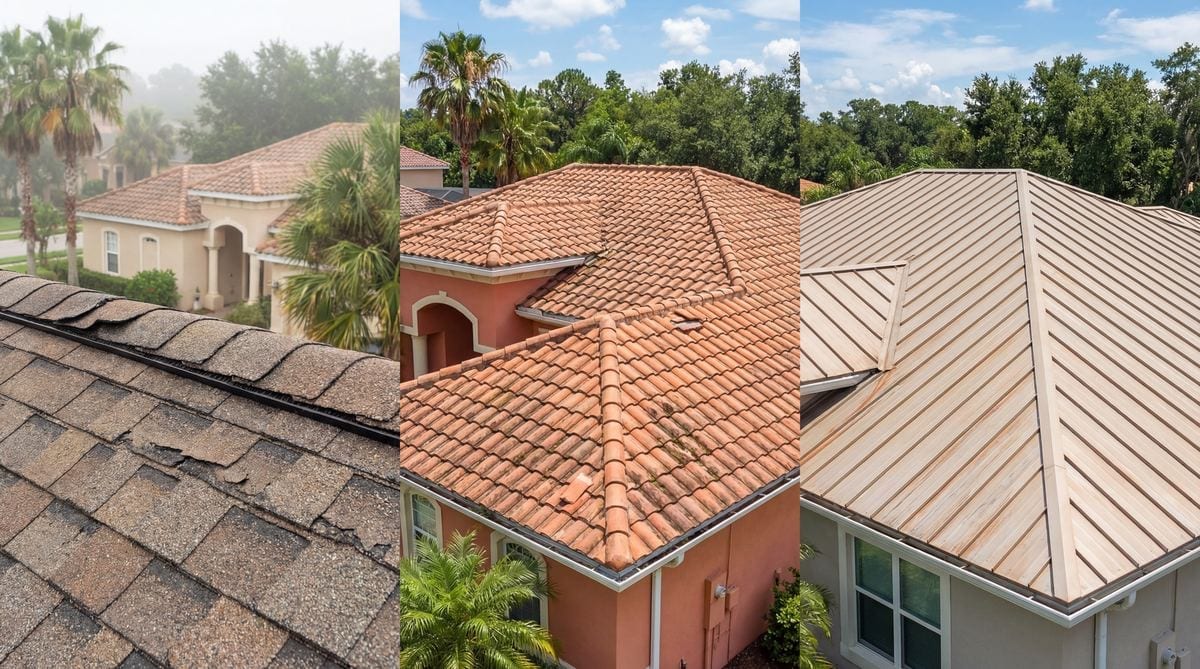
This is where things get interesting. A tile roof is actually two systems:
- The tile itself (clay or concrete) lasts 50 to 100+ years
- The underlayment beneath lasts 20 to 25 years in Florida
When people say “tile roof replacement,” they usually mean underlayment replacement. The tile is typically saved, set aside during the tear-off, and re-installed on top of fresh underlayment. It looks like a full replacement but costs less and keeps the original tiles.
Clay tile: 80–100+ years for the tile itself. Clay is fired to become essentially glass-hard. Failure modes are cracking from impact (falling branches) or slipping from failed underlayment below.
Concrete tile: 50–70 years for the tile itself. Concrete is slightly softer than clay and can chalk or erode at the edges over decades. Still far longer than shingles.
Underlayment failure signs:
- Interior leaks despite visually intact tile above
- Dark staining or efflorescence on the underside of tiles (visible from attic)
- Slipped tiles that were perfectly placed when installed
- Your tile roof is 20+ years old and has never been re-felted
Typical Florida tile roof system lifespan. Driven by underlayment failure, not the tile itself. Clay or concrete tiles outlive 2-3 underlayment cycles.
Source: Florida Tile Roofing Institute & Integrity Roofing field dataFlorida-Specific Factors That Shorten Roof Lifespan
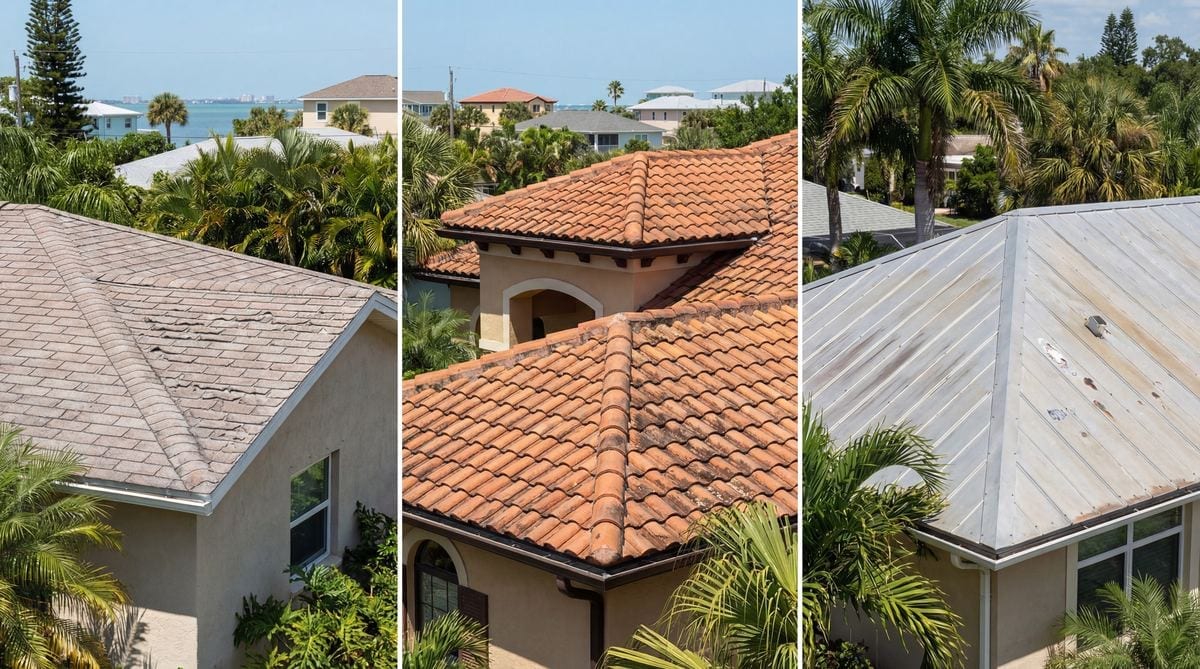
Same shingle, same install crew, same materials. Two roofs can still last different amounts. Here’s what drives variance:
Attic Ventilation
The single biggest factor outside of material choice. A poorly ventilated attic hits 140°F on a summer afternoon, cooking the shingles from below. Proper ventilation (ridge vent + soffit intake, cross-flow circulation) drops that to 105–115°F and adds 3–5 years to shingle life.
Signs of poor ventilation:
- No soffit vents or blocked soffit vents
- No ridge vent (or a passive ridge cap that doesn’t vent)
- Curling shingles concentrated on the hottest-exposed slope
- High AC bills that don’t match the rest of your neighborhood
Orientation and Shade
South and west-facing slopes take the most UV. Expect those slopes to age 20–30% faster than north and east slopes. A tree canopy over part of the roof protects it (bonus: reduces AC load). On a two-story Tampa home with no shade at all, the south slope often needs replacement while the north slope still looks new.
Coastal Proximity
Within a half-mile of the Gulf, salt-air exposure significantly accelerates asphalt shingle aging. Metal holds up much better (especially Galvalume). For coastal Clearwater, St. Pete Beach, and Gulfport homes, factor in 15–20% shorter shingle lifespan vs. inland Tampa Bay.
Installation Quality
This is the factor most homeowners don’t realize matters. A shingle roof installed with 5 nails per shingle properly placed in the nailing strip, with correct underlayment overlap and fastening, and with complete flashing will easily outlast an identical roof installed with 4 nails misplaced in the soft zone.
When evaluating a past install or vetting a new contractor, ask about their nailing pattern (6 nails per shingle in high-wind zones, 4 minimum even in normal zones), their underlayment product (synthetic preferred over felt for Florida heat), and their flashing approach at every penetration.
Hurricane Exposure
A single direct hit from a Cat 2+ hurricane can knock 3–7 years off a shingle roof’s remaining lifespan. Even if the roof “survived” without needing immediate replacement. The damage is cumulative and hidden: raised nails, cracked but not-yet-displaced shingles, weakened flashing seals. After any major storm, have a licensed roofer do a free roof inspection so you know where you stand.
Not sure how much life your Tampa Bay roof has left?
Free drone inspection, full attic check, and a written 25-point report in 24 hours. We tell you honestly whether it's 2 years or 20.
When to Start Planning a Replacement
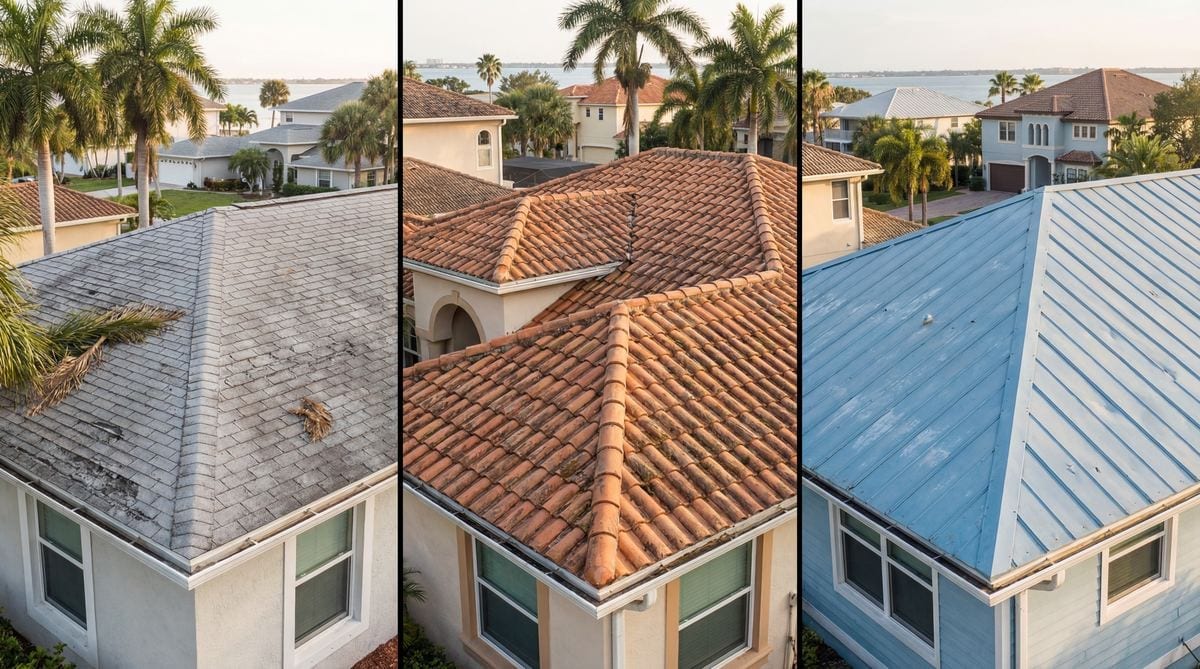
Planning a full roof replacement starts 5 years before the roof actually fails. That’s not too early. It’s the window where you:
- Start saving or lining up financing
- Watch for insurance non-renewal signals (carriers flag roofs 18–20+ years old)
- Time the replacement to something tax-advantageous
- Avoid making the decision under hurricane duress (prices spike right after storms)
Material-specific timing:
- Shingle roof at year 15: start the conversation. At year 18, get it priced. At year 20, schedule it.
- Tile roof at year 18: book an underlayment assessment. At year 22, plan the underlayment re-roof.
- Metal roof: if installed properly, you’re not replacing it. Periodic inspections and section repairs, which is exactly what our roof maintenance plans are built around.
The Bottom Line on Florida Roof Lifespan
Quick reference:
| Material | Florida Lifespan | Typical Tampa Bay Use |
|---|---|---|
| Architectural asphalt shingle | 18–25 years | Most affordable new construction; starter-home replacement |
| Impact-rated asphalt shingle | 22–28 years | Budget-conscious replacement with insurance discount |
| Concrete tile | 40–50 years system (100+ year tile) | Mediterranean-style homes, re-roofed once or twice |
| Clay tile | 40–50 years system (100+ year tile) | Historic homes, premium Mediterranean, tile outlasts owners |
| Standing-seam metal | 50–70 years | The “last roof” choice for long-term homeowners |
| Metal shingle | 40–50 years | HOA-approved metal for neighborhoods that ban standing-seam |
If you’re in Tampa Bay and want a licensed roofer to give you a straight answer on how much life your current roof has left, call (813) 388-9190 or book a free inspection here. We bring drones, we climb into the attic, and we tell you honestly. No sales pitch.
Want a real estimate on your Tampa Bay roof?
Enter your address and we'll pull satellite measurements instantly.
The Integrity Roofing Team · Florida Roofing Experts · Licensed & Insured
The Integrity Roofing of Florida team installs and repairs tile, metal, and shingle roofs across Tampa Bay. With decades of combined field experience, we've helped more than a thousand homeowners navigate hurricane-damage claims, material choices, and the gap between what's marketed and what actually holds up in Florida conditions. Every post is written by working Florida roofers. Not content writers.
Ready to talk to a real human?
No phone tree, no pressure. Owner-level attention on every call.