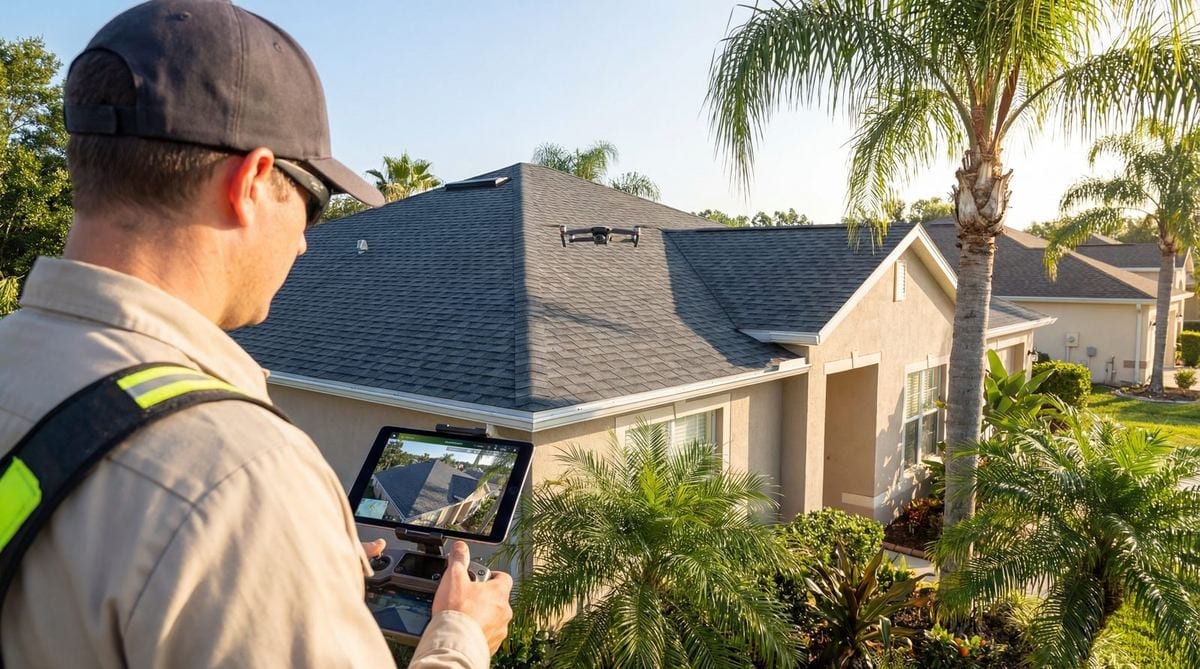
Wind Mitigation Inspection Cost in Florida (2026): What It Costs, What It Saves, Who Can Do It
Wind mitigation inspection cost in Florida: the $75 to $150 benchmark, the free state option, the OIR-B1-1802 form, who may sign it, and when to redo it.
- A stand-alone wind mitigation inspection costs about $75 to $150 in Florida by the benchmarks we could verify, takes about an hour, and the OIR-B1-1802 form it produces is valid for up to five years.
- Eligible homeowners can get the inspection free through My Safe Florida Home. A 4-point inspection is a different product, $100 to $300 stand-alone by the state's own guide, and it is generally only good for weeks.
- Florida law makes every carrier file wind mitigation credits, but no law sets the amount. The 2026 form asks nine questions and wants a photo or document behind every answer from question 2 on; your carrier prices them.
- Redo the inspection after a re-roof, new impact openings or a roof-to-wall retrofit. Carriers such as Progressive apply credits from the inspection date, not from the day the work was finished.
Wind mitigation inspection cost in Florida runs about $75 to $150 for a stand-alone inspection, takes about an hour, and produces an OIR-B1-1802 form that stays valid for up to five years. Eligible homeowners can get the same inspection free through My Safe Florida Home. Bundling it with a 4-point is where some inspectors offer a package price.
In Tampa Bay the form matters more than the fee. Every carrier writing wind coverage here has to price what the inspector writes down, and most of the answers live on your roof.
What a Wind Mitigation Inspection Costs in Florida Right Now
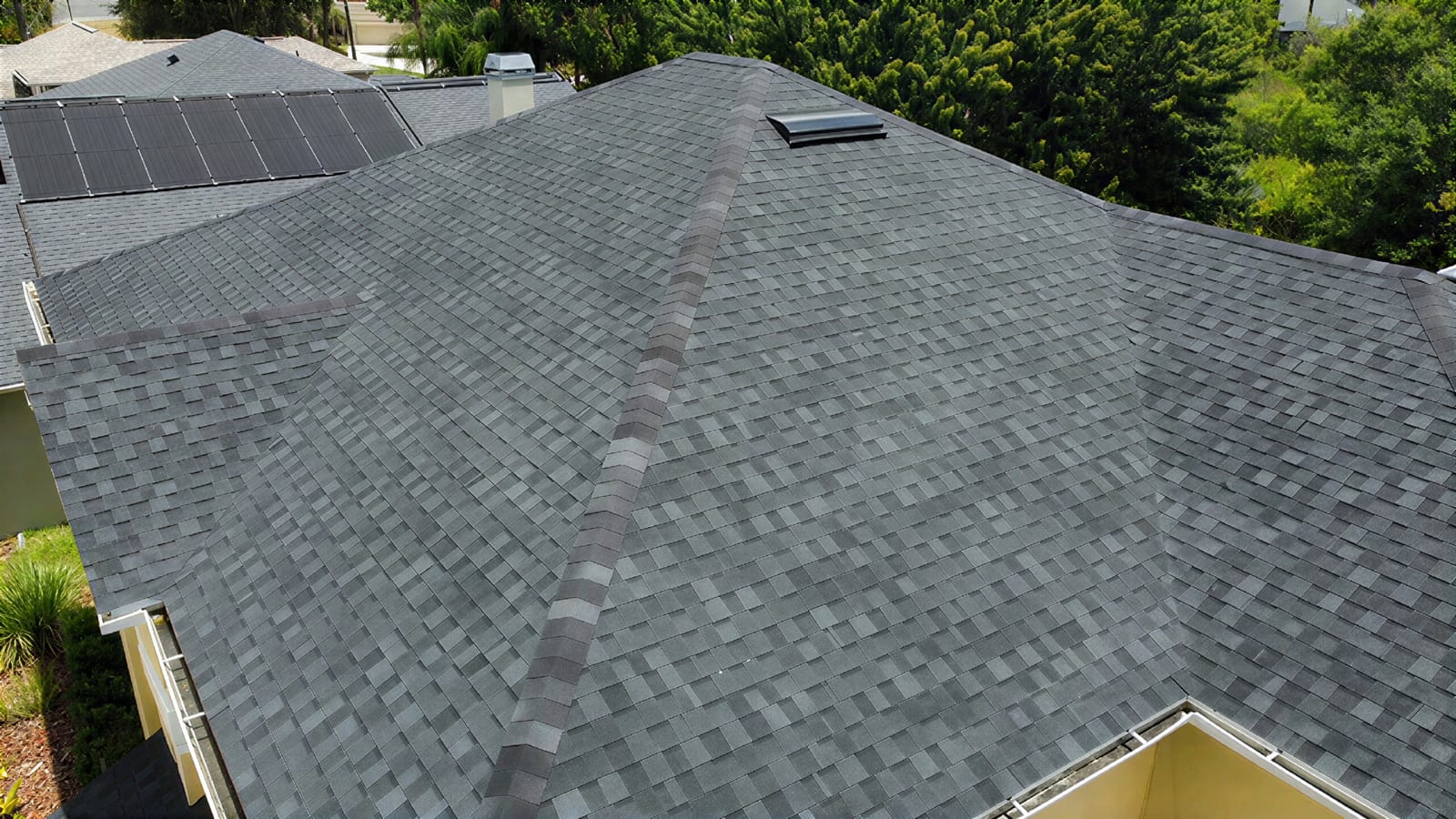
Nobody publishes a statewide price list, so here are the benchmarks we could verify, with who published them.
| What you are buying | Benchmark | Who says so |
|---|---|---|
| Stand-alone wind mitigation inspection | $75 to $150, about an hour on site | Kin Insurance, updated July 2026 |
| Wind mitigation inspection, national specialty table | $75 to $150 | Fixr, January 2025 |
| Stand-alone 4-point inspection | $100 to $300 | Florida Insurance Consumer Advocate guide |
| 4-point inspection in Florida | $75 to $150 | Security First and Slide |
| My Safe Florida Home inspection | Free for eligible homeowners | Florida DFS program site |
Those are benchmarks, not our prices. We do not publish a fee for the inspection. We quote it when we book your free roof inspection, and you have the number before anyone climbs a ladder.
What moves the fee, in our experience: stories, attic access, tile versus shingle, and the drive. A two-story in Westchase with a scuttle hole in a closet ceiling takes longer than a 1962 block ranch in Town ‘n’ Country with a walk-in attic.
what a stand-alone wind mitigation inspection typically runs in Florida, about an hour on site, with a form that stays valid for up to five years
Source: Kin Insurance, updated July 2026The fee is the smallest number on this page. The form it produces gets read by your carrier at every renewal for up to five years.
Do the division. $75 to $150 across up to five years of validity is $15 to $30 a year. The 4-point is a snapshot by comparison: the state’s guide says the report generally must be dated within the 30 days prior to the insurance application, though each carrier sets its own window.
Stand-Alone, Bundled With a 4-Point, or Free: Pick Your Lane
Four ways to buy it, depending on the age of the house and what your agent actually asked for.
Stand-alone. Your agent wants a wind mit and nothing else. Typical when the house is newer, when you are shopping carriers, or when you just re-roofed. Pay the $75 to $150 benchmark and be done.
Bundled with a 4-point. Insurer pages from Security First and Slide both say carriers commonly require a 4-point once a home is around 20 years old, and Security First notes that some inspectors offer bundle deals that include a wind mitigation inspection. If you need both, the bundle is where to ask for a price break.
They are still different products. The 4-point grades the condition of the roof, electrical, plumbing and HVAC. Our wind mitigation and 4-point inspection guide walks through both forms.
Free, through the state. My Safe Florida Home, run by the Florida Department of Financial Services, offers free wind mitigation inspections to eligible homeowners, with a report of recommended improvements and potential eligibility for up to $10,000 in grant funding. Eligibility moves with funding; our My Safe Florida Home roof grant guide covers the process.
Re-inspection after work. You pay a stand-alone fee again. One wrinkle: Citizens’ wind loss mitigation guide says the full form may not be required when only a roof cover credit is requested and a valid completed roofing permit is available. If your re-roof also renailed the deck and added a sealed roof deck, you want the full form, because those credits live in questions 5 and 8.
The Seven Features the OIR-B1-1802 Grades (Plus Two New Ones)
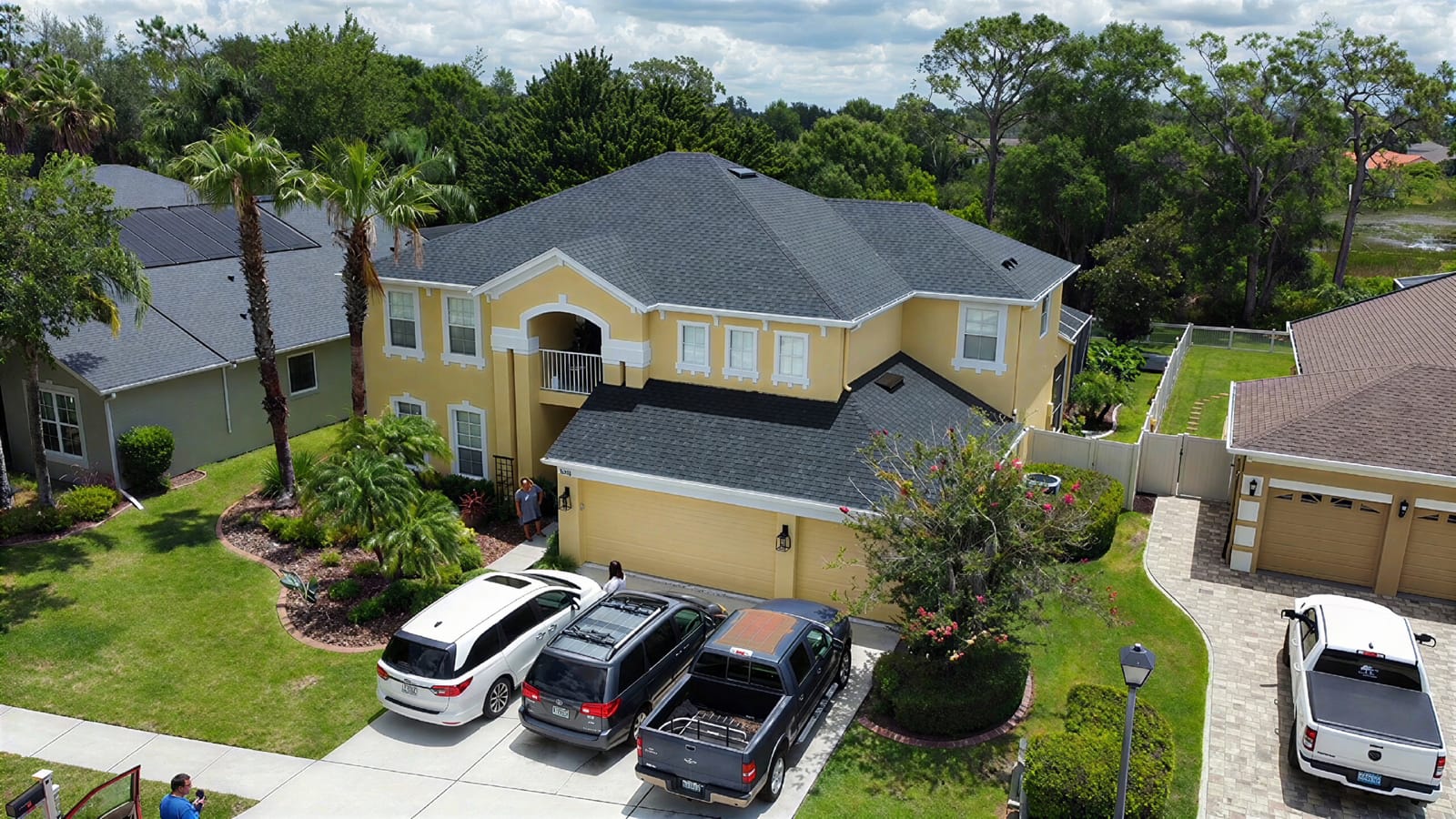
The form is the Uniform Mitigation Verification Inspection Form, OIR-B1-1802. The Office of Insurance Regulation updated it effective April 1, 2026 after a 2024 Residential Wind-Loss Mitigation Study by Applied Research Associates, and we read the adopted Rev. 04/26 form line by line. Here is what it asks.
| Question | What the inspector verifies |
|---|---|
| 1. Building Code | Code in force at the original permit: FBC 2001 and 2004, FBC 2007 or later, SFBC-94 in the HVHZ, or unknown |
| 2. Region (new) | Design wind speed region under ASCE 7-22 |
| 3. Roof Slope (new) | 6:12 or steeper, or under 6:12 |
| 4. Roof Covering | Each covering type with a permit date or a product approval number and year |
| 5. Roof Deck Attachment | The weakest attachment: staples or 6d nails, 8d nails at 12 inches, 8d nails at 6 inches, concrete, spray foam, unknown, or no attic access |
| 6. Roof to Wall Attachment | The weakest connection: toenails, clips, single wraps, double wraps, or structural |
| 7. Roof Geometry | Hip with no other shapes greater than 10 percent of the roof perimeter, flat, or other |
| 8. Sealed Roof Deck / SWR | ASTM D1970 self-adhered underlayment, taped deck seams, double-layer felt or synthetic, or spray foam |
| 9. Opening Protection | The weakest protection on windows, doors, skylights and garage doors, graded A, B, C, N, X or Z |
Every attribute marked in questions 2 through 9 needs at least one photograph or document attached, and a FORTIFIED Home Roof, Silver or Gold certificate can now validate questions 4 through 6 and 8 through 9. The form also carries a line we wish more homeowners read: “Some items listed may not qualify for a discount.”
On the new fields, Citizens’ March 2026 bulletin says inspections on or after April 1, 2026 must use the revised form, that a Rev. 01/12 form is still accepted if the structure has not changed and it was completed within five years prior to April 1, 2026, and that the change “will not result in any difference to the credits available and applied at this time.” Its guide adds that roof slope does not impact credits.
So the two new questions are bookkeeping. The seven old ones are still where the money is, and three of them (4, 5 and 8) are decided by whoever installed your roof.
Who Can Sign the Form Under s. 627.711 (Roofers, Read This)
Price is the second question. The first is whether your carrier has to accept the signature.
Florida’s s. 627.711(2)(a) says an insurer shall accept a uniform mitigation verification form signed by:
- A home inspector licensed under s. 468.8314 who has completed at least 3 hours of hurricane mitigation training approved by the Construction Industry Licensing Board and a proficiency exam
- A building code inspector certified under s. 468.607
- A general, building, or residential contractor licensed under s. 489.111
- A professional engineer licensed under s. 471.015
- A professional architect licensed under s. 481.213
- Any other individual or entity recognized by the insurer as possessing the necessary qualifications to properly complete a uniform mitigation verification form
Read line 3 again. It does not say roofing contractor. Compare s. 627.7011(5)(a), the roof-age inspection statute, which names “a general, building, or residential contractor licensed under s. 489.111 or a roofing contractor” among the authorized inspectors an insurer approves. The Legislature knew how to add roofers to a list, and did it in one statute and not the other.
A roofing license is named on the roof-age inspection list. On the wind mitigation form it is not, which leaves line 6: only if your carrier says so.
That is why the Office of Insurance Regulation tells consumers to verify that the inspector is authorized under Section 627.711(2)(a) before booking. Ask any company, us included, which of the six lines on page 5 the signer checks, and ask your agent whether the carrier accepts that signer. We will tell you who signs ours, and under which line, before we come out.
Three more rules in the same statute. The signer must inspect personally, not through employees, unless a licensed contractor or engineer sends a direct employee with the requisite skill. A knowingly false form is a first-degree misdemeanor. And an insurer may, at its own expense, require independent verification before accepting a form, so an inflated form does not just fail. It gets reinspected.
Want the wind mitigation inspection quoted with a free roof inspection?
We measure the roof, get into the attic, photograph the deck nailing and the connections, and give you the inspection price and who signs the form before anyone climbs a ladder.
The Discount Is Required by Law. The Amount Is Not
Florida’s s. 627.0629 says residential property rate filings “must include actuarially reasonable discounts, credits, or other rate differentials” for construction features shown to reduce windstorm loss, roof strength, roof covering performance, roof-to-wall strength and opening protection among them, and since October 1, 2023 every insurer has had to describe its discounts on its own website. The requirement dates to 2005, per OIR’s premium discounts page, and if an agent or insurer refuses your form that page sends you to DFS Consumer Services at 1-877-693-5236.
What the law does not do is set a number. Each carrier files its own credits, which is why the same form can move two premiums by very different amounts. Our new roof and homeowners insurance guide owns the credit tables and how they stack. This page is about the inspection.
Timing matters. Progressive’s Florida page says premium credits are applied from the date of the wind mitigation inspection or the start of the policy, whichever is later, and that homes built after 2002 automatically receive default credits on its policies. A 2006 house in FishHawk Ranch may already carry the building-code credit; the inspection documents what the builder did beyond code, or what you added since.
We document. Your carrier decides. We have never promised a discount and we are not starting now.
Five Years, Then Redo It: When a New Form Pays for Itself
The footer of every page of the form says it: “This verification form is valid for up to five (5) years provided no material changes have been made to the structure or inaccuracies found on the form.” OIR’s consumer page repeats the five years, and so do Kin and Progressive.
Five years is the ceiling, not the plan. Redo it sooner when any of these happen.
After a re-roof. A replacement changes question 4 by definition. It usually changes 5 and 8, because Florida’s s. 553.844 lists strengthening or correcting roof-decking attachments and fasteners during reroofing and a secondary water barrier among its techniques. For a site-built single-family home in the wind-borne debris region with an insured value of $300,000 or more, the replacement must also incorporate the roof-to-wall connection retrofit, capped at approximately 15 percent of the cost of reroofing, which can move question 6. Three or four answers on a nine-question form. Order the inspection the week the final passes, because at carriers like Progressive the credit runs from the inspection date.
After opening protection. Question 9 grades the weakest opening on the house, so finish the last window before you pay for the form, or the one old slider in the Florida room drags the whole answer down.
After a roof-to-wall retrofit. Straps at the gable ends of a 1980s Carrollwood Village house can move question 6 from toenails to clips or single wraps. The form wants the weakest connection, excluding hip and valley jacks within five feet of a corner, so the retrofit has to reach every truss the inspector can see.
When you change carriers. The new company takes the old form if it is under five years old and the house has not changed. New inspections must be on the Rev. 04/26 form; Citizens warns that submitting an older form can draw a performance violation.
One thing the form will never do is prove your roof’s age or condition. Citizens’ guide says it “is not acceptable proof of roof condition or replacement.” That job belongs to the inspection under s. 627.7011, which says that for a roof “at least 15 years old, an insurer must allow a homeowner to have a roof inspection performed by an authorized inspector at the homeowner’s expense before requiring the replacement of the roof.” Different form, different signers. Our Florida 15-year roof rule guide covers that one, and how old is my roof covers finding the date.
What a Roofer Sees in the Attic That an Inspector Can Miss
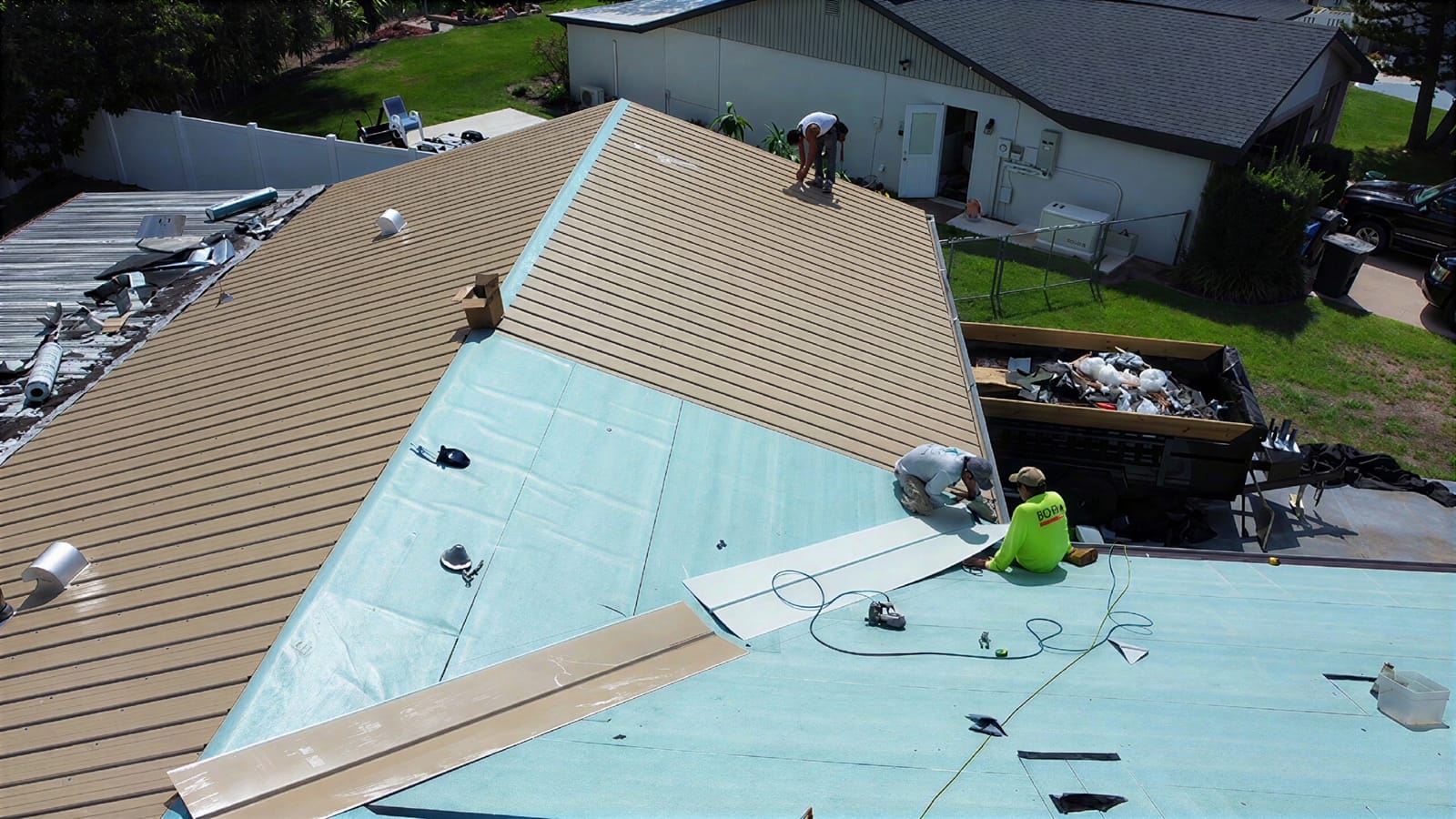
Three questions are answered from the attic or from under the roof covering, and that is where a roofer and a general home inspector part ways.
Question 5, the deck nailing. The form asks for the weakest attachment and offers answer H, no attic access, for a reason. An inspector with a flashlight through a closet scuttle sees one or two bays. On a tear-off, our crews see every sheet. Answer C is 8d common nails at a maximum of 6 inches in the field on 7/16-inch plywood or OSB, and the day the old shingles are off is the only day anyone can photograph that pattern across the whole deck.
Question 6, clip versus strap. The difference between B and C is whether the connector wraps over the truss and how many nails land on each side: a single wrap needs two nails on one side and one on the other. Corrosion matters too, because the form requires connectors free of visible severe corrosion. On the 1950s block ranches in Seminole Heights we open up, the rafters are often toenailed and nothing else. On 2004 and later hip roofs in Westchase, straps are the norm.
Question 8, secondary water resistance. The one homeowners get wrong most. The form says standard underlayment or hot-mopped felts do not qualify. What qualifies is a fully adhered polymer-modified bitumen underlayment complying with ASTM D1970, deck seams taped with a 3.75-inch strip of the same membrane, a double layer of felt or synthetic, or spray foam underneath. Two-ply hot mop under a tile roof, the Tampa Bay standard for decades, does not count. A self-adhered membrane over the whole deck does, and we photograph it before the tile or shingle goes on.
If your roofer cannot tell you what underlayment went on your deck and show you the photo, you do not have a question 8 answer. You have a guess.
That is why we treat every roof replacement as the start of the wind mitigation file. The deck photos, the connector photos and the underlayment product approval come to you with the permit, and they are what an authorized inspector attaches to the form. Our hurricane-rated roofing guide covers the installation side; our insurance documentation support page covers what we hand you: photos, measurements, an itemized estimate, and someone on site when the adjuster shows up.
What to Do This Week If Your Agent Asked for a Wind Mit
Ask the agent three things: whether the carrier wants a Rev. 04/26 form or will take a valid older one, whether your house already carries default building-code credits, and which signers it accepts under s. 627.711(2)(a).
If the letter is about roof age, that is a different inspection and a different statute. If a re-roof is coming in the next year, order the form after the final passes, so the new covering, the renailed deck and the sealed roof deck start one fresh five-year clock.
And if you want one visit to settle it, book a free roof inspection. We measure, get into the attic, photograph the nailing and the connections, and quote the wind mitigation inspection in Tampa Bay on the spot, with the signer’s license line in writing. Integrity Roofing of Florida is a licensed Florida roofing contractor, CCC1334243, and every answer on the form we arrange for you has a photo or a document behind it.
Get the inspection price and the signer's license line in writing
Free roof inspection, same-week response, attic photos of the deck nailing and connections, and a straight quote for the OIR-B1-1802 inspection. Your carrier decides the credit; we make sure the form is accurate.
Frequently Asked Questions
How much does a wind mitigation inspection cost in Florida?+
By the benchmarks we could verify, a stand-alone wind mitigation inspection runs about $75 to $150 in Florida and takes about an hour on site. Progressive's Florida page, citing Angi, puts it at about $100. The fee moves with home size, number of stories, attic access and travel. We do not publish a price for ours; we quote it when we schedule your free roof inspection, so you have the number before anyone climbs a ladder.
Is a wind mitigation inspection free in Florida?+
It can be. The My Safe Florida Home program, run by the Florida Department of Financial Services, offers free wind mitigation inspections to eligible homeowners and a report listing recommended improvements and potential eligibility for up to $10,000 in grant funding. You apply through the program's website. Eligibility rules are set by the state and change with funding, so check the official program page before you count on it.
How long is a wind mitigation inspection good for in Florida?+
The OIR-B1-1802 form states it is valid for up to five years provided no material changes have been made to the structure and no inaccuracies are found on the form. Carriers such as Kin and Progressive say the same five years on their consumer pages. A re-roof, new impact openings or a roof-to-wall retrofit are material changes, and after any of them a fresh inspection is how the new features reach your policy.
Can a roofing contractor sign the OIR-B1-1802 wind mitigation form?+
Section 627.711(2)(a) lists the signers an insurer must accept: a licensed home inspector with hurricane mitigation training, a certified building code inspector, a general, building or residential contractor licensed under s. 489.111, a licensed professional engineer, a licensed architect, or anyone else the insurer recognizes as qualified. A roofing contractor is not named on that list, so ask who signs your form and under which line, and ask your carrier whether it accepts that signer.
How much is a 4-point inspection compared with a wind mitigation inspection?+
Florida's Insurance Consumer Advocate guide says a stand-alone 4-point inspection typically runs $100 to $300, and insurer pages from Security First and Slide put it at $75 to $150. A wind mitigation inspection benchmarks at $75 to $150. They are different products: the 4-point checks the condition of the roof, electrical, plumbing and HVAC and is generally dated within 30 days of your application, while the wind mitigation form documents storm features and lasts up to five years.
Do I need a new wind mitigation inspection after a new roof?+
Yes, if you want the new roof on your policy. A roof replacement changes the roof covering answer, usually the deck attachment answer, and often the secondary water resistance answer, because Florida law requires fastener strengthening and a secondary water barrier when a roof is replaced. Carriers such as Progressive apply credits from the inspection date, not from the day the permit closed, so order the new form as soon as the final inspection passes.
What changed on the wind mitigation form in April 2026?+
The Office of Insurance Regulation adopted a revised OIR-B1-1802 (Rev. 04/26) effective April 1, 2026, after a 2024 wind-loss mitigation study. Inspections on or after that date must use it. It adds a Region field based on design wind speed, a Roof Slope field, a spray-foam option for deck attachment, and lets a FORTIFIED Home certificate validate several features. Citizens says the change does not alter the credits available at this time.
Want a real estimate on your Tampa Bay roof?
Enter your address and we'll pull satellite measurements instantly.
Mike Shepherd · Co-Owner, Integrity Roofing of Florida
Mike Shepherd co-owns Integrity Roofing of Florida with Bettina Savorelli. The company is a Florida-licensed roofing contractor (license CCC1334243), a TAMKO Pro Gold and GAF-certified installer, and a BBB A+ rated business serving Hillsborough, Pinellas, Pasco, Polk, Manatee and Sarasota counties. His crews install and repair tile, metal and shingle roofs across Tampa Bay and document storm damage for homeowners' insurance claims. Every article is written from the field, not from a content desk.
Ready to talk to a real human?
No phone tree, no pressure. Owner-level attention on every call.