Skylight Replacement Cost in Florida (2026): Installation, Leak Repair and When to Replace
Skylight replacement cost in Florida: about $1,000 to $3,600 per unit by national benchmarks, what moves the price, and why a re-roof is the cheap moment.
- National benchmarks put skylight replacement cost at about $1,000 to $3,600 per unit for a like-for-like swap. The manufacturer's own published range for replacing one fixed glass unit is $2,000 to $3,600, product and installation.
- A leaking skylight is usually a flashing, curb or roofing problem, not a glass problem. Reflashing a sound unit is a medium repair on our price list, $800 to $2,500.
- The cheapest moment to replace a skylight is during a re-roof, when the flashing kit goes in with the new underlayment and the skylight and roof warranties start the same day.
- Tampa Bay sits outside the High-Velocity Hurricane Zone, so you need a Florida Product Approval number, not a Miami-Dade NOA, and laminated impact glass if your address is in a windborne debris region.
Skylight replacement cost in Florida runs about $1,000 to $3,600 per unit for a like-for-like swap, based on national benchmarks and the manufacturer’s own published ranges. Reflashing a sound unit runs $800 to $2,500 on our jobs. Doing the swap during a re-roof is the cheapest path, because the flashing goes in with the new roof.
It matters here because a skylight is a hole in the one surface that takes the full force of a Gulf storm. And because a lot of the skylights we look at in Tampa Bay are acrylic domes older than the homeowner asking about them.
Skylight Replacement Cost: What the Benchmarks Actually Say
We do not publish a skylight price. We publish our roof prices and our repair bands, and we quote skylights after a free inspection, because the pitch, the curb and the roofing around the unit decide the number more than the unit does.
What we can do is put the published benchmarks in one place, so nobody can pad a quote and call it the going rate.
| Source (national benchmark) | What it prices | Figure |
|---|---|---|
| Velux, product plus installation | Replace one fixed skylight | $2,000 to $3,600 |
| Velux, product plus installation | New fixed skylight in a new opening | $2,800 to $5,000 |
| Velux Fresh Air (venting) | Product from $1,100 (manual) or $2,100 (solar or electric) | Installation from $1,800 to $2,100 |
| Velux Sun Tunnel | Product plus installation, one tunnel | $880 to $2,280 |
| This Old House (updated March 30, 2026) | Skylight installation, materials and labor | $1,000 to $3,000, average $1,800 |
| Fixr (updated January 31, 2025) | Skylight installation | $1,080 to $1,966, average $1,523 |
| Bob Vila (updated August 30, 2024) | Skylight installation | $1,000 to $2,700, about $1,860 |
Three things to notice.
First, the manufacturer’s replacement range sits above the home-improvement sites because it prices a glass unit with interior and exterior finish labor included. The lower figures blend in plastic domes and tubular units. A glass skylight with laminated panes and a real flashing kit lands at the top of the band.
Second, labor is the small part. Fixr puts labor to replace an existing skylight at $176 to $320, against $587 to $1,068 for a tempered-glass unit. The money is in the glass and the flashing.
Third, every number above is for a standalone job with the roof closed. Open the roof and the picture changes.
A skylight quote with no line for the flashing kit is a quote for a leak.
Curb-Mount, Deck-Mount, Fixed, Venting: Which One You Need
Four decisions set the price before anyone talks about glass.
Curb-mount or deck-mount. A deck-mounted unit is installed directly onto the roof deck for a lower profile, and the manufacturer says plainly that deck-mounted skylights are not suitable for low slopes. A curb-mounted unit sits on a framed box, which the same page calls “great for replacing older skylights and for flat or low-sloped roofs,” because the raised curb drains better.
Velux’s own pitch ranges: curb-mount from flat to 20:12, deck-mount from 3:12 up. The code agrees. Florida’s residential code says a unit skylight on a roof flatter than 3:12 must sit on a curb “not less than 4 inches (102 mm) above the plane of the roof” unless the manufacturer’s instructions say otherwise.
In practice, the 1980s and 1990s domes we replace already sit on a 2x6 curb, so most replacements are curb-mount. New skylights on a new shingle roof are deck-mount.
Fixed or venting. A venting unit opens, and the manufacturer lists product from $1,100 for a manual crank and $2,100 for solar or electric, with installation from $1,800 to $2,100, rain sensor included on the powered versions. Our opinion: a venting unit earns its price over a bathroom with no exhaust fan. Everywhere else, buy fixed and spend the difference on laminated glass.
Glass or tunnel. A sun tunnel runs $880 to $2,280 installed and is the best light per dollar we know of for the dark hallway in a 1970s Town ‘N’ Country ranch. Small hole in the roof, no drywall shaft, no framing.
The flashing kit, matched to your roof. Velux sells different kits for shingle, metal, tile and flat roofs: EDL for shingle, EDM for ribbed or standing seam metal, EDW or ECW for tile with risers to clear the tile height. On barrel tile in Avila or Westchase, the tile kit is not optional. We have pulled shingle kits off tile roofs that leaked from the day they went on.
Sizes have names too. A deck-mount C06 is 21 1/2 by 46 1/4 inches outside the frame and an M08 is 30 9/16 by 54 15/16, while curb-mount codes are four digits that match the inside of the curb, 2222 through 4646. Measure the old curb before you shop and the quote gets simpler.
Those 1980s Acrylic Domes Are Past Due. Replace, Don’t Reflash
The classic Tampa Bay skylight is a bronze acrylic double dome on an aluminum frame, bolted to a 2x6 curb on a Carrollwood or Seminole ranch in 1986. By now it has crazed, yellowed and lost its seal, and somebody has caulked the frame twice.
The manufacturer’s own numbers say that unit is done. Velux says its skylights can last 20 to 30 years, and that it is best to update after about 30 years. The signs it lists for an old dome read like a tour of a 1980s hallway: “discoloration from sunlight exposure, mildew stains from moisture buildup, leaks or condensation around the panes.”
The point at which Velux says it is best to update a skylight. Its units last 20 to 30 years, so a dome from the 1980s or early 1990s on a Carrollwood roof is already past it
Source: VELUX USAHere is where homeowners lose money. They call about a drip, a roofer reflashes the dome, and the drip comes back next summer because the crazed acrylic and the dead frame gasket were the problem.
Reflashing a 1986 dome buys you a dry 1986 dome.
Our rule on a free inspection: crazed, fogged or yellow glazing, or a unit older than the roof around it, gets a new unit and we tell you why. Clear glass, a sound seal and water coming from the flashing or the curb gets a reflash and the unit stays. Our skylight installation and repair page spells out the same call.
Replace It During the Re-Roof. Here Is the Math
Velux does not hedge on this one: “The best time to replace old skylights is when you reroof your home,” because doing so “will save time and money and will synchronize your skylight and roofing warranties.”
Why it is cheaper on our jobs: the crew is already up there with the old covering off, the flashing kit laps under the new underlayment the way the manufacturer drew it, with the adhesive underlayment as secondary water protection beneath the flashing, and the shingles or tile get cut around the unit once instead of twice.
Why it is better: the warranties line up. The manufacturer’s 10-year installation warranty covers the skylight and flashing installation, product and labor, against leaks when its flashing is used, with 20 years on the glass seal. Replace both the same day and there is one start date and one contractor to call when water shows up on a ceiling; our roof warranties in Florida guide explains the layers.
One insurance detail. A new skylight does not make your roof younger. Under Florida’s s. 627.7011, a roof’s age is “calculated using the last date on which 100 percent of the roof’s surface area was built or replaced,” so only the re-roof resets the clock. If your roof is within a few years of 15, do the roof and do the skylight with it; our how old is my roof guide shows how to find the permit year.
Standalone replacement still makes sense when the roof is young. The manufacturer says a single skylight replacement typically takes only a couple of hours, and we take those calls. But if the roof has five years left, we will say so and price a full roof replacement with the skylight folded in, because a new skylight on a dying roof is a down payment on a second trip.
Not sure if it is the skylight or the roof around it?
A free inspection with photos of the flashing, the curb and the deck answers that in an hour. You get a written price for reflash, replace or deck-over, and if a re-roof is the smarter move we say so.
Wind-Rated and Impact-Rated: What Tampa Bay Actually Requires
Every skylight spec sheet brags about a Miami-Dade NOA. Most Tampa homeowners do not need one.
The Florida Building Code defines the High-Velocity Hurricane Zone in one sentence: “This zone consists of Broward and Miami-Dade counties.” A Notice of Acceptance is Miami-Dade’s own product approval for that zone. Hillsborough, Pinellas, Pasco, Polk, Manatee and Sarasota are outside it.
What applies here is the state system. The Florida Product Approval search lists “Sky Lights” as its own category next to “Roofing,” with filters for “Approved for use in HVHZ” and “Approved for use outside HVHZ.” Every unit we install carries an FL number you can look up there, and a roofer who cannot tell you the FL number in his quote has not looked.
Behind the label, the code says unit skylights “shall be tested by an approved independent laboratory” and labeled with the manufacturer, the performance grade rating and the inspection agency. That performance grade is the wind pressure the unit survived on the bench, and the county reviewer checks it against the design pressure for your roof.
Impact is a separate question. The code says “exterior glazed openings in buildings located in windborne debris regions shall be protected from windborne debris” and must meet the Large Missile Test of ASTM E1996. A skylight is a glazed opening in your roof. On the barrier islands from Clearwater Beach to Anna Maria and the bayfront streets inside a windborne debris region, we spec laminated impact glass and let the permit reviewer confirm the zone for your address.
Our opinion: spec laminated glass everywhere. Under R308.6, a fully tempered skylight needs a retention screen below it unless it is small, low and thin, while laminated glass needs no screen, and the manufacturer’s hail coverage applies to skylights with laminated glass. The upcharge is small next to the unit.
Then insurance, stated carefully. Florida’s s. 627.0629 requires residential rate filings to include discounts for construction techniques that reduce windstorm loss, and the list names “window, door, and skylight strength.” We cannot promise a discount and we do not adjust claims. What we can do is hand you the FL number and the product label, and point you to a wind mitigation inspection if your form is out of date.
Heat, Glare and Condensation: Glass for the Florida Sun
A skylight in Tampa faces the sun from a roof that bakes all afternoon. The glass decides whether you get light or a heat lamp.
The manufacturer admits the trade: skylights “do allow some amount of heat into the home,” and its answer is a Low-E coating on argon-filled dual panes that “subdues radiative heat flow through the skylight.” Then read the NFRC label. It covers windows, doors and skylights, and the number that matters here is the Solar Heat Gain Coefficient: “Low numbers resist solar heat, high numbers allow solar heat,” and “in summer months, a low solar heat gain coefficient helps to keep your home cool.” ENERGY STAR’s skylight criteria vary by climate zone, so compare against your zone, not a national sticker.
A single-pane acrylic dome has no coating at all. Replacing it with Low-E double glass is the biggest comfort change a 1980s hallway can get for the money.
Placement is the other half. A west-facing skylight over a Riverview bonus room will cook the room from three o’clock on, whatever the glass. Where the roof gives you no choice, a blackout shade fixes it, and the manufacturer covers shades and controls for 5 years.
Now the call we take every January: a drip under the skylight on a clear, cold morning, and a homeowner asking about leak repair. That is condensation: warm, humid indoor air meeting a cold single-pane dome. A double-pane unit and a working bathroom exhaust fan cure most of it, and the manufacturer lists “condensation around the panes” as a sign the dome is at the end of its life.
If it drips when the sky is clear, it is not a leak. If it drips an hour into a thunderstorm, it is almost never the glass.
Skylight Leak Repair Cost: It Is Usually Not the Glass
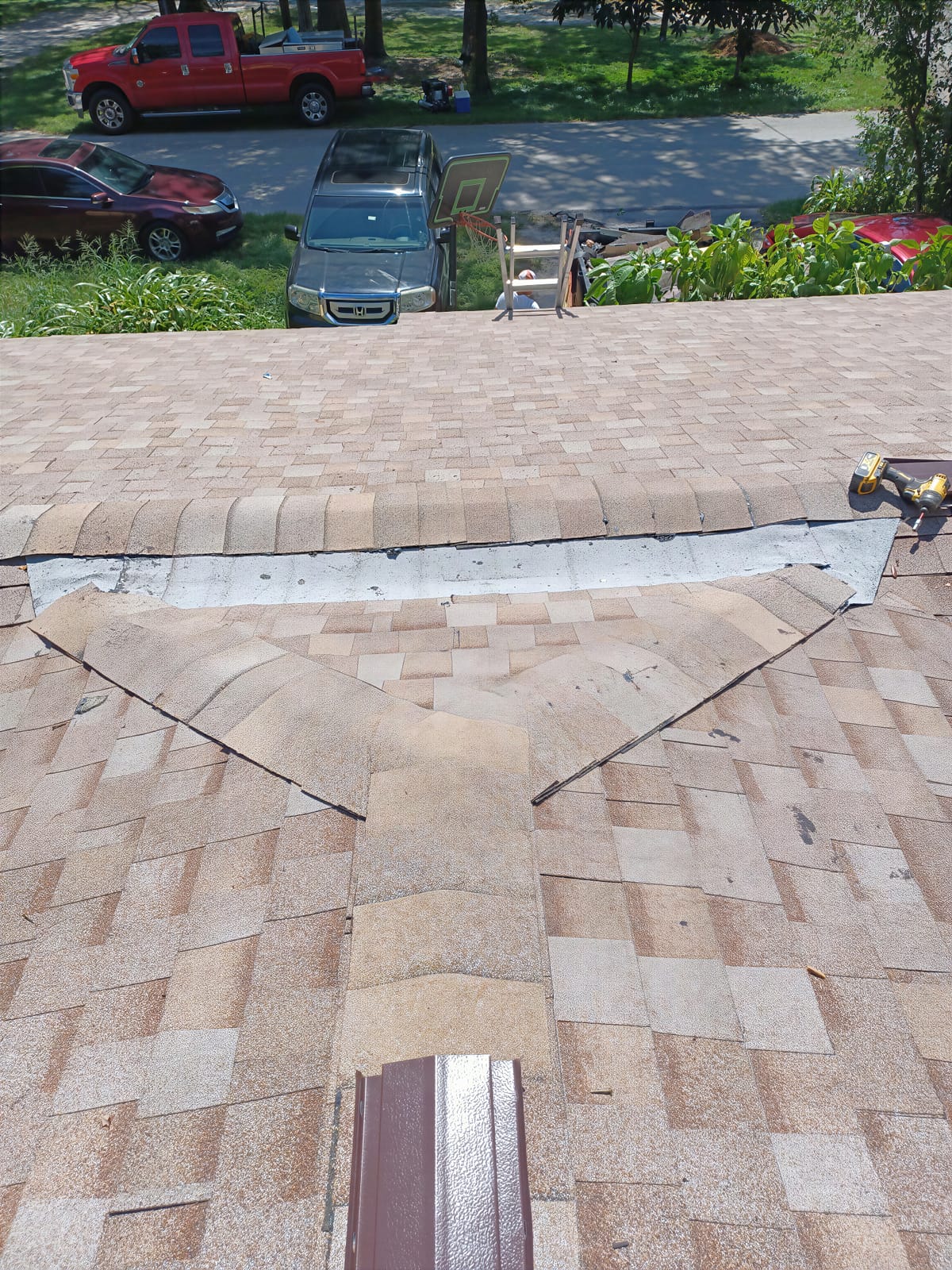
When we open up a leaking skylight, this is the order we find the problem in.
1. The uphill flashing. Water piles up on the high side of the unit. The head flashing is short, the shingles above were nailed through it, or a wide curb has no saddle. This is the most common leak we find, and it is a roof repair, not a skylight repair.
2. The curb. A 2x6 curb from 1986 with forty nail holes and rot at the corners. New flashing on a rotten curb lasts one season.
3. The roofing around it. Shingles cut short against the frame, underlayment that stops at the curb instead of lapping up it, tile mortar doing a job flashing should do. On a 2000s Westchase two-story, missing kick-out flashing where the skylight meets a wall.
4. The glazing seal. Fog between the panes, or a drip at the frame joint on a crazed dome. This one is a replacement, not a repair.
5. Condensation. Covered above. Not a leak.
Caulk fixes none of these for longer than two summers. Flashed, not caulked. A heavy bead of caulk around a skylight frame is the most common “previous repair” we photograph.
What it costs on our jobs. A flashing patch is a small repair, $300 to $800. A full reflash or reseal of a skylight, like chimney flashing or roughly 100 square feet of covering and decking, is a medium repair, $800 to $2,500. If water is coming in tonight, an emergency tarp runs $0 to $350 and is often free when we do the permanent repair. Our roof leak repair cost in Tampa Bay guide breaks down every band, and our post on roof leaks in heavy rain covers why a skylight that is dry in a drizzle pours in a July downpour.
| Option | When it is the right call | What it costs |
|---|---|---|
| Reflash or reseal, keep the unit | Glass clear, seal sound, unit under about 20 years, water traced to the flashing or curb | Our medium repair band, $800 to $2,500 |
| Replace the unit | Crazed, fogged or yellowed glazing, failed seal, any dome older than the roof, or the roof is coming off anyway | Benchmarks: about $1,000 to $3,600 per unit standalone; less per unit during a re-roof |
| Remove and deck over | Chronic leaker over a room nobody uses, a flat section that ponds, or you want the penetration gone before the next storm | Roof side prices like a medium repair on our jobs, $800 to $2,500; drywall and paint inside are a separate trade |
One option people forget: swap a leaking 44-inch dome over a hallway for a sun tunnel. Smaller hole, cheaper unit, brighter hallway.
And one warning. Cutting a new opening is framing work. A rafter can be headed off; a truss chord cannot be cut without an engineer’s letter. If a roofer offers to “just cut one in” on a trussed 1990s Brandon two-story with no engineering, find another roofer.
What to Do Before You Call Anyone
Three things take ten minutes and change the quote.
Photograph the ceiling stain and the skylight from inside, and note when it drips: during rain, or on a clear cold morning. Find the permit year on your roof, because roof age decides whether the skylight gets replaced alone or with everything around it. Measure the outside of the curb or frame so the size code is settled before anyone climbs up.
Then book the free inspection. We photograph the flashing, the curb and the deck, read the label on the existing unit, and give you a written price for reflash, replace or deck-over. If the roof is the real problem, we say so and run the instant roof estimate for the whole thing. Integrity Roofing of Florida inspects for free and responds the same week, and every skylight we set is flashed into the roof system, not caulked onto it.
Get a skylight price that holds up in a thunderstorm
Free inspection, same-week response, and a written quote for reflash, replace or deck-over with the flashing kit and the FL number on it. If the roof should go first, we will tell you.
Frequently Asked Questions
How much does it cost to replace a skylight in Florida?+
National benchmarks put a like-for-like skylight replacement at about $1,000 to $3,600 per unit. The manufacturer whose figures we quote publishes $2,000 to $3,600 to replace one fixed glass skylight, product and installation included, and $880 to $2,280 for a sun tunnel. We do not publish a skylight price because the pitch, the curb and the roofing around the unit decide it, so we quote after a free inspection.
How much does skylight leak repair cost?+
On our jobs a flashing patch is a small repair, $300 to $800, and a full reflash or reseal of a skylight is a medium repair, $800 to $2,500. If the glazing is crazed, fogged or yellowed, we tell you to replace the unit instead, because reflashing a dead skylight buys you a dry dead skylight. An emergency tarp runs $0 to $350 and is often free when we do the permanent repair.
Should I replace my skylight when I replace my roof?+
Almost always, yes. The manufacturer says the best time to replace old skylights is when you reroof, because it saves time and money and lines up the skylight and roofing warranties. The flashing kit laps under the new underlayment, the shingles or tile get cut around the unit once, and the crew is already on the roof. A skylight that outlives the roof it sits on is rare in Florida sun.
Do skylights in Tampa Bay need a Miami-Dade NOA or an impact rating?+
Not a Miami-Dade NOA. The Florida Building Code defines the High-Velocity Hurricane Zone as Broward and Miami-Dade counties, and Tampa Bay sits outside it. What applies here is a Florida Product Approval number for a unit tested and labeled for wind pressure. If your address is in a windborne debris region, the code requires glazed openings to be protected, so we spec laminated impact glass there and recommend it everywhere.
Can I remove a skylight and roof over the hole instead of replacing it?+
Yes, and for a chronic leaker over a room nobody uses it is often the smart call. On the roof side we remove the unit and curb, add blocking, deck the opening, lap the underlayment and blend the shingles or tile, which prices like a medium repair on our jobs, $800 to $2,500. The drywall and paint inside are a separate trade. During a re-roof it is cheaper still.
Curb-mount or deck-mount: which skylight do I need?+
Match the roof. The manufacturer rates curb-mounted units for flat to low-slope roofs and deck-mounted units for pitches of 3:12 and steeper, and the Florida residential code requires a curb at least 4 inches above the roof plane on roofs flatter than 3:12. Most replacements of 1980s and 1990s domes are curb-mount because the old unit already sits on a curb. Deck-mount is the cleaner look on a new shingle roof.
Why does my skylight drip when it has not rained?+
That is condensation, not a leak. Warm, humid indoor air hits a cold single-pane acrylic dome on a January cold front and the water runs down the inside. A double-pane Low-E unit and a working bathroom exhaust fan cure most of it. A drip that shows up during an afternoon thunderstorm is a leak, and it is almost always the flashing, the curb or the roofing around the unit, not the glass.
Want a real estimate on your Tampa Bay roof?
Enter your address and we'll pull satellite measurements instantly.
Mike Shepherd · Co-Owner, Integrity Roofing of Florida
Mike Shepherd co-owns Integrity Roofing of Florida with Bettina Savorelli. The company is a Florida-licensed roofing contractor (license CCC1334243), a TAMKO Pro Gold and GAF-certified installer, and a BBB A+ rated business serving Hillsborough, Pinellas, Pasco, Polk, Manatee and Sarasota counties. His crews install and repair tile, metal and shingle roofs across Tampa Bay and document storm damage for homeowners' insurance claims. Every article is written from the field, not from a content desk.
Ready to talk to a real human?
No phone tree, no pressure. Owner-level attention on every call.